
Is marijuana legalization causing more car accidents in Colorado? Here’s the truth: the relationship between cannabis legalization and traffic safety is more complicated than a simple yes or no. While some data points to an increase in marijuana-related traffic incidents since legalization, other factors make it difficult to draw a straight line between legal cannabis and crash rates.
Table of Contents
- What Happened to Colorado's Roads After Legalization?
- Is Marijuana Legalization Causing More Car Accidents in Colorado? Breaking Down the Data
- The Science of Cannabis Impairment Behind the Wheel
- How Law Enforcement Is Responding
- Confounding Factors That Complicate the Picture
- What Other States and Researchers Are Learning
- What Drivers Should Know About Cannabis and Road Safety
- The Role of Public Policy Moving Forward
- Conclusion
- Frequently Asked Questions
- Key Takeaways
- Colorado legalized recreational marijuana in 2012, making it one of the first states to do so — and a long-running case study for researchers.
- Marijuana-impaired driving citations and fatalities involving cannabis have increased, but correlation does not equal causation.
- Testing for marijuana impairment is far less precise than testing for alcohol, complicating enforcement and data collection.
- Population growth, increased tourism, and changes in driving behavior also affect Colorado’s traffic statistics.
- Public education and law enforcement strategies are still evolving to meet the challenge of cannabis-impaired driving.
What Happened to Colorado’s Roads After Legalization?
When Colorado voters approved Amendment 64 in November 2012, legalizing recreational marijuana for adults 21 and older, public safety advocates immediately raised questions about traffic safety. In the years that followed, Colorado saw a measurable uptick in the number of drivers who tested positive for THC — the psychoactive compound in cannabis — following accidents.
However, it’s important to note that overall traffic fatalities in Colorado have fluctuated due to a wide range of variables, including road conditions, distracted driving, speeding, and changes in total vehicle miles traveled. Attributing changes in accident rates solely to marijuana legalization oversimplifies a complex picture.
Is Marijuana Legalization Causing More Car Accidents in Colorado? Breaking Down the Data
Is marijuana legalization causing more car accidents in Colorado? Here’s the truth from researchers and traffic safety experts: the data is mixed and context-dependent. Reports from Colorado’s Department of Transportation and law enforcement agencies have shown increases in drivers involved in fatal crashes who tested positive for marijuana. But a positive toxicology result does not necessarily mean the driver was impaired at the time of the crash.
THC can remain detectable in a person’s blood for hours, days, or even weeks after use, depending on how frequently someone consumes cannabis. This means a driver could test positive for THC without being functionally impaired during the incident. This critical distinction affects how we interpret every statistic tied to marijuana and traffic safety.
The Science of Cannabis Impairment Behind the Wheel
Research consistently shows that cannabis does impair driving ability — particularly reaction time, lane-tracking, and decision-making — especially for infrequent users. Studies using driving simulators and controlled road tests have demonstrated that higher doses of THC correlate with measurably worse driving performance.
That said, the degree of impairment varies significantly based on tolerance, consumption method, dose, and individual biology. Frequent users may show fewer functional impairments at the same blood THC level compared to occasional users. This variability is part of why establishing a legal impairment threshold — similar to the 0.08% blood alcohol limit for alcohol — has proven so difficult for cannabis.
Why There Is No Clear “Legal Limit” for THC
Unlike alcohol, where blood alcohol concentration correlates reasonably well with impairment, THC levels in blood do not translate cleanly into impairment levels. Colorado has set a “permissible inference” level of 5 nanograms of THC per milliliter of blood, but courts and juries are not required to treat this as proof of impairment. This creates challenges for prosecutors, law enforcement, and safety researchers alike.
How Law Enforcement Is Responding
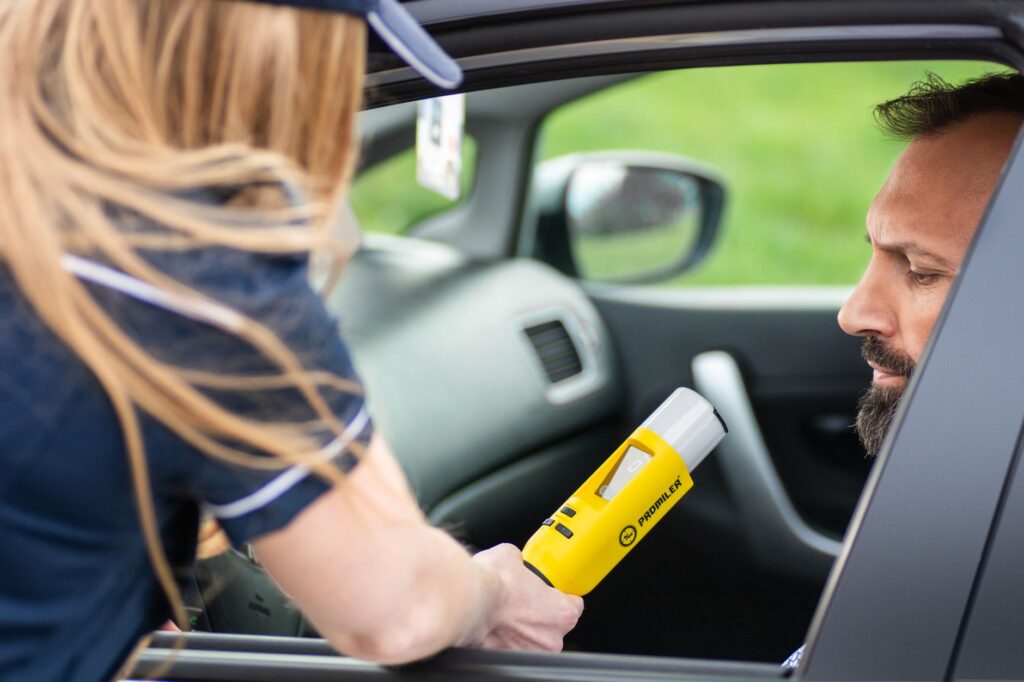
Colorado has invested in training Drug Recognition Experts (DREs), officers specially trained to identify signs of drug impairment beyond what a breathalyzer can detect. Roadside oral fluid testing devices have also been piloted in some jurisdictions, though none have yet been fully approved as legally definitive tools in Colorado courts.
The state has also funded public awareness campaigns warning drivers about the risks of driving after consuming cannabis. These campaigns emphasize that “high driving” is impaired driving, even if the impairment is harder to measure than alcohol.
Confounding Factors That Complicate the Picture
It would be misleading to look at Colorado’s traffic data in isolation. The years following legalization also brought significant population growth, a boom in tourism — including cannabis tourism — and broader national trends of increased distracted driving due to smartphone use. All of these factors independently contribute to changes in accident rates.
Researchers who compare Colorado’s crash trends to similar states that did not legalize marijuana during the same period have reached varying conclusions. Some studies suggest legalized states see small but measurable increases in traffic fatalities, while others find no statistically significant difference. This ongoing academic debate underscores why definitive claims — in either direction — should be made cautiously.
Legalization Also Changed Who Reports Use
Before legalization, many drivers involved in accidents may have underreported cannabis use to law enforcement out of fear of criminal consequences. After legalization, more drivers may have willingly disclosed recent marijuana use, or testing may have become more routine. This reporting change alone could partially explain why post-legalization data shows higher rates of cannabis involvement in crashes — it may reflect better detection, not necessarily more impairment.
What Other States and Researchers Are Learning
Colorado is not alone in grappling with these questions. Several states that have legalized recreational marijuana are watching Colorado’s experience closely. Researchers are working to develop better roadside testing tools and to establish clearer standards for impairment. Until those tools and standards are in place, comparing marijuana-impaired driving data across states remains challenging.
The broader lesson from Colorado’s decade-plus of data is that legalization creates new public safety challenges that require updated enforcement tools, public education, and ongoing research — not panic, but not complacency either. High-profile road tragedies, like the fatal collision inside the Downtown Tunnel, serve as stark reminders that impaired driving in any form carries devastating real-world consequences.
What Drivers Should Know About Cannabis and Road Safety
Regardless of where the science ultimately lands on legalization’s macro-level effects, the individual risk is clear: driving while meaningfully impaired by cannabis increases the likelihood of an accident. Here are key points every driver should understand:
- Cannabis affects coordination, reaction time, and the ability to judge speed and distance — all critical driving skills.
- Impairment is not always felt subjectively; users sometimes underestimate how affected they are.
- Consuming cannabis and then driving — even legally purchased cannabis — can result in a DUI charge in Colorado.
- There is no reliable way to “test yourself” for impairment before getting behind the wheel.
- Waiting several hours after use is advisable, but the precise safe window varies by individual and method of consumption.

The Role of Public Policy Moving Forward
Colorado continues to refine its approach to cannabis-impaired driving through legislation, education, and enforcement investment. Policymakers face the challenge of balancing individual freedoms with public safety obligations. As technology improves — particularly in the area of portable impairment testing — the legal and enforcement frameworks are likely to become more precise.
Public education remains one of the most powerful tools available. States and municipalities that invest in clear, honest messaging about the risks of driving under the influence of cannabis tend to see better public awareness outcomes. Understanding the real risks — not inflated by moral panic, not minimized by legalization advocates — is essential for a safer driving culture.
Frequently Asked Questions
Is it illegal to drive after using marijuana in Colorado?
Yes, driving under the influence of marijuana is illegal in Colorado regardless of its recreational legality. Colorado has a "permissible inference" law that allows prosecutors to argue impairment when a driver's blood THC level is at or above 5 nanograms per milliliter. A conviction can result in fines, license suspension, and jail time.
Has Colorado seen more traffic deaths since marijuana was legalized?
Traffic fatality data in Colorado since 2012 shows increases in crashes where drivers tested positive for THC, but overall fatality trends are influenced by many factors including population growth and distracted driving. Researchers disagree on how much of any increase can be directly attributed to marijuana legalization. The relationship is real but not simple.
How do police test for marijuana impairment during a traffic stop?
Colorado law enforcement officers use field sobriety tests, behavioral observation, and Drug Recognition Experts to assess marijuana impairment. Blood tests can detect THC levels, though a positive result does not definitively prove impairment at the time of the stop. Portable oral fluid testing devices are being piloted but are not yet fully adopted statewide.
Can you get a DUI for marijuana in Colorado even if you have a medical card?
Yes. Having a valid medical marijuana card does not protect you from a DUI charge in Colorado if you drive while impaired. The law applies equally to medical and recreational users. Impairment, not the legal status of the cannabis, is what determines criminal liability.
How long should you wait to drive after using cannabis?
There is no universally agreed-upon safe window because impairment duration depends on the dose, consumption method, and individual tolerance. Many experts suggest waiting at least four to six hours after smoking, and longer after consuming edibles, which have delayed and prolonged effects. When in doubt, choosing not to drive is always the safest option.
Conclusion
So, is marijuana legalization causing more car accidents in Colorado? Here’s the truth: legalization has coincided with measurable increases in marijuana-detected driving incidents, but the full picture is far more nuanced. Imprecise testing methods, improved reporting, population growth, and other confounding variables all play roles in the data we see. What is clear is that driving under the influence of cannabis is dangerous and illegal, and Colorado — along with the rest of the country — is still working to build the policy and enforcement infrastructure needed to address it effectively. Staying informed, driving sober, and supporting evidence-based public safety policy are the most meaningful steps any driver can take.