TL;DR: Durham, anchored by Duke University and Research Triangle Park, offers historic neighborhoods like Trinity Park, luxury Hope Valley, and family-friendly Woodcroft. Prices vary sharply by area, so matching neighborhood to commute matters more here than in most North Carolina cities.
Durham is the Research Triangle’s most characterful city: a former tobacco town reinvented around Duke University, Duke Health, and Research Triangle Park, with a nationally known food scene and a downtown built from converted tobacco warehouses. Its neighborhoods tell that story in different ways, from Duke’s East Campus corridor to golf-course estates to new southern suburbs. Newcomers should start with commute: Research Triangle Park, Duke, and downtown pull in different directions, and the right neighborhood often depends on which one you drive to every day.
1. Trinity Park
Trinity Park, beside Duke University’s East Campus, is Durham’s most walkable historic neighborhood, with Victorian and Craftsman homes on tree-lined streets and a strong neighborhood association. It leads the city for walkability and historic character, and it draws academics, medical staff, and professionals who want to walk to campus and downtown.
2. Duke Park
Duke Park, north of Trinity Park, offers a similar historic feel with single-family homes, apartments, and townhomes, plus walking trails and one of the city’s best children’s playgrounds. It is a practical, family-friendly alternative to Trinity Park, often at a lower price.
3. Hope Valley
Hope Valley, in south Durham, is the city’s established luxury address, with grand estates, winding streets, and the Hope Valley Country Club golf course. It is consistently cited as Durham’s most expensive neighborhood, for buyers who want space, privacy, and a country-club lifestyle.
4. Woodcroft
Woodcroft, in southwest Durham, is a planned community of varied housing, walking trails, pools, and a strong family focus, close to Research Triangle Park. It draws families who want suburban amenities with a manageable RTP commute.
5. Downtown Durham
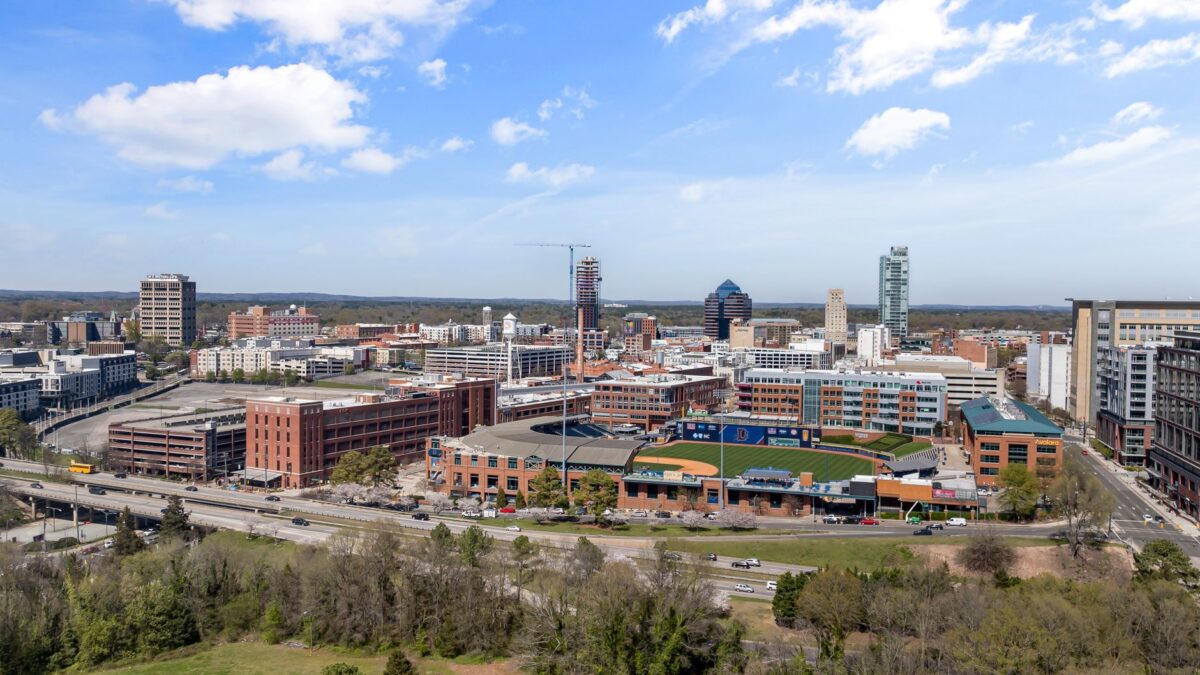
Downtown Durham, around the American Tobacco Campus, the Durham Performing Arts Center, and the Durham Bulls ballpark, has become a residential neighborhood of apartments and condos in historic buildings. It suits young professionals who want restaurants, nightlife, and a short walk to work.
6. Forest Hills
Forest Hills, south of downtown, is a quiet, established neighborhood of historic homes on larger lots, popular with families who want a residential feel with city amenities nearby. Homes here tend to sell quickly when they come on the market.
7. Southpoint
Southpoint, in southern Durham near The Streets at Southpoint shopping center, offers newer subdivisions, apartments, and townhomes with strong retail and Interstate 40 access. It suits families and professionals who want convenience and newer housing.
8. Northgate Park
Northgate Park, north of downtown, is a diverse, affordable neighborhood of mid-century homes and newer builds, close to parks and the Northgate shopping area. It offers value for first-time buyers who want a central location.
9. Parkwood
Parkwood, in southeast Durham, sits close to Research Triangle Park, making it one of the shortest commutes in the city for RTP workers. It mixes older homes with newer subdivisions and offers a practical, affordable base.
10. Old West Durham
Old West Durham, west of downtown near Duke’s West Campus and Ninth Street’s shops and restaurants, is a historic, walkable neighborhood popular with Duke affiliates and young professionals. Its Ninth Street corridor is one of the city’s best small dining and shopping streets.
What to Know Before You Choose
Durham prices range widely, from affordable north-side homes to multi-million-dollar Hope Valley estates, so set your budget before touring. Check school zones and RTP commute times from the actual address, and be honest about walkability: only the central neighborhoods are truly walkable, while southern suburbs are car-dependent. Visit Trinity Park and Ninth Street on foot to feel the difference.
Related reading on WagsWoofs: The 10 safest cities in North Carolina for 2026 Moving to Greensboro? 10 Neighborhoods to Know
Sources: Best neighborhoods in Durham, NC (2026) Moving to Durham
Frequently Asked Questions
What is the best neighborhood in Durham for families?
Woodcroft and Southpoint are strong family picks, with trails, shopping, and newer homes. Duke Park suits families who prefer a historic neighborhood near Duke.
What is the most walkable neighborhood in Durham?
Trinity Park leads for walkability and historic character, followed by Duke Park and Old West Durham around Ninth Street.
What is the richest neighborhood in Durham?
Hope Valley is consistently cited as Durham’s most expensive neighborhood, with large estates and golf course living.
Where should Research Triangle Park workers live?
Parkwood and Woodcroft offer the shortest RTP commutes, while Southpoint and southern Durham also keep the drive manageable.
Is Durham affordable?
Durham is generally more affordable than Raleigh, but prices vary sharply by neighborhood, from affordable north Durham to premium Hope Valley.
What is Durham known for?
Durham is known for Duke University, its tobacco history, the Durham Bulls, and a nationally recognized food scene built around the American Tobacco Campus.
Is Durham safe?
Safety varies by neighborhood and block. Check recent local crime data for the specific area and visit at different times of day.
How far is Durham from Raleigh?
Durham is about 25 miles northwest of Raleigh, roughly a 30-minute drive, making the two cities easy to combine for work or weekends.