Pittsburgh’s 90 neighborhoods are famously distinct — each with its own main street, its own identity, and often its own fiercely loyal residents. The best neighborhoods in Pittsburgh combine the city’s unbeatable affordability with walkable business districts, top-tier universities and hospitals, and a food scene that punches far above its weight. Drawing on 2026 market analysis from Houzeo’s Pittsburgh rankings, resident reviews on Niche.com, and local reporting, here are 11 neighborhoods to know in 2026.
TL;DR: Best Neighborhoods in Pittsburgh at a Glance
Young professionals flock to Lawrenceville, the Strip District, and Shadyside. Families favor Squirrel Hill, Regent Square, and Dormont. Budget buyers find value in Bloomfield, Polish Hill, and parts of the South Side, while the North Shore and Oakland suit sports fans and university crowds respectively. Pittsburgh’s overall cost of living runs about 8% below the national average, so your dollar stretches in nearly all of these.
11 Best Pittsburgh, PA Neighborhoods, Ranked for 2026
1. Shadyside
Shadyside is Pittsburgh’s classic upscale urban neighborhood, anchored by the boutique-lined Walnut Street corridor. It suits young professionals and affluent buyers who want dense, walkable living with top restaurants; it is among the priciest city neighborhoods, with Houzeo citing a median near $618,000.
2. Squirrel Hill
Squirrel Hill is a leafy, diverse, walkable neighborhood known for its strong Jewish community, independent shops, and beloved Frick Park access. It suits families and academics who want an urban village feel; housing is upper-middle for the city.
3. Lawrenceville
Lawrenceville has gone from industrial riverfront to Pittsburgh’s trendiest corridor, with Butler Street’s restaurants and galleries drawing national attention. It suits young professionals and creatives; prices have risen sharply but remain moderate nationally, around $226,000 median per Extra Space Storage.
4. Strip District
The Strip is Pittsburgh’s historic market neighborhood — daytime food stalls and ethnic grocers giving way to converted warehouses and new apartments. It suits food lovers and young professionals who want to live above the action; housing is upper-middle.
5. Oakland
Oakland is Pittsburgh’s university and medical district, home to Pitt, Carnegie Mellon, and UPMC’s flagship hospitals. It suits students, researchers, and medical professionals who want to live steps from campus; rents are moderate and student-driven.
6. Bloomfield
Bloomfield is Pittsburgh’s “Little Italy,” a working-class-turned-hip corridor along Liberty Avenue with beloved Italian institutions and a growing bar scene. It suits budget-conscious young buyers who want character without Lawrenceville prices.
7. North Shore
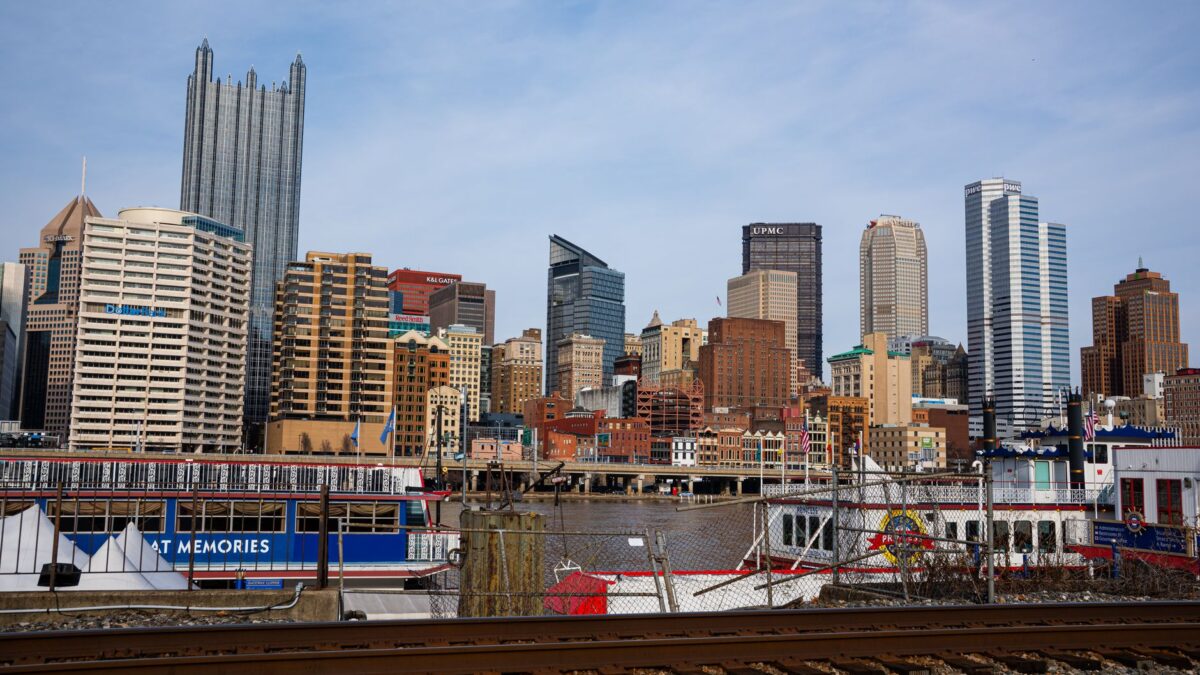
The North Shore sits across the Allegheny from downtown, home to Acrisure Stadium, PNC Park, and a growing strip of restaurants and apartments. It suits sports fans and downtown commuters who want skyline views; newer builds put it at the upper-middle end.
8. South Side Flats
The South Side Flats run along the Monongahela with one of the city’s densest nightlife strips on East Carson Street, plus riverfront trails and converted lofts. It suits young singles who prioritize nightlife; rents are moderate, though parking and party noise are not for everyone.
9. Regent Square
Regent Square is a quiet, tree-lined neighborhood prized for direct access to Frick Park’s 600-plus acres and a strong community feel. It suits families who want park-at-your-doorstep living; Houzeo values it near $456,000 median, an upper-middle family favorite.
10. Dormont
Dormont is a classic streetcar suburb just south of the city, with a walkable business district, the historic Hollywood Theater, and easy T light-rail access downtown. It suits first-time buyers and young families seeking affordability with real transit connectivity.
11. Polish Hill
Polish Hill is a small, steep, historic neighborhood above the Strip District known for its tight-knit community and sweeping city views. It suits buyers seeking authentic character and affordability minutes from downtown; prices are among the lowest in the central city.
Exploring more affordable metros? Check our Denver neighborhoods guide and Nashville neighborhoods guide for the same detailed format.
Frequently Asked Questions
What is the best neighborhood in Pittsburgh for young professionals?
Lawrenceville, Shadyside, and the Strip District top the list, with Downtown also popular for a true urban address. Extra Space Storage’s 2026 guide names Downtown, Lawrenceville, Mount Washington, Shadyside, and Squirrel Hill as the metro’s best for singles and young adults.
What is the safest neighborhood in Pittsburgh?
Safety varies significantly by neighborhood. Squirrel Hill and Shadyside earn some of the highest safety ratings in the city per relocation guides, while established suburbs like Mount Lebanon and Aspinwall rank among the safest in the metro on Niche.com. Always check recent block-level crime data before signing a lease or buying.
Which Pittsburgh neighborhood is best for families?
Squirrel Hill, Regent Square, and Point Breeze are the most-cited in-city family picks for their parks, walkability, and community feel. Experience PA’s family guide also highlights Highland Park for its outdoors access and Mount Lebanon for top suburban schools.
What is the most affordable neighborhood in Pittsburgh?
Polish Hill, Bloomfield, Dormont, and parts of the South Side offer the most accessible prices near the urban core. Pittsburgh’s overall cost of living runs about 8% below the national average, so even desirable neighborhoods cost less than comparable areas in most major metros.
Is Pittsburgh a good place to live in 2026?
Yes — Pittsburgh combines low housing costs, strong healthcare and education employers (UPMC, Carnegie Mellon, Pitt), and a growing tech and robotics scene. BestNeighborhood.org notes the metro scores highest on low disaster risk, healthcare access, and schools.
How is the job market in Pittsburgh?
Pittsburgh has evolved well beyond steel into healthcare, technology, education, finance, and advanced manufacturing. Major employers include UPMC, Highmark Health, PNC, and Carnegie Mellon, with a notable robotics and AI cluster attracting professionals at a lower cost of living than larger tech markets.
Do I need a car in Pittsburgh?
Mostly, yes — Pittsburgh’s hills and rivers make it a driving city for most neighborhoods. Exceptions include Downtown, Shadyside, and Oakland, which are highly walkable with transit, and Dormont and the North Shore, which have direct light-rail T access.