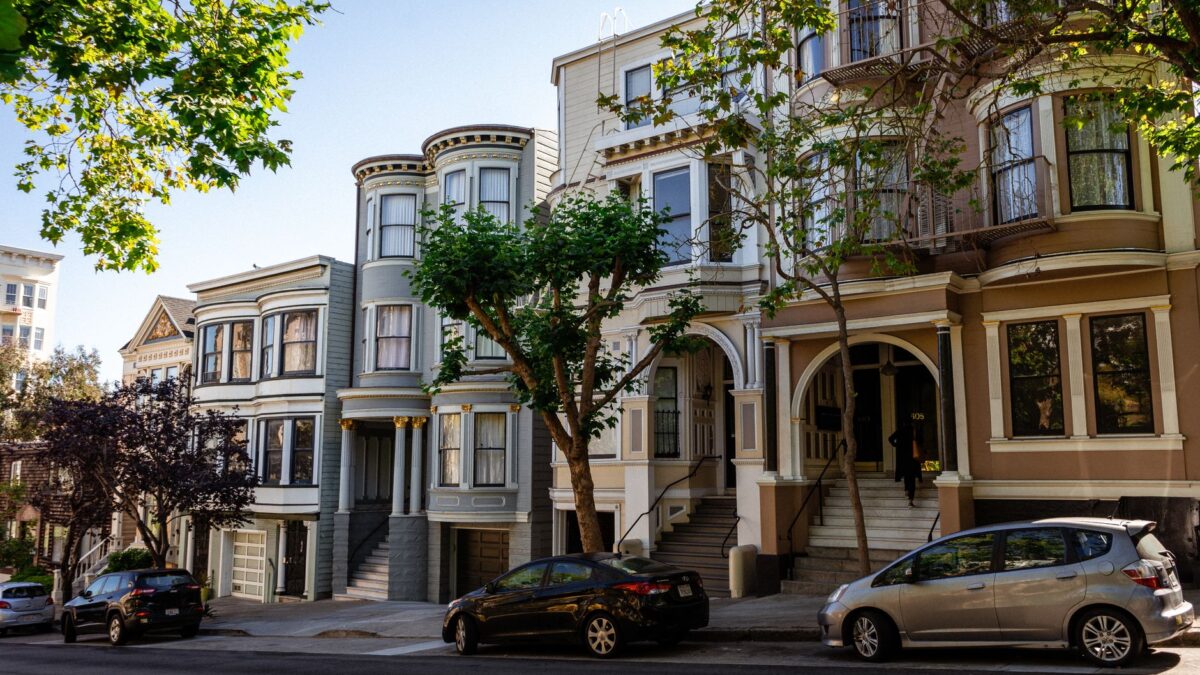
Picking where to live in San Francisco is really picking a lifestyle. This 49-square-mile city packs wildly different worlds — sunny village streets, foggy ocean edges, nightlife corridors, and quiet hilltop enclaves — into neighborhoods separated by just a few blocks. This guide to the best neighborhoods in San Francisco for 2026 breaks down ten standout areas, each with its own personality, housing stock, transit story, and local flavor.
TL;DR: The best neighborhoods in San Francisco in 2026 include the Mission District and Castro for culture and nightlife, Noe Valley and the Sunset District for families, Pacific Heights and the Marina District for upscale living, and Hayes Valley and Bernal Heights for walkable village charm. Expect citywide home values around $1.2 million, with neighborhood figures varying widely (Census ACS via HomeSnacks).
San Francisco neighborhoods reward hyper-local thinking: a microclimate, a hill, or a single commercial strip can change a block’s feel entirely. Wondering how safety factors in? Our breakdown of Is San Francisco Safe? 2026 Crime Stats maps the city block by block.
1. The Mission District — culture, dining, and energy
The Mission is San Francisco’s most vibrant corridor, built around Latino culture, legendary taquerias, street murals, and Dolores Park — the city’s sunniest big gathering spot on weekend afternoons. Home values here sit around $1.26 million (HomeSnacks, Census ACS data). The neighborhood’s Walk Score of 99 (Kurby, Walk Score data) means BART’s 16th and 24th Street stations, Muni lines, and Valencia Street’s bike lanes keep the whole city within reach.
Best for: food lovers, young professionals, and anyone who wants the city’s cultural pulse outside their door.
2. The Castro — welcoming, walkable, and proud
One of the world’s most famous LGBTQ+ districts, the Castro mixes rainbow-flagged streets with handsome Edwardian buildings, a beloved independent cinema (the Castro Theatre), and a fiercely loyal community. Home values hover near $1.07 million (HomeSnacks, Census ACS data). The Muni Metro subway runs straight through Market Street for easy downtown commutes.
Best for: buyers and renters who want a warm, established community with top-tier walkability.
3. Haight-Ashbury — bohemian history meets the Panhandle
Birthplace of the Summer of Love, the Haight keeps its counterculture soul alive with vintage shops, record stores, and crowds of tourists photographing the painted ladies’ predecessors. Golden Gate Park’s Panhandle borders it directly — miles of green without leaving the neighborhood. Home values sit around $1.32 million (HomeSnacks, Census ACS data).
Best for: park lovers, musicians, and free spirits who value character over polish.
4. The Marina District — waterfront and social
Flat, breezy, and young, the Marina draws twentysomethings and young professionals to its Marina Green waterfront, Palace of Fine Arts, and bar-packed Chestnut and Union streets. Presidio greenery and Fort Mason are right next door. Home values run around $1.64 million (HomeSnacks, Census ACS data). Transit leans on Muni buses and bikes rather than subways — something to weigh if you commute downtown daily.
Best for: young professionals, runners, and anyone who wants bay views with their brunch.
5. Pacific Heights — grand homes and bay views
“Billionaire’s Row” is San Francisco’s prestige address: grand mansions, sweeping bay views, and a famous film-star street of Victorians. Fillmore Street’s upscale shops and restaurants anchor daily life, and Lafayette Park offers green relief. Home values sit around $1.75 million (HomeSnacks, Census ACS data).
Best for: luxury buyers who want quiet, elegant streets minutes from downtown.
6. Noe Valley — the sunny village
Noe Valley’s 24th Street feels like a small town dropped into the city: cafes, bookstores, a farmers’ market, and parents with strollers everywhere. It famously escapes the fog that blankets other districts. Home values sit around $1.71 million (HomeSnacks, Census ACS data). The J-Church Muni line connects to downtown in about 20 minutes.
Best for: families and anyone chasing sunshine, community, and easy daily life.
7. The Richmond District — local flavor near the ocean
San Francisco’s northwest corner is a dense, diverse neighborhood of family-owned dumpling houses, bakeries, and the Inner Richmond’s shopping strip on Clement Street. Golden Gate Park forms its southern border; the ocean is a short walk west. Home values in the Inner Richmond sit near $1.61 million (HomeSnacks, Census ACS data), generally softer than the city’s northern prestige districts.
Best for: families and food lovers who want more space and local authenticity.
8. The Sunset District — quiet streets by the beach
The Sunset is San Francisco’s residential workhorse: block after block of classic homes, foggy but friendly, with Golden Gate Park to the north and Ocean Beach to the west. The Inner Sunset’s Irving Street has grown into a genuine dining destination. Home values in the Inner Sunset sit around $1.36 million (HomeSnacks, Census ACS data). The N-Judah Muni line gives a straight shot downtown.
Best for: buyers seeking value, quiet, and room to breathe near the Pacific.
9. Hayes Valley — central, trendy, and walkable
Once under a freeway, Hayes Valley reinvented itself as one of San Francisco’s hippest pockets: the Octavia Boulevard green space, Hayes Street boutiques, and a dense lineup of restaurants. Its Walk Score of 99 (Kurby, Walk Score data) and central position put downtown, the Mission, and the Civic Center arts district minutes away.
Best for: design-conscious renters and buyers who want the city’s center at their doorstep.
10. Bernal Heights — community on the hill
Bernal pairs dramatic skyline views from its hilltop park with a tight-knit, slightly off-the-beaten-path community feel along Cortland Avenue’s shops and eateries. Home values sit around $1.23 million (HomeSnacks, Census ACS data) — relatively approachable for the city. Many blocks feel more like a small town than downtown-adjacent San Francisco.
Best for: community-minded buyers who want views, dogs, and neighborhood pride.
Once you’re settled, the whole Bay Area opens up — see our 9 Best Day Trips From San Francisco (2026 Guide) for weekend escapes.
Frequently Asked Questions
What is the best neighborhood to live in San Francisco in 2026?
It depends on your priorities. Noe Valley and the Sunset District lead for families, the Mission and Hayes Valley for nightlife and walkability, and Pacific Heights and the Marina District for upscale living.
Which San Francisco neighborhood is the safest?
Crime maps consistently show western residential areas like the Inner Sunset and Noe Valley among the city’s lowest-crime pockets. See our 2026 San Francisco crime stats breakdown for details.
What is the most walkable neighborhood in San Francisco?
The Mission District, Castro, and Hayes Valley each earn Walk Scores of 99 out of 100 (Walk Score data via Kurby), making them the city’s most walkable areas.
Where do young professionals live in San Francisco?
The Marina District, Mission District, and Hayes Valley are the top draws for young professionals, thanks to nightlife, transit, and dense apartment stock.
Which SF neighborhood is best for families?
Noe Valley, the Sunset District, and the Richmond District are family favorites, offering parks, relatively quieter streets, and strong neighborhood schools.
What is the most affordable neighborhood on this list?
Among these ten, the Mission and Bernal Heights show the lowest typical home values in Census-based data — though “affordable” is relative in San Francisco.
Which neighborhoods have the best weather?
Noe Valley and the Mission District famously sit in the city’s sunnier microclimates, while the Richmond and Sunset Districts get more ocean fog.
Is public transit good in San Francisco neighborhoods?
Central neighborhoods like the Castro, Hayes Valley, and Mission have excellent BART and Muni access; the Marina and western districts rely more on buses and biking.