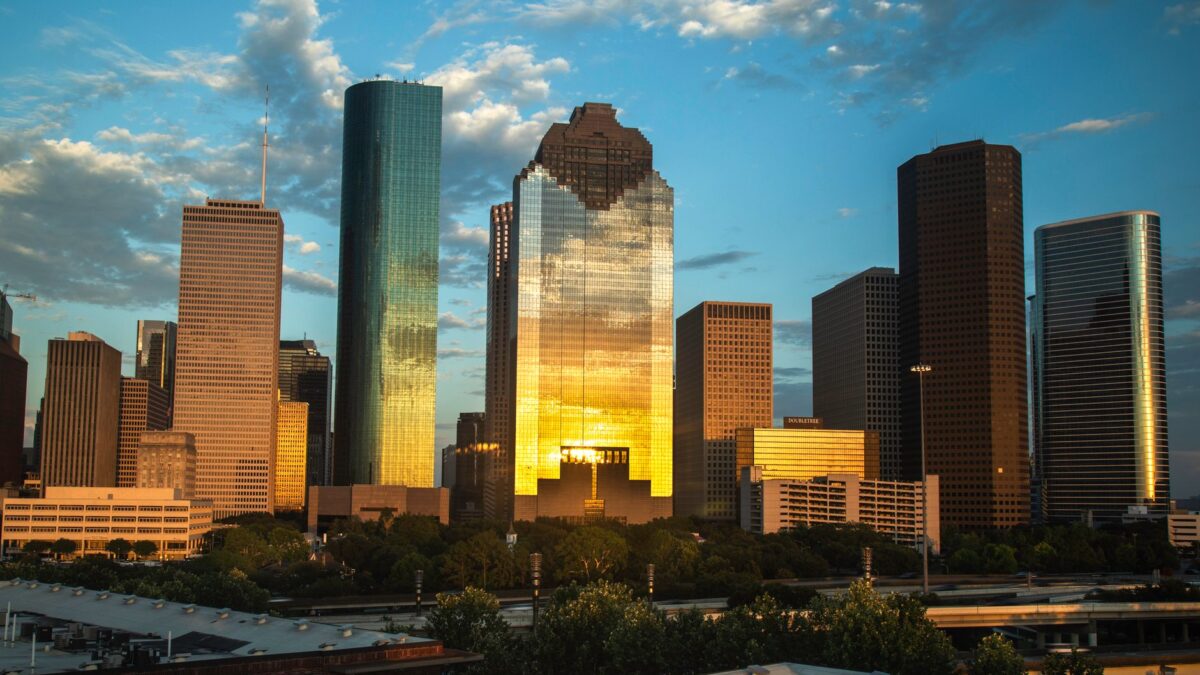
If you’re asking “is Houston safe?”, you’re not alone. With more than 2.3 million residents, Houston is America’s fourth-largest city. The honest answer is mixed: crime runs well above the national average, but it’s been falling for years, and the gap between neighborhoods is enormous.
TL;DR: Houston’s 2024 FBI violent crime rate was about 3.2 times the U.S. average, driven mostly by aggravated assault, and property crime ran about 2.4 times the national rate. But HPD data shows violent crime fell sharply through 2025, and safety varies dramatically by neighborhood — master-planned suburbs and independently policed enclaves are far calmer than parts of the urban core.
Houston Crime Rates vs. the National Average
The FBI’s Uniform Crime Reporting data for 2024 — the latest full year available — recorded 26,628 violent crimes and 99,572 property crimes in Houston, a city of 2,319,160 people. That works out to a violent crime rate of 1,148 per 100,000 residents, versus a national rate of 359: more than triple the U.S. average. Property crime ran at 4,294 per 100,000 against 1,760 nationally — roughly 2.4 times the average, driven by larceny-theft and 16,304 motor vehicle thefts.
Houston logged 320 murders in 2024 — a rate of 13.8 per 100,000, nearly three times the national 5.0. Robbery (6,355) and aggravated assault (18,260) make up the bulk of violent crime. Quotable version: In Houston, aggravated assault — not homicide — is the engine of the violent crime rate. Sources: HomeSnacks’ analysis of FBI UCR 2024 data and OpenCrime’s FBI-based major-city comparison.
Is Houston Safe for Visitors?
Most visitor corridors — Downtown, the Galleria, the Museum District, the Texas Medical Center — are busy, well-patrolled, and heavily trafficked. Your biggest realistic risks as a visitor are property crimes: car break-ins in parking lots and garages. Park in well-lit lots, leave nothing visible in the car, and use rideshare after dark in entertainment districts.
The Trend Is Moving in the Right Direction
The 2024 numbers tell half the story — the trend line matters more for 2026. Houston Police Department data reviewed by KPRC showed violent crime through April 2025 down 14.3% versus the same period in 2024, with total crime down 9.7%. Robbery dropped 16.9%, aggravated assault fell 14.5%, and auto theft plunged 26.8%. Homicides ticked up slightly through April but year-end tracking by the Real Time Crime Index showed full-year 2025 homicides down roughly 18% versus 2024. HPD also reported 2024 murders at a five-year low. Homicide remains far too high by national standards, but the direction is clearly improving.
Safest vs. Higher-Crime Areas of Houston
Houston has no zoning, so safety can shift within a single ZIP code — crime follows freeways, commercial strips, and apartment density more than neighborhood lines, as Houston Crime Map’s analysis of HPD open data notes. Generally calmer areas include West University Place, Bellaire, the Memorial Villages, and master-planned suburbs such as Sugar Land, The Woodlands, and Katy — communities with independent police departments consistently post lower numbers. Higher-crime concentrations are flagged most often in Sunnyside, Greenspoint, parts of northeast and southeast Houston, apartment-dense Gulfton, and downtown/Midtown nightlife corridors. Check any specific address on HPD’s public crime map before signing a lease — and see our 10 Best Neighborhoods in Houston, TX for 2026 or the 9 Best Day Trips From Houston, Texas (2026 Guide).
Practical Safety Tips for Houston
- Protect your car. Vehicle theft is one of Houston’s defining crime problems — park in garages and never leave bags or electronics visible.
- Check the address, not just the neighborhood. Safety shifts block by block; look up any address on HPD’s public crime map before signing a lease.
- Don’t forget flood risk. Houston’s biggest safety wildcard isn’t crime — it’s flooding. Check FEMA flood maps for any address you’re considering.
Frequently Asked Questions
Is Houston safe to visit in 2026?
Yes, with normal big-city caution. Tourist corridors like Downtown, the Galleria, and the Museum District are busy and well-patrolled. Your main risks are property crimes — car break-ins in parking areas — which are preventable by parking in well-lit garages and leaving nothing visible in the car.
What is the crime rate in Houston?
For 2024, the latest full year in the FBI dataset, Houston’s violent crime rate was 1,148 per 100,000 residents (vs. 359 nationally) and its property crime rate was 4,294 per 100,000 (vs. 1,760 nationally), including 320 homicides.
Is Houston safe at night?
It depends on the area. Busy entertainment districts are fine with normal caution, but local trackers advise extra care in higher-crime corridors (Sunnyside, Greenspoint, parts of northeast and southeast Houston) after dark. Use rideshare late at night rather than walking long stretches alone.
What are the safest neighborhoods in Houston?
West University Place, Bellaire, the Memorial Villages, and master-planned suburbs like Sugar Land, The Woodlands, and Katy consistently post the city’s lowest crime rates. Communities with independent police departments outperform HPD-patrolled areas.
Which areas of Houston should I avoid?
Local crime trackers most often flag Sunnyside, Greenspoint, parts of northeast and southeast Houston, and apartment-dense Gulfton. But Houston’s safety shifts block by block — check any specific address on HPD’s public crime map rather than ruling out a whole neighborhood.
Is Houston safer than other large cities?
Not on the numbers. In 2024 Houston’s violent crime rate of 1,148 per 100,000 was higher than Los Angeles (729) and New York City (671) per FBI-based comparisons, though lower than cities like Philadelphia (909).
Is the Houston crime rate going down?
Yes. HPD data through April 2025 showed violent crime down 14.3% and total crime down 9.7% versus the same period in 2024, and full-year tracking showed 2025 homicides down roughly 18% versus 2024.
Is downtown Houston safe?
Downtown is generally safe during business hours and major events, with heavy foot traffic and police presence. Vehicle break-ins are the main concern — stay in well-lit areas, avoid isolated streets late at night, and park in attended garages.