Thinking of moving to Miami? The best neighborhoods in Miami fall into clear tiers: the walkable urban towers of Brickell and Edgewater, the family suburbs of Coral Gables, Coconut Grove, and Pinecrest, the luxury islands of Key Biscayne and Bal Harbour, and value plays like Little Havana and Kendall. Medians run from about $430K in Little Havana to $1.5M+ on Key Biscayne, per 2026 market data — and with the World Cup arriving in June 2026, the city’s profile (and its housing market) has never been hotter. Here are 11 verified picks for 2026.
TL;DR: Best Neighborhoods in Miami for 2026
The best neighborhoods in Miami for young professionals are Brickell and Edgewater for walkable high-rise living; Coral Gables, Coconut Grove, and Pinecrest lead for families thanks to top schools and safety; Key Biscayne and Bal Harbour are the luxury standard. Budget carefully: citywide median rent is $2,350 for a 1-bedroom and $3,100 for a 2-bedroom in 2026 data, with vacancy near 4.5%.
The 11 Best Neighborhoods in Miami for 2026
1. Brickell — Best for Young Professionals
Miami’s financial district has become its most complete urban neighborhood: towers, rooftop bars, and a Walk Score around 92 — the highest on this list. Medians run $650K–$900K for purchases (condo-heavy stock starts near $485K, per 2026 cost-of-living data). For World Cup 2026, travel guides rank Brickell the best value base in the city — close to everything without the South Beach premium.
2. Coral Gables — Best for Families
Coral Gables consistently ranks as Miami’s top family neighborhood: excellent public schools, low crime, tree-lined streets, and Mediterranean-revival architecture. The median sits near $1.05M, and the historic Venetian Pool — a former rock quarry turned public swimming landmark — is the city’s most distinctive amenity. Genuine community character with luxury pricing.
3. Coconut Grove — Best Bohemian-Meets-Luxury
Miami’s oldest neighborhood is its most relaxed waterfront enclave: lush, tree-lined streets, marinas, and a village center, with safety ratings better than 84% of Florida cities, per 2026 moving guides. Medians run $920K–$1.1M with a Walk Score near 75. Creatives, families, and boaters get South Florida’s best lifestyle balance here.
4. Pinecrest — Best Suburban Schools
Pinecrest delivers top-rated schools and large lots in a quiet suburban setting south of the city — the pick for families who prioritize education and space over walkability (Walk Score ~32). Medians run $800K–$1M, with safety in the highest tier. It’s Miami’s answer to the classic American suburb, done at a premium.
5. Key Biscayne — Best Island Living
A barrier island 15 minutes from Downtown, Key Biscayne pairs the highest safety tier in the metro with excellent schools and beachfront parks. The trade: medians of $1.5M+ and genuine isolation — one causeway in and out. For buyers who want a private-island feel with city access, nothing else in Miami compares.
6. Bal Harbour — Best Luxury Beachfront
Bal Harbour is Miami’s quiet-luxury beachfront: high-end condos, the open-air Bal Harbour Shops, and medians of $1M+. Safety ranks in the highest tier. It’s the anti–South Beach — no party strip, just beach, shopping, and privacy.
7. South of Fifth (SoFi) — Best Residential Beach Life
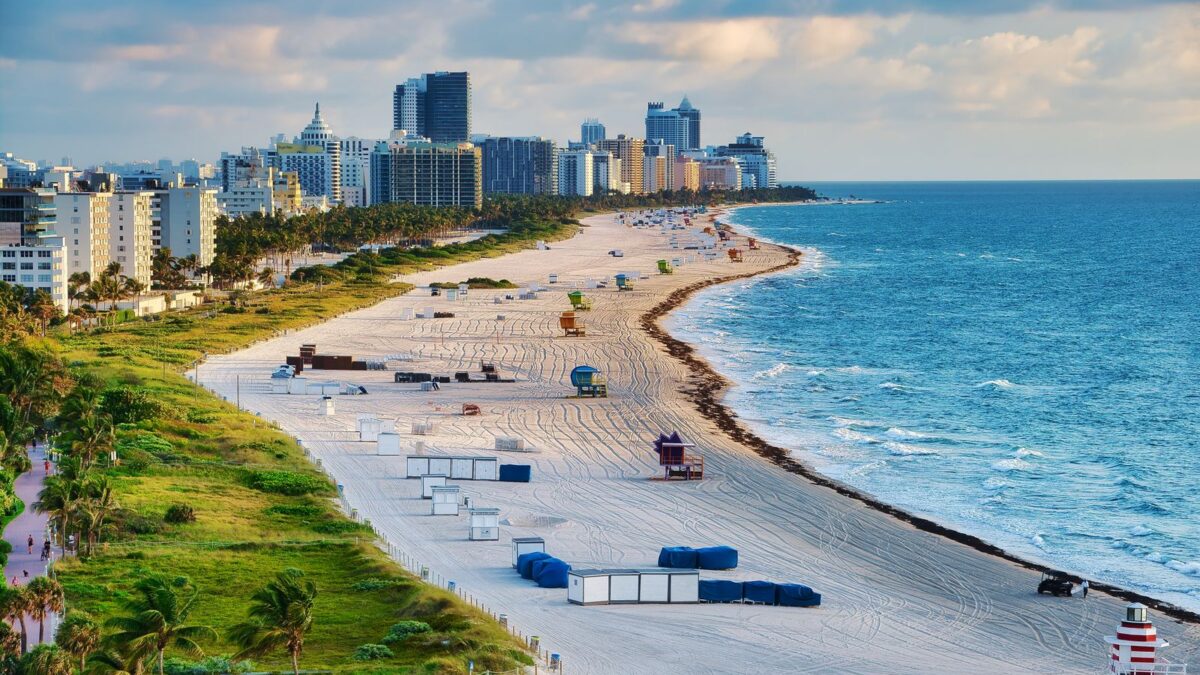
The southern tip of South Beach, “South of Fifth” is the residential, calmer end of the island: luxury condos, a Walk Score of 85, and the beach at your door. Medians run $1.2M+. You get the South Beach postcard without the Ocean Drive chaos.
8. South Beach — Most Iconic
The pastel Art Deco Historic District, Ocean Drive, and Lummus Park make South Beach the Miami the world knows. It’s tourist-facing and premium-priced (medians near $680K), but for beach lovers and hospitality workers, the energy is genuinely unmatched. Visit between November and April, when temperatures sit in the 70s–80s with low humidity.
9. Wynwood — Best for Art and Culture
Wynwood’s converted warehouses now hold the Wynwood Walls — the outdoor mural museum that anchors the district — plus craft breweries, galleries, and boutiques. Medians with neighboring Edgewater run about $520K. It’s the pick for artists, entrepreneurs, and buyers betting on continued creative-district growth.
10. Little Havana — Best Culture and Value
The cultural heart of the Cuban diaspora, centered on Calle Ocho (SW 8th Street): ventanitas serving cafecito, cigar shops, Domino Park (officially Maximo Gomez Park), and the historic Tower Theater. At roughly $430K, it’s the most affordable entry point on this list with the richest street culture in the city — and Miami-Dade down-payment assistance can cover up to $40K for eligible first-time buyers.
11. Edgewater — Best Value Near Downtown
Just north of Downtown along Biscayne Bay, Edgewater offers high-rise living at a discount to Brickell, with genuinely walkable blocks near the bayfront. Ranked among the city’s most renter-friendly areas for value near downtown, it’s the smart-money pick for young professionals who want the urban Miami lifestyle without Brickell prices.
What to Know Before Moving to Miami
Budget beyond the mortgage: 2026 data puts citywide median rent at $1,750 (studio), $2,350 (1BR), $3,100 (2BR), and $3,900 (3BR), with vacancy near 4.5% — landlords rarely negotiate. Hurricane season runs June through November, with peak risk August–October, so factor insurance into every buy-vs-rent calculation; staying fewer than five years usually favors renting. New Florida residents must get a Florida driver’s license within 30 days. Comparing Sun Belt moves? See our Phoenix neighborhoods guide and Austin neighborhoods guide for the other boomtown options.
FAQ: Moving to Miami in 2026
What is the best neighborhood in Miami for families?
Coral Gables — top-rated public schools, low crime, tree-lined streets, and a ~$1.05M median. Coconut Grove and Pinecrest are the leading alternatives.
What is the most walkable neighborhood in Miami?
Brickell, with a Walk Score around 92 — towers, restaurants, and rooftop bars in a genuinely pedestrian district. South of Fifth (85) is the walkable beach option.
Where is the most affordable place to live in Miami?
Little Havana (~$430K median) for buyers and Kendall (~$450K) for suburban value. Both offer far more space per dollar than the urban core.
Is Miami expensive in 2026?
Yes — citywide median rent is $2,350 for a 1BR and $3,100 for a 2BR in 2026 data, with vacancy near 4.5%. Insurance and closing costs make buying vs. renting a close call under five years.
What is Wynwood known for?
Street art — the Wynwood Walls outdoor mural museum anchors a district of converted warehouses, craft breweries, galleries, and boutiques.
What is Little Havana known for?
Cuban culture: Calle Ocho’s cafecito windows and cigar shops, Domino Park, live Latin music venues, and the historic Tower Theater.
When is hurricane season in Miami?
June through November, with peak risk in August–October. Factor homeowner’s insurance into any Miami housing budget.
When is the best time to visit Miami?
November through April — temperatures average 70–80°F with low humidity and minimal rain. Summer brings high 80s–low 90s with humidity and afternoon storms.
Do I need a car in Miami?
In Brickell and South Beach you can manage without one; Pinecrest, Kendall, and Key Biscayne are car-dependent. Traffic is notoriously aggressive — plan commutes carefully.