
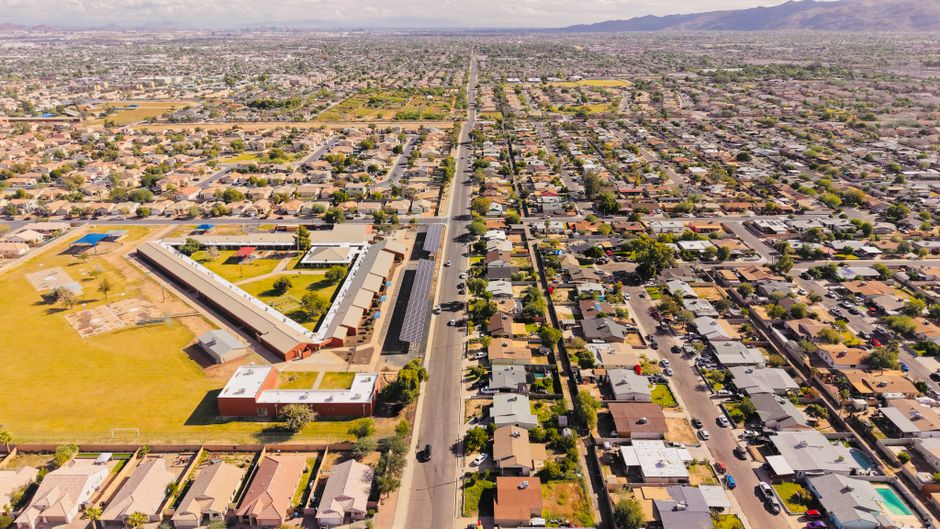
I landed in Phoenix in late October with no real plan beyond a rental car and a loose idea that the city would be flat, hot, and forgettable. It isn't. What I found instead was a sprawling metro area where neighborhoods matter more than you'd expect—not because they're trendy, but because Phoenix is genuinely fragmented. You can't just pick a hotel downtown and have the full experience. The city spreads across something like 600 square miles, and where you land shapes whether you're stuck in traffic an hour each way or whether you can actually walk somewhere.
I spent three weeks moving between five different neighborhoods, staying with friends, crashing in Airbnbs, and eating enough breakfast burritos to understand the local food culture. Phoenix isn't Vegas—it's not built for tourists to drop in and hit a strip. But it's also not hostile to visitors. It's just organized by intention. The neighborhoods I'll walk you through here each have a real personality, and they each work for different people. Pick the right one and you'll actually want to stay.
Central Phoenix for being in the middle of everything
Central Phoenix isn't one neighborhood—it's a cluster that includes Camelback Corridor, Coronado, and Encanto—but it functions like a single idea: established, tree-lined, walkable in patches. This is where you find the oldest large homes in the city, built in the 1960s and 70s, mostly single-story ranch and mid-century styles that have either been carefully maintained or gutted and rebuilt into modern versions of themselves.
I stayed near Camelback Road one week and immediately understood why people talk about it. You can walk to coffee shops, decent restaurants, and the Phoenix Art Museum. Traffic is bad but not impossible. The vibe is mixed—young families renovating old houses, established retirees who've been there 40 years, a few creeping luxury boutiques, and actual neighborhood character instead of strip mall sameness. Prices are climbing, especially near Camelback itself, but you're not paying Old Town Scottsdale money.
The catch is that "walkable" is relative in Phoenix. You're not strolling everywhere like you would in a dense city. It's more that some errands don't require a car. If you're retired or working from home and want established infrastructure without driving 30 minutes to dinner, this works. Young professionals often land here too, especially if their office is anywhere central. Families find it appealing for the schools and the sense that you're in an actual neighborhood rather than a subdivision.
Tempe for young people who don't mind college town chaos
Arizona State University basically is Tempe. I drove through on a Friday afternoon and understood immediately why this place attracts people in their twenties and thirties—it's got bars, cheap restaurants, a river walk that's occasionally crowded, and the kind of energy that comes from having 70,000 students plus recent grads living in the same few square miles.
Mill Avenue is the spine of it, lined with dive bars, taco places, thrift shops, and coffee spots that are perpetually full. The mill itself was converted into a public area with some life to it, though it's really just a long open space where people hang out. Prices are lower than you'd think for somewhere this walkable—rent in Tempe proper is maybe 20 percent cheaper than downtown or Camelback. If you're working remote or taking a gap year or just want to be around people your age, it's functional.
What it isn't: quiet. The weekends are loud, the bars stay open late, and if you need peace and space, Tempe will exhaust you. There's also this weird thing where the neighborhood is great if you're inside the 10-block radius of Mill Avenue, and increasingly suburban and car-dependent the moment you venture out. Choose your exact location carefully. And know that you're spending your nights surrounded by 23-year-olds drinking $2 margaritas—which is fine if that's your scene, less fine if it isn't.
Chandler as the default choice for families
Chandler is the suburb that actually works. It's south of the main Phoenix sprawl, planned in the way that American suburbs are planned, full of new and semi-new homes on quarter-acre lots. Schools are funded and decent. Parks are everywhere. There's a downtown-ish area around Arizona Avenue that has some actual restaurants and a slight sense of place, though it's still fundamentally a strip-mall suburb with better intention.
I spent an afternoon here and felt the demographic immediately. Young families, dual-income couples, people from the Midwest who moved to Arizona for the weather and proximity to employment. The cost of a three-bedroom home is real but not astronomical compared to coastal equivalents. You can buy or rent here and live a suburban life without feeling like you're in exurbia.
The trade-off is real: you're driving 30-45 minutes to downtown Phoenix if you want to go out. Culture, nightlife, walkable shopping—those things are in Phoenix or Scottsdale, not here. If you have kids and value schools, parks, and a stable, predictable neighborhood, Chandler is the obvious choice. If you're single, young, or want to feel like you're in a city proper, you'll feel the distance. The heat is worse here too, or feels worse, because there's less tree cover and more sprawl. But for what Chandler is trying to be, it's competent.
Old Town Scottsdale if you want walkability and money
Scottsdale is north of Phoenix proper, and Old Town is the nucleus—a pedestrian-friendly grid of galleries, high-end restaurants, resorts, and shops that actually feels like somewhere you'd walk around by choice. The architecture plays at Old West, which is both kitschy and weirdly effective. On a Thursday evening, the streets are full of people drinking wine and wandering in and out of galleries.
This is where money lives in the Phoenix metro. You'll see luxury cars, see the kind of careful landscaping that suggests a serious budget, eat at restaurants with reservations and wine lists. Golf courses are nearby. The weather is the same, but the experience is fundamentally different from anywhere else I've listed. If you're coming to Phoenix with a decent budget and want to feel like you're in a place rather than a city, Scottsdale delivers.
The problem is obvious: it's expensive. A casual dinner runs $50-80 per person. Resorts are premium-priced. Even shopping feels curated for wealth. If that's fine, or if you're retirees with a comfortable budget, Scottsdale is spectacular. The walkability is real. The restaurants are legitimately good, not just upscale. But you're paying for the privilege. Also be aware that tourists are part of the experience here—it's not local in the way Camelback or Tempe are local. You're paying to be in a refined tourist experience, which is different from paying to be in a neighborhood where tourists happen to also visit.
Downtown Phoenix for the ambitious and tolerant
Downtown has changed in the last 15 years. It's not yet a neighborhood in the traditional sense—it's more a collection of blocks with specific uses. There's a arts and culture cluster around the museums and galleries. There's a sports district around the Suns arena. There's residential mixed into commercial, and restaurants scattered through that have actual reputation beyond being downtown restaurants.
I ate at several places downtown and they were legitimately good, not condescending-to-downtown-good. But I also walked multiple blocks at night where I was the only person on the sidewalk. The infrastructure is there, but the foot traffic isn't consistent. It's not dangerous in the way older downtowns can be, but it doesn't feel fully inhabited the way a successful urban neighborhood should.
If you want to live downtown, you're making a choice that you're living in a city. You're close to culture, close to restaurants, probably working downtown or close enough that the commute is short. You're not paying as much as you would in Scottsdale or Camelback, but you're paying for the premise of living downtown rather than for the current reality of it. The neighborhood is still becoming. If you're the type who wants to be part of a place while it's growing, downtown makes sense. If you want to live somewhere fully realized and established, you're better off elsewhere.
Getting the neighborhood choice right
Phoenix is big enough that context matters more than you might expect. The difference between living in Chandler and living in Camelback isn't just price—it's fundamentally different lives. One is suburban and car-dependent, the other is older and walkable. One is designed for families with schools and parks, the other is designed for people who want to feel like they're in a city.
When I was deciding where to spend my time, I realized the mistake most visitors make is staying near the airport or picking a downtown hotel and assuming that's Phoenix. It's not. Phoenix is distributed. You need to pick a neighborhood that matches what you want from the city, because the neighborhood you choose will determine whether you spend an hour a day in traffic or whether you can actually walk somewhere. The weather is the same everywhere, but the experience is completely different.
Frequently Asked Questions
which neighborhood in Phoenix is best for families
Chandler is the top choice for families. It has good schools, numerous parks, planned neighborhoods with newer homes, and lower crime rates. The trade-off is that it's more suburban and requires driving to reach downtown Phoenix attractions and restaurants. Camelback Corridor in Central Phoenix is an alternative if you want something more established and closer to the city center, though homes are pricier.
is downtown Phoenix safe to walk around at night
Downtown Phoenix is generally safe compared to older downtowns in other cities, but foot traffic is inconsistent and many blocks feel empty after dark. Certain areas around the Arts District and near the Suns arena have more activity. It's advisable to stick to well-lit, populated blocks and use typical urban caution. The neighborhood is still developing, so safety varies by specific block.
what's the most walkable neighborhood in Phoenix
Old Town Scottsdale is the most consistently walkable with pedestrian-friendly streets, galleries, shops, and restaurants. Tempe around Mill Avenue is highly walkable and cheaper, though smaller in scope. Parts of Central Phoenix (Camelback Corridor) are walkable for errands and dining, though less so than Scottsdale. Most of Phoenix still requires a car for many activities.
where should I stay in Phoenix as a tourist
Old Town Scottsdale is the best choice for most tourists—it has walkability, restaurants, galleries, and a clear sense of place. Downtown Phoenix works if you want to be near museums and sports venues, though it's less vibrant. Tempe suits younger visitors or those on a budget. Avoid Chandler unless you have specific reasons; it's too suburban for a short visit. Your choice depends on whether you want walkability, nightlife, culture, or family activities.
Which neighborhood catches your eye?



