I pulled into Tampa on a humid Tuesday afternoon with no real plan except to avoid I-275 during rush hour. The city surprised me. It's not Miami's glitz or Orlando's chaos—it's something looser, more genuinely lived-in. Neighborhoods here actually feel like neighborhoods, not just commercial strips or subdivisions. After spending time bouncing between several of them over a few weeks, I realized that where you land in Tampa makes an enormous difference in what kind of experience you'll have.
Tampa's not huge by major city standards, but it's sprawling enough that picking a home base matters whether you're visiting for a few days or moving here permanently. The neighborhoods I kept coming back to all had something distinct—not in a forced, Instagram-way, but because they actually evolved different personalities over time. Here's what I found.
Channelside: The Tourist and Young Professional Playground
Channelside is what you get when a waterfront district actually works. It's built around the Garrison Channel with a mix of new construction, restaurants, and that particular kind of energy that makes sense for people who want convenience and scenery without moving to an actual resort. The Amalie Arena sits here, so there's always something happening—concerts, sports, events that keep foot traffic steady.
I watched families feeding fish off the docks at sunrise and professionals in business casual grabbing lunch at riverside spots. It's undeniably tourist-oriented, and the prices reflect that. A decent meal runs you north of what you'd pay two neighborhoods over. But if you're visiting Tampa for three or four days and want to feel like you're actually downtown without dealing with genuine urban grit, Channelside works. The waterfront walks are real, the sight lines are clean, and you can actually see the water from most places—which matters more than people think.
For new residents, Channelside appeals to young professionals who want walkability and don't mind paying for it. It's the kind of place where your neighbors work in finance or tech and your Friday night is probably planned. The draw is location and convenience. The tradeoff is that it feels a little constructed, a little too intentional.

Ybor City: History, Heat, and the Actual Soul of Tampa
Ybor City is where I felt Tampa actually start to make sense. It's the neighborhood with actual bones—literally built by Cuban and Spanish cigar workers in the late 1800s, and you can see it in the brick buildings, the narrow streets, and the way the whole district moves differently than anywhere else in the city. There's a texture here that Channelside doesn't have because you can't buy that kind of history.
The main strip along 7th Avenue is the obvious part—bars, galleries, vintage shops, the kind of Thursday night scene where you genuinely don't know if you're walking into a dive or a destination. That's actually good. It means it hasn't entirely calcified. During my first visit I had dinner at a sit-down Cuban restaurant tucked into a converted storefront and watched multigenerational families come in knowing exactly where they were going. The next block over, twenty-somethings were packing into a craft cocktail bar playing live music.
Ybor works for solo travelers, for artists, for people who actually want to be in a neighborhood with character rather than just consuming it. The downsides are real: parking is a nightmare, the noise can be aggressive late on weekends, and the tourist overlay is thick enough that you feel it sometimes. But underneath that, there's still something genuine. New residents who land here usually aren't trying to escape Tampa—they're trying to be part of it.
South Tampa (Hyde Park, Palma Ceia): The Settled Adult Neighborhood
South Tampa is where people go when they're done proving something. It's a collection of neighborhoods—Hyde Park and Palma Ceia are the anchors—that feel established without being boring. Tree-lined streets, older homes with actual character, yards that people actually maintain. The architecture is mostly 1920s to 1960s, which means you get Craftsman bungalows next to mid-century modest homes, most of them owned by people who've lived there fifteen years or longer.
I walked through on a Saturday morning and caught the flavor immediately: couples at coffee shops, families at parks, hardware stores and bookshops that felt actual rather than aspirational. There's a permanence here. The restaurants aren't chasing trends—they're places people go regularly. The shops are owned by people who live nearby.
This is the neighborhood for people who've moved to Tampa for stability, for families raising kids, for anyone who's tired of flux. The tradeoff is that it's older and requires some comfort with things that need work and yards that demand attention. Real estate moves here because people actually want to stay. For visitors, it's less obvious—you're not going to build a three-day itinerary around South Tampa, but if you're staying with friends here or want to understand how Tampa people actually live when they're not downtown or partying, this is it.

Downtown and The Edge District: The Emerging Professional Center
Downtown Tampa proper has been in a genuine rebuild mode, different from the premade feel of Channelside. There's actual empty space that's being filled slowly with apartments, small offices, and restaurants that seem to actually be betting on the neighborhood rather than just testing it. The Edge District, just north, is less polished—more warehouse conversions, breweries, younger creative types setting up. This is where you feel growth happening, not promotion.
I grabbed lunch at a Thai restaurant in a converted warehouse space on a Tuesday and was genuinely surprised by the quality and the fact that almost everyone there seemed local. The neighborhood still has rough patches—some blocks are clearly still transitional, some lots feel permanently empty. But that's part of why it's interesting. It hasn't closed yet.
For young professionals and artists, this is where Tampa actually offers room to do things. Rent is cheaper than Ybor City, the vibe is less settled than South Tampa, and you're actually participating in something being built rather than maintaining something existing. It's not for everyone, and it's definitely not the safe choice. But it's where I'd put my money if I were 28 and staying.
Carrollwood: The Family Suburban Anchor
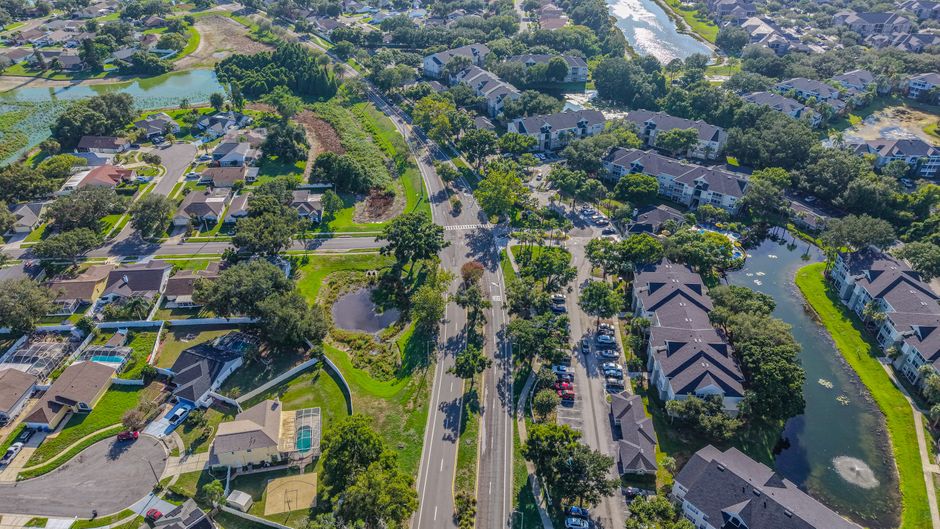
Carrollwood exists in most cities but feels particularly Tampa here—suburban without being generic, established without being old. It's where families go when they want good schools and space. The Town Center is the commercial heart, and everything radiates from there in a planned but not aggressively planned way. There are parks, the kind of development that actually left trees, and the particular demographic makeup of people who aren't trying to be anywhere else.
It's not particularly interesting for visitors. It's the neighborhood you'd visit if you were meeting friends who live there. But if you're moving to Tampa with school-age kids and a car, this is where the math works—more house for your money than South Tampa, better schools than most urban Tampa neighborhoods, and a community that actually functions. The trade-off is that you're suburban. You're not walking to dinner. You're not happening upon things.
For new residents with families, it's practical. For retirees looking for familiar suburban rhythms, it works. For solo travelers or anyone seeking authentic Tampa texture, this is a skip.

The Practical Question of Where to Actually Stay or Land
After spending time in these neighborhoods, the choice became less about which was objectively best and more about what you were actually doing in Tampa. If you're here for three days and want obvious stuff to do within walking distance, Channelside or Ybor City. You'll spend more, but you'll get density and activity. If you're considering moving and want to understand how Tampa people actually live, spend a Saturday morning in South Tampa and a weeknight evening in the Edge District. You'll learn something real.
Channelside feels designed but works well for its purpose. Ybor City has genuine character that can't be faked, along with all the complications that brings. South Tampa is stable and established without being exciting, which is exactly the point. The Edge District is promising but unfinished. Carrollwood is the practical suburban choice. None of them are bad—they're just genuinely different, which is actually rare in cities that have been built and rebuilt as aggressively as Tampa has.
I left Tampa thinking about where I'd stay if I came back, and I realized I'd probably split time between neighborhoods depending on what I was trying to do. That flexibility, that range of distinct places, is probably Tampa's best asset.