I rolled into Columbus on a Thursday afternoon expecting the usual Midwest sprawl—and that's partly what I got. But after a week walking every neighborhood that mattered, talking to bartenders and shop owners and actual residents (not just tourism boards), I realized the safety picture here is pretty normal for a mid-size city. It's not dangerous by any real measure. It's also not risk-free. The difference between a good trip and a stressful one usually comes down to knowing which blocks to navigate carefully, which times to avoid certain routes, and which parts of town genuinely don't warrant the paranoia.
Columbus isn't a city where you need to white-knuckle it. Plenty of neighborhoods are lively, well-lit, and full of people at night. The Short North, German Village, and the Arena District hum. But like any city with 900,000 people, there are blocks where foot traffic dies after dark, where property crime clusters, and where a solo traveler should use the same street sense you'd apply anywhere. I'm going to walk you through it honestly, without the pearl-clutching or the false reassurance.
The Neighborhoods That Need Your Attention
Linden and the Near Linden area, north of downtown, has historically been flagged in local crime data. It's not a war zone—you won't see it in the news every other week—but it carries a reputation among residents for property crime and has lower foot traffic in residential blocks, especially at night. If you're staying near there or passing through solo after dark, stick to well-lit main streets. During the day it's fine. Just don't assume the same ease you'd have in Short North.
The South Side, particularly around Parsons and further south toward the city limits, similarly shows up in police data as areas where solo travelers should be more cautious, especially in the evening. I didn't feel physically threatened during a daylight walk, but I also didn't linger. There are better-lit, more active neighborhoods that give you the same urban experience without the slight edge of unease.
East of downtown, around the Hilltop area and parts of East Columbus, tend to have lower foot traffic and some blocks with visible disinvestment. Again—not dangerous in an active, gang-warfare sense. But sparse, quiet, darker at night. Not where you want to be exploring solo at 11 p.m. with your phone out.

Where Solo Travelers Actually Feel Safe
Short North is the obvious play. High street, good restaurants, galleries, breweries, heavy foot traffic until late. Lots of people around means eyes on the street. The bars and boutiques keep it energized. I walked it at night multiple times and never felt off-balance.
German Village is genuinely pleasant—brick homes, tree-lined streets, a village-square feel that draws locals and visitors. It's walkable at night, busy enough to feel populated, quiet enough to feel residential. The neighborhood has a strong community identity, which usually correlates with people looking out for their block. I saw families and couples out, heard live music from bars, spotted groups of friends.
The Arena District, around Nationwide Arena and the Hilton, is the downtown entertainment core. Banks, restaurants, offices, and the Blue Jackets crowd mean foot traffic and activity. It's designed for visitors. Safe by design, more or less.
The OSU campus and surrounding neighborhoods (the Clintonville and Victorian Village areas) buzz with student and resident life. Well-lit, younger crowd, dense enough that you're not alone on sidewalks. Worth exploring.
Practical Precautions That Actually Matter
Time of day is the biggest variable. Neighborhoods that feel fine at 6 p.m. can feel dicey at midnight. This isn't unique to Columbus—it's true everywhere. But it's worth being explicit: if you're out past 10 or 11 p.m. solo, use rideshare rather than walking unfamiliar blocks, even in generally okay areas. It's not paranoia; it's pragmatism.
Stick to main thoroughfares. High Street, Broad Street, Front Street, the Short North corridor—these have better lighting, more eyes, and regular foot traffic. Side streets and residential blocks, especially in the neighborhoods I mentioned above, are where the risk calculus shifts. During the day, explore freely. At night, know your route and plan to use a ride if you're going somewhere that requires walking quiet blocks.
Be normal about valuables. Don't flash expensive gear or walk around looking distracted on your phone. Columbus isn't pickpocket central, but property crime is a thing. Keep your bag close, your wallet secure, your phone put away when you're navigating. This is baseline city sense.
Trust the vibe. If a block feels off—sparse, poorly lit, empty at an unusual hour—it probably is. There's enough interesting stuff in well-trafficked areas that you don't need to force a walk through somewhere that doesn't feel right. Solo travelers have good instincts; listen to them.
Public Transit and Getting Around
COTA (Central Ohio Transit Authority) buses are the main public transit. They're reliable, affordable, and reasonably safe during normal hours. I rode them during the day without issue. After dark, buses are still okay—they're populated, there's a driver, it's structured. But some routes serving low-traffic areas at late hours feel thinner. If you're relying on public transit at night, stick to main routes and get off in well-lit areas with people around.
Uber and Lyft are everywhere. If you're in any doubt about getting somewhere safely after dark, just order a ride. It's not expensive in Columbus, and it removes a variable. I used rideshare three or four times during my week, mostly from restaurants or bars back to my hotel. No complaints, no weirdness.
Walking during the day is the best way to see the city. Most neighborhoods are fine and feel walkable. Just apply normal urban navigation—know your route, stick to main streets in unfamiliar areas, and don't wander deep into residential blocks at dusk without a good reason.
Downtown After Dark
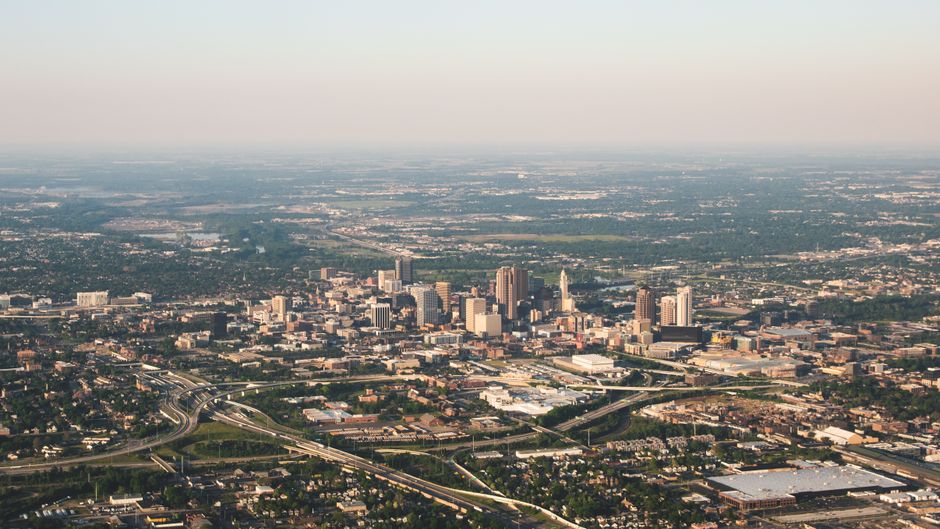
Downtown proper—the core around Capitol Square, the Statehouse, and the government buildings—is federal/state office space. During work hours it's fine, normal, busy. After 5 or 6 p.m., especially on weekends, it empties out. A solo walk through downtown at 11 p.m. on a Friday would feel sparse, even if technically safe. The light districts are Short North and the Arena District; those are where you want to be if you're out at night. Downtown itself is better for daytime exploring.
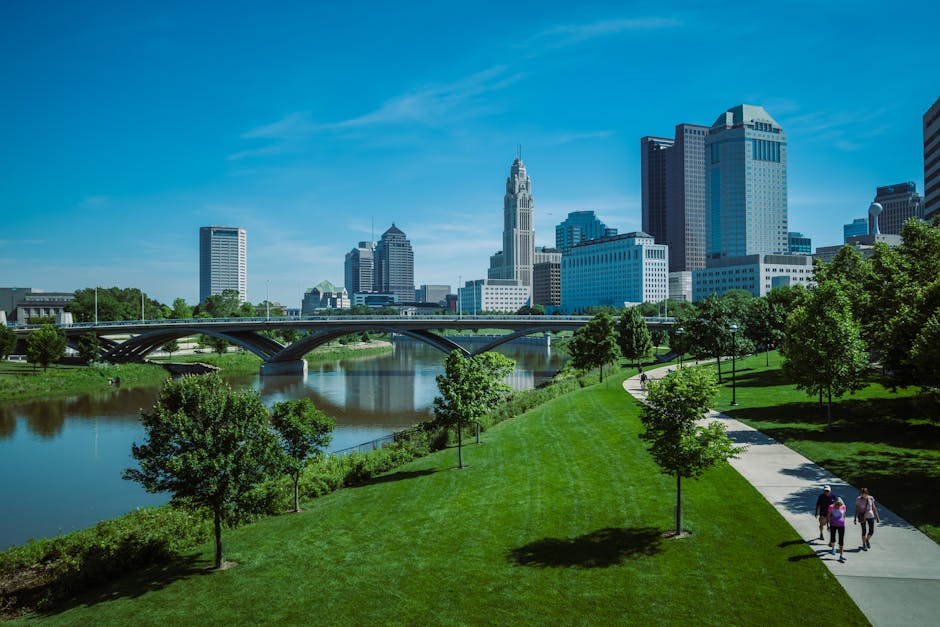
The Scioto Riverfront and Bicentennial Park are nice for daytime strolls. Good parks, open sightlines, and during daylight hours they're active and appealing. After dark, they're less populated, and a solo walk through them at night isn't smart. Stick to them in daylight.
The Bigger Picture
Columbus isn't a city where you need to be paranoid. The vast majority of neighborhoods are fine, people are decent, and the city functions normally. Solo travel here is totally doable. I felt comfortable most of the time, went out to dinner alone, explored neighborhoods, rode transit, and didn't have a single moment where I felt directly threatened.
The neighborhoods I flagged aren't off-limits or war zones. People live in them. Kids play in them. But they do require more awareness and caution, especially at night, than Short North or German Village do. That's just how cities are built—some blocks are denser, better lit, more trafficked. Some aren't. Knowing the difference is the main thing.
Use your head. Be present. Stick to main streets at night. Use transit or rideshare if you're unsure. Avoid the blocks that feel wrong. Beyond that, Columbus is a totally normal, livable city where solo travelers can have a good time without worrying constantly.
Practical Resources
The Columbus Convention & Visitor's Bureau has decent neighborhood guides if you want a more tourism-focused take. Local subreddits like r/Columbus are actually useful for real questions about neighborhoods—residents will give you honest answers about where they wouldn't walk alone at night.
If you get to Columbus, talk to people at your hotel or hostel. They know the current state of neighborhoods better than any guide. Ask a bartender which blocks to avoid after dark on the walk back to your lodging. Locals are usually straightforward about this stuff.
Keep the non-emergency police number handy (614-645-4545) if something feels wrong, though honestly you're more likely to just use your phone to call a rideshare and move on. Emergency is always 911.