
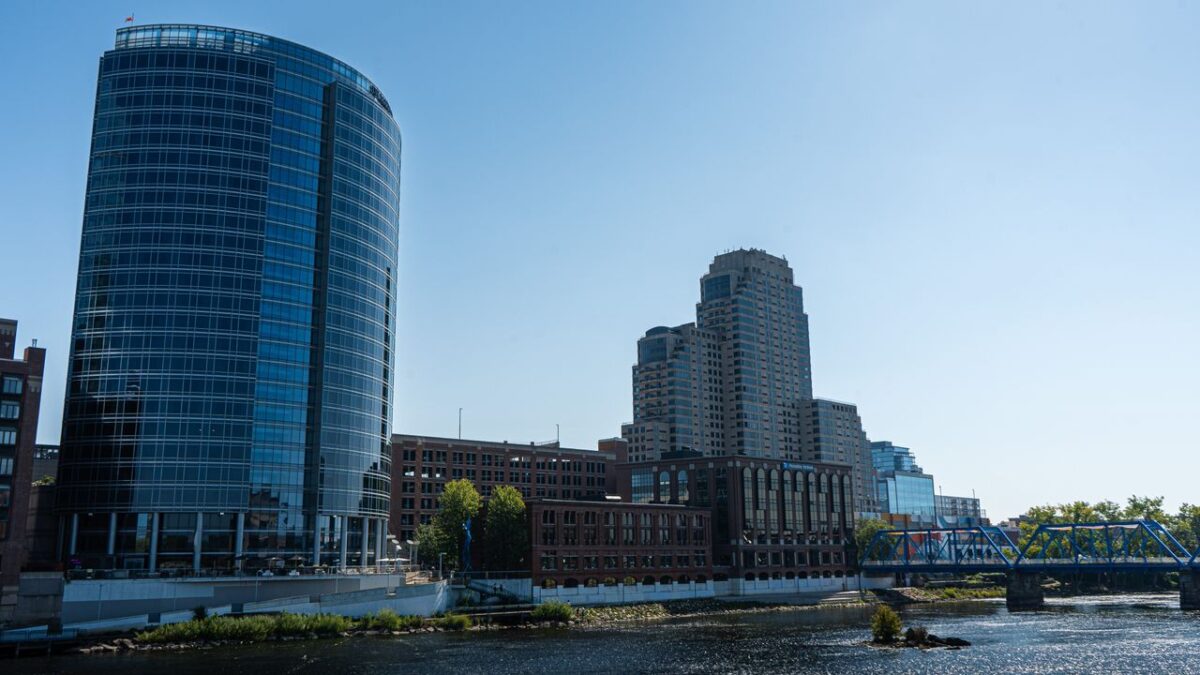
TL;DR: Grand Rapids markets itself as Michigan’s safest city, citing 2026 WalletHub rankings. But police dashboard data shows aggravated assaults climbing every year since 2023 — from 705 to nearly 780 by July 2026 — while the city admits it can’t fully account for millions spent on its flagship anti-violence program.
For years, Grand Rapids has sold itself as Michigan’s safe success story. The city’s own tourism bureau, Experience Grand Rapids, declares it “the state’s safest city, according to 2026 WalletHub rankings.” Beer City USA. Family-friendly. The responsible alternative to Detroit.
The police department’s own crime dashboard tells a different story — and it’s getting harder to ignore.
The Numbers Keep Climbing
According to figures from the Grand Rapids Police Department’s crime dashboard, reported by the Grand Rapids Herald in September 2026, aggravated assaults in the city have risen every single year since 2023. That year saw 705 aggravated assaults. Then came 737. Then 760 in 2025. And by July 2026, the city had already blown past its entire 2025 total — pushing toward 780 with nearly half the year still to go.
The pain isn’t spread evenly. The department’s East and South service areas — which cover the Third Ward — are driving the surge. Since January, the East service area logged 182 aggravated assaults, up 10.6% compared to the same period in 2025. The South area recorded 178, up 1.1%. Crimes against persons, which include sexual assault, intimidation and kidnapping, are up 8.5% in the East and 3.7% in the South.
The North and Central service areas, covering the Second Ward and downtown, actually saw assaults decrease — 10.1% and 5.6% respectively. Grand Rapids doesn’t have one crime problem. It has a tale of two cities.
Millions Spent, Receipts Missing
Here’s where the story turns from troubling to infuriating. The city’s flagship answer to the violence is Cure Violence, a program that treats violence as a public health issue, deploying unarmed “violence interrupters” — many of them former offenders — to defuse street conflicts before they turn deadly.
Cure Violence points to its own report claiming a 40% decrease in aggravated assaults within its small 15-by-19-block zone in the Third Ward between January 2021 and June 2025. But even by its own numbers, the area still logged 168 aggravated assaults from June 2024 to June 2025 — triple digits in a zone barely bigger than a neighborhood.
And the money? The city’s Office of Oversight and Public Accountability, which administers the program through a $2 million federal grant, told the Herald it doesn’t maintain a single report tracking Cure Violence spending — and would only compile one if hit with a Freedom of Information Act request. Millions of taxpayer dollars, no readily available accounting. The city commission, meanwhile, just approved another $125,000 for the program’s training and licensing.
Residents Are Done Waiting
At a recent city commission meeting, resident Cindy Hicks said what many in the Third Ward are thinking: “Cure Violence has not cured any violence, not where I live. My neighbors, there’s teens and twenties. They’re burying their friends and their family members. Every single day that I get on Facebook, there is one more person that is losing someone in their life to extreme violence.”
Mayor David LaGrand said he was “saddened” by her remarks and defended the program as “very statistically grounded” with “great promise.” Cure Violence itself posted a video rebuttal calling violence “a global issue.”
But statistics are cold comfort on blocks where the numbers keep rising. An FBI-data-based analysis puts Grand Rapids’ violent crime rate at 84% above the national average, with residents facing a 1 in 138 chance of becoming a victim of violent crime, according to Local Observer Daily.
While America Got Safer, Grand Rapids Didn’t
What makes the local trend sting more: the country as a whole just posted its largest single-year violent crime drop since 1936, per FBI 2025 data, with murders down more than 18% nationwide. FBI Director Kash Patel called it “the single largest decrease in violent crime and murder since 1937.” Baltimore’s homicides fell 60% over seven years.
Grand Rapids is swimming against that tide — and nobody at City Hall seems able to say exactly why, or exactly what the millions spent are buying.
What Happens Next
The city’s 2027 fiscal plan proposes a $2.9 million budget for the oversight office running Cure Violence. With assaults still climbing and residents openly burying neighbors, the question hanging over Grand Rapids isn’t whether the “safest city in Michigan” label still fits. It’s how long the city can keep printing it on the brochures while the dashboard says otherwise.
FAQ
Is Grand Rapids really the safest city in Michigan?
The city’s tourism bureau, Experience Grand Rapids, claims it is “the state’s safest city, according to 2026 WalletHub rankings.” WalletHub’s rankings weigh home and community safety alongside natural-disaster risk and financial safety — categories where Grand Rapids scores well. But police dashboard data shows aggravated assaults rising every year since 2023, and FBI-data-based analyses put the city’s violent crime rate 84% above the national average.
How much has violent crime risen in Grand Rapids?
Per the Grand Rapids Police Department’s crime dashboard, as reported by the Grand Rapids Herald in September 2026: aggravated assaults rose from 705 in 2023 to 737, then 760 in 2025 — and by July 2026 the city had already exceeded its entire 2025 total, pushing toward 780. The East service area is up 10.6% year over year.
What is Cure Violence?
Cure Violence is a national nonprofit approach that treats violence as a public health issue. In Grand Rapids, the city partners with the Urban League of West Michigan to deploy unarmed “violence interrupters” — often people with firsthand experience of street violence — to mediate conflicts before they escalate. The local program launched in 2021 in the Third Ward.
How much has Grand Rapids spent on Cure Violence?
That’s the controversy: the city’s Office of Oversight and Public Accountability says it doesn’t maintain a single report capturing all program expenses, and would only compile one under a Freedom of Information Act request. The program is administered through a $2 million federal grant, and the city commission recently approved an additional $125,000 for training and licensing.
Which parts of Grand Rapids are seeing the most crime?
The East and South police service areas, covering the Third Ward, are driving the increase — aggravated assaults up 10.6% and 1.1% respectively versus the same period in 2025. The North service area (Second Ward) saw a 10.1% decrease and downtown’s Central area dropped 5.6%.
How does Grand Rapids compare to Detroit on safety?
Detroit consistently ranks near the bottom nationally — 179th of 182 cities in WalletHub’s 2025 safest-cities report — while Grand Rapids ranked 82nd. But the gap is about levels, not trends: Detroit’s violence has been falling with the national trend, while Grand Rapids’ aggravated assaults keep climbing.
Is crime rising across Michigan or just Grand Rapids?
It’s mixed. FBI Detroit reported a 120% increase in arrests in 2025, with 75% tied to violent crime and gangs — but that reflects enforcement surges, not necessarily rising crime. Nationally, 2025 saw the largest violent-crime drop since 1936. Grand Rapids stands out for rising assault numbers against that improving backdrop.
What are city officials doing about it?
Mayor David LaGrand continues to back Cure Violence as “statistically grounded,” and the 2027 budget proposes $2.9 million for the oversight office. Critics, including Third Ward residents, say the program hasn’t delivered and want accountability for both the spending and the results.