
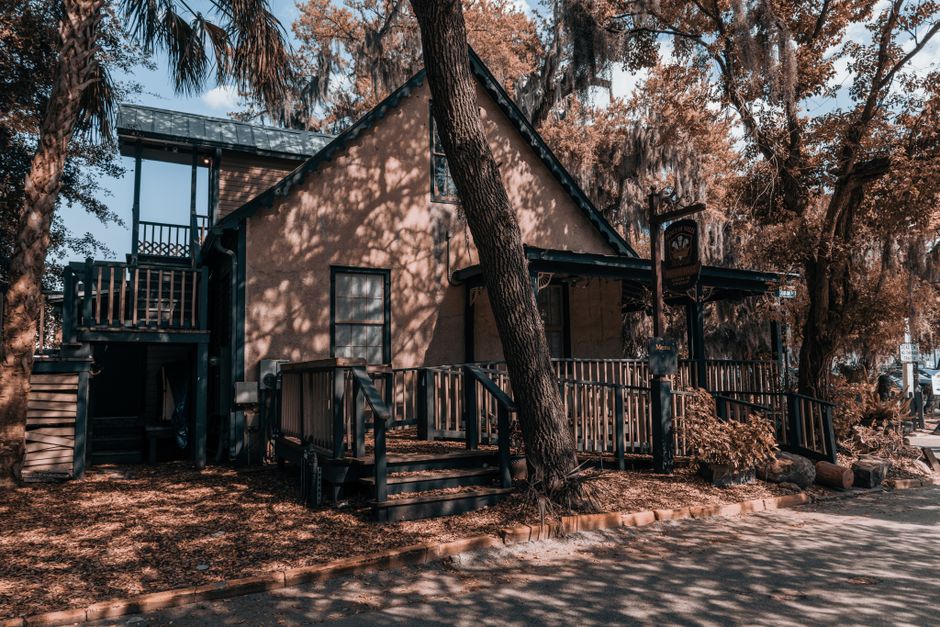
I showed up in Savannah on a Tuesday in July, humidity hitting like a wall, and the first thing I thought was: "How do people actually retire here?" Not in a bad way—more the practical kind of wondering. The moss-draped squares, the river access, the Southern pace of things—it all has obvious appeal. But I've learned that retirement isn't about romantic notions. It's about whether your money stretches, whether doctors are close, whether you can tolerate the weather for months at a time, and whether the taxes make sense on your specific situation.
I spent the better part of two weeks moving through Savannah and the surrounding areas—walking neighborhoods, talking to people who'd made the move, checking out what healthcare actually looks like beyond the marketing. What I found is messier than any listicle suggests, but also more knowable than most people think.
Here's what matters if you're thinking about retiring to Savannah.
Housing Costs: The Range Is Wide
Savannah's housing market has shifted noticeably in the last five years. The days of buying a historic cottage for under $250,000 are mostly gone. What you're looking at now depends entirely on where you land.
If you want to be in or near the Historic District—that's the squares, the riverside, the walkable core—you're spending $1,800 to $2,500 a month for a one- or two-bedroom rental, or upward of $400,000 to buy a modest place. Condos in converted warehouses around Factor's Walk run similar. Utilities are reasonable (electricity spikes in summer), but property taxes on owned homes run roughly 0.92% annually on assessed value, which is middle-of-the-road for the South.
Move outward to Midtown or the neighborhoods around Victory Drive, and the needle shifts. You'll find rentals at $1,200–$1,600 and home prices in the $250,000–$350,000 range. Less charm, more practical. If you're genuinely trying to stretch a modest retirement income, this is where the math starts working.
The suburbs—Pooler, Savannah's expanding industrial neighbor to the west, or areas near the airport—offer two-bedroom rentals around $1,000–$1,300 and homes you can buy for $200,000–$300,000. You lose walkability and lose the Savannah feeling, but you gain breathing room financially.

Healthcare: Good Regional Hospital, Scattered Specialists
Candler Hospital and Memorial University Medical Center are the anchors here. Both are legitimate regional facilities with decent cardiac, orthopedic, and general surgery departments. If you have a chronic condition that needs routine management, you'll likely be fine. I spoke with a retired couple managing Type 2 diabetes and atrial fibrillation, and they said finding endocrinologists and cardiologists was manageable, though not instant.
The real pinch comes if you need specialized care that Savannah doesn't handle well—certain cancer treatments, complex orthopedic surgery, some neurological work. Many retirees end up traveling to Jacksonville (two hours) or Atlanta (four hours) for serious stuff. That's not disqualifying, but it matters.
Medicare is accepted broadly. Costs for supplemental insurance, prescriptions, and out-of-pocket expenses track with national averages—nothing shocking, but also nothing cheap. If your retirement income is tight, budget $300–$500 monthly for healthcare costs beyond Medicare, depending on your health.
Heat, Humidity, and the Climate Question
July and August are brutal. Average highs in the 90s, humidity that makes the air feel like soup. I spent a July afternoon walking through Forsyth Park and hit that wall again around 3 p.m.—the kind of heat that stops being fun fast.
The flip side: winters are genuinely mild. Lows rarely drop below 40°F, and snow is almost nonexistent. You'll have 200-plus sunny days a year. Spring and fall are genuinely lovely.
But here's the practical part: if you're retiring to Savannah, you need to genuinely like air conditioning and screens and the rhythm of spending June–August mostly indoors or near water. Some people love this trade. Others find it suffocating. You can't negotiate around it.
Mosquitoes are real but not apocalyptic if you're disciplined about it. Use DEET-based repellent, avoid dusk walks near water during peak season, and run fans on your porch. It's doable.
Taxes: Georgia's Favorable Rules (With Caveats)
Georgia is genuinely retirement-friendly from a tax perspective, though the details matter. Social Security income is exempt from state income tax. Military pensions are exempt. This is objectively nice if either applies to you.
For investment income and retirement account withdrawals—IRAs, 401(k)s, taxable brokerage accounts—Georgia levies state income tax at rates from 5.75% to 5.85%. That's not the worst in the country, but it's not special either. Your federal tax situation remains unchanged. If you're living off investment returns or have a pension that isn't military or Social Security, don't overestimate the tax advantage.
Property tax, as mentioned, runs around 0.92% annually on assessed value. No state sales tax exemptions for seniors. I'd strongly suggest you run your specific numbers with a tax professional before making the move—what's good on paper might not be good for your particular mix of income sources.
The Historic District and Midtown: Beauty at a Price
Savannah's Historic District is why most people imagine retiring here. The squares are real, the architecture is genuine, the cafes and galleries are there. Forsyth Park isn't staged—it's where people actually go. You can walk to restaurants. You can stumble onto live music on River Street. The social scene is active: Rotary clubs, garden societies, book clubs, all the retirement social infrastructure you'd want.
But this lifestyle costs. A comfortable one-bedroom rental here runs $1,800–$2,200. A small home—say, a 1920s cottage needing maintenance—goes for $350,000–$450,000. Property taxes are the same percentage as elsewhere, but the base value is much higher.
Midtown, an hour's drive south on Bull Street and Victory Drive, is the quieter play. Less historic prestige, more mixed-use sprawl, but still very Savannah. You get decent walkability, local restaurants, similar cultural stuff, and housing costs 20–30% lower. A two-bedroom rental here might be $1,400–$1,700. Homes $250,000–$350,000. If Savannah's identity matters more to you than proximity to the most famous squares, Midtown is worth the serious look.
Pooler: Practical, Affordable, Not Charming
Pooler is west of the city, 20 minutes from downtown, and it's where the sprawl lives. Chain restaurants, big-box retail, newer subdivisions. It's not inherently bad; it's just not Savannah in the romantic sense.
For retirement on a budget, it works. A two-bedroom home goes for $220,000–$300,000. Rentals are $900–$1,300. Grocery costs are maybe 5–10% cheaper than Historic District prices just because the economy of scale is different. You're near I-95, which matters if you travel by car. Healthcare access to Candler is 25 minutes, reasonable.
The trade is obvious: you live among retirees and commuters, not in a distinctive neighborhood. There's less of the "interesting Savannah" feeling. But if your priority is financial breathing room and you're willing to drive into the city for cultural things, Pooler makes mathematical sense.
Tybee Island: Waterfront Living and Tourist Chaos
Tybee, 20 miles east on the coast, has real water access and beach life. For some retirees, that's the whole point. Rental costs are surprisingly high—$1,600–$2,000 for a modest one-bedroom because vacation rental demand drives the market. Buying is $350,000–$500,000 for something modest.
The catch is the summer tourism surge. June through August, the island gets crowded. Parking gets worse. Noise increases. The off-season is genuinely pleasant, but you'll live through months of relative chaos if you're here year-round.
If waterfront living and beach walks are non-negotiable, and your budget allows it, Tybee is viable. Otherwise, the cost premium doesn't justify it for most retirees.
The Real Bottom Line
Savannah works as a retirement destination if you align your expectations with reality. You need a budget that stretches at least $2,000–$2,500 monthly for comfortable, independent living in or near the city proper. You need to tolerate real heat and humidity. You need to accept that serious medical needs might require travel.
But if you want a walkable, culturally alive place with genuine charm, actual seasons (even if summer is rough), good access to water and nature, and reasonable cost-of-living fundamentals, Savannah is legitimately in the conversation. The tax advantages are modest but real if your income sources align. The healthcare is solid for routine care. The community is active and organized.
The mistake most people make is arriving expecting a version of Savannah that fits a retirement budget it can't actually fit. The solution is either adjust the budget, adjust the neighborhood (Pooler or Midtown instead of Historic), or adjust the expectations. All three are viable. None of them are failures.
Frequently Asked Questions
What is the cost of living for retirees in Savannah GA
A comfortable retirement in Savannah runs roughly $2,000–$2,500 monthly in total expenses if you're renting in or near the city center. Housing alone costs $1,500–$2,500 for a one- or two-bedroom, utilities add $150–$250, groceries run $300–$400, and healthcare costs $300–$500 beyond Medicare. Moving to Pooler or Midtown cuts housing costs by 20–40%, bringing the total lower. Exact costs depend heavily on which neighborhood you choose and whether you rent or buy.
Is Savannah Georgia good for retirees
Savannah is good for retirees with moderate to solid budgets who like humid summers and Southern charm. The city has genuine walkability, active social infrastructure, acceptable regional healthcare, and favorable tax treatment for Social Security and military pensions. The downsides are summer heat, occasional specialist gaps, and rising housing costs in desirable areas. It works best if you're flexible on neighborhood and realistic about climate.
What is the state income tax rate for retirees in Georgia
Georgia's state income tax ranges from 5.75% to 5.85% on earned income and investment withdrawals, but Social Security income and military pensions are fully exempt. This is moderate compared to most states but not exceptional. Your federal tax obligations are unchanged. Consult a tax professional about your specific income mix before moving.
Where do most retirees live in Savannah Georgia
Most retirees in Savannah cluster in three areas: the Historic District and Forsyth Park area for walkability and culture (higher cost), Midtown along Victory Drive for a quieter but still-Savannah feel (moderate cost), and Pooler for affordability and practical living (lowest cost but least character). The Historic District and Midtown are most popular among people prioritizing lifestyle; Pooler appeals to budget-conscious retirees.
Which neighborhood would you retire in?



