Moving to Baltimore in 2026 means buying into one of the East Coast’s last genuinely affordable big cities. Redfin pegged the citywide median sale price at $245,000 for the three months ending May 2026, up just 2.9% year over year, while Maryland REALTORS reported $266,500 for June — both far below Baltimore County’s $378,000 median. The real question is not whether you can afford Baltimore, but which of its fiercely distinct neighborhoods fits you. Here are eleven, every one with a verified price tag.
TL;DR: Baltimore’s neighborhood prices span from roughly $200,000 in Reservoir Hill to $900,000-plus in Roland Park, with most buyer-friendly picks clustering between $280,000 and $600,000. The city rewards block-level research, and buyers get negotiating power — realtor.com reports 22% of listings carried recent price cuts.
How We Picked These 11 Neighborhoods
Each neighborhood below is a real, named Baltimore neighborhood with pricing drawn from realtor.com, homes.com, Zillow, or 2026 Bright MLS data compiled by local brokerages. The list covers waterfront rowhouses, historic districts, and value plays — no filler, no invented numbers. Comparing coastal cities? See our best neighborhoods in Seattle guide for another waterfront-city breakdown.
1. Fells Point
Baltimore’s oldest waterfront playground, where 1700s Federal-style rowhouses line Thames Street and Broadway. Prices run $350,000 to $650,000, per 2026 Bright MLS data, with realtor.com putting the neighborhood median at $384,945. It packs the city’s best bar-and-restaurant density — and parking is the eternal trade-off.
2. Canton
The young-professional capital: brick rowhouses and converted industrial lofts around O’Donnell and Boston Streets, anchored by the Canton waterfront. The median sits at $399,900 per realtor.com, with Zillow’s average home value at $362,918. Expect competition on turnkey rowhouses and a social calendar built around the park.
3. Federal Hill
South Baltimore’s classic, all early-1800s brick rowhouses with roof decks and harbor views from Federal Hill Park. The 2026 price benchmark is $350,000 to $600,000 per Bright MLS data. Cross Street Market anchors the food scene; the Inner Harbor is minutes on foot.
4. Hampden
Quirky and artsy — ‘The Avenue’ (36th Street) is all indie shops, diners, and the famous holiday lights. Stone and brick mill-worker rowhouses trade from $280,000 to $500,000 per Bright MLS data, making Hampden one of the best value-for-character bets in the city. The annual HonFest still defines the calendar.
5. Mount Vernon
The city’s cultural core: Beaux-Arts and Italianate brownstones around the Washington Monument, steps from the Walters Art Museum and the central library. Realtor.com lists the median at $289,500, with a broader 2026 range of $280,000 to $550,000.
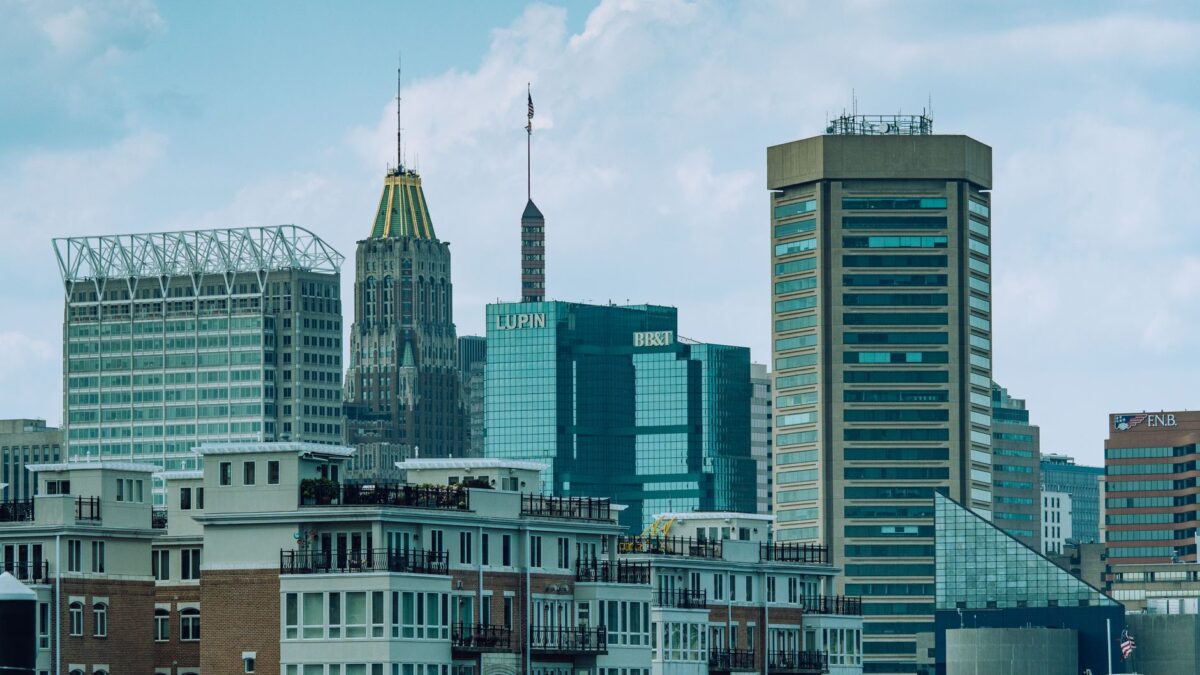
6. Inner Harbor
Yes, people actually live here — mostly in condos with skyline views over the water. The median is $499,000 per realtor.com. You trade neighborhood intimacy for centrality: Light Rail and bus routes converge within a short walk.
7. Roland Park
Early-1900s planned suburbia at its most gracious: Tudor and Colonial Revival homes along Roland Avenue, priced from $500,000 to over $900,000 per Bright MLS data. The pick for top-tier housing stock, mature trees, and a village shopping center over nightlife.
8. Locust Point
A peninsula neighborhood wrapped by the harbor, home to Fort McHenry and a tight-knit, historically working-class-turned-yuppie community. The median home price is $472,500 per homes.com. The fort’s green space gives it a small-town feel minutes from downtown.
9. Charles Village
The affordable historic pick: an early-1900s streetcar suburb of painted-lady rowhouses with a median sale price of $323,000 per homes.com. Hopkins affiliates keep it lively, at the lowest price point among the historic districts here.
10. Bolton Hill
Victorian grandeur with white marble steps and wrought-iron railings, minutes from the Maryland Institute College of Art. Prices run $300,000 to $550,000 per Bright MLS data. It flies under the radar next to Mount Vernon — exactly why value hunters love it.
11. Reservoir Hill
The sleeper pick: grand late-1800s Victorians with turrets and ornate stonework at $200,000 to $400,000 per Bright MLS data — the lowest range on this list. It is rougher around the edges than Bolton Hill, but the architecture-per-dollar ratio is unmatched in the city. Walk the exact blocks you are considering, day and night.
Moving to Baltimore: Frequently Asked Questions
What is the best neighborhood in Baltimore for newcomers?
First-timers gravitate to Canton, Fells Point, and Federal Hill for the walkable social life, or Hampden and Charles Village for character at lower prices. Families often aim for Roland Park. Your commute and budget narrow it fast — visit each finalist on a weekday evening and a weekend morning.
Is Baltimore affordable in 2026?
Yes, by East Coast standards. Redfin’s citywide median sale price was $245,000 for the three months ending May 2026, and the city runs far cheaper than Baltimore County ($378,000) or Anne Arundel County ($535,000). The trade-off: city property taxes run higher than the surrounding counties, so factor that into monthly costs.
Is Baltimore safe?
Honestly, it varies enormously by block — more than almost any city on the East Coast. Established picks like Roland Park, Canton, and Federal Hill feel very different from disinvested corridors a mile away. Check the FBI Crime Data Explorer and recent local reporting for the specific blocks you are considering, and talk to residents, not just listings.
Can you live in Baltimore without a car?
In the right neighborhood, yes. The Light RailLink runs north-south through the city, and Penn Station offers Amtrak and MARC train service to Washington, D.C. Mount Vernon, Charles Village, and the Inner Harbor are the most transit-friendly bases; outer neighborhoods like Roland Park are easier with a car.
What should first-time buyers watch out for in Baltimore?
Older housing stock means flat roofs, party walls, and aging electrical are common — get a thorough inspection. Parking is scarce in the rowhouse neighborhoods. A neighborhood’s name alone is never enough research; walk the block.
Where do young professionals live in Baltimore?
Canton, Fells Point, and Federal Hill form the young-professional triangle, with Harbor East and Locust Point close behind. Hampden draws the artsier crowd, and Charles Village attracts Hopkins-affiliated buyers on a budget.
Does Baltimore work for commuters to Washington, D.C.?
Many people do it daily. MARC Penn Line trains run from Baltimore’s Penn Station to D.C.’s Union Station, making Mount Vernon and Charles Village practical bases for D.C. commuters who want Baltimore prices.