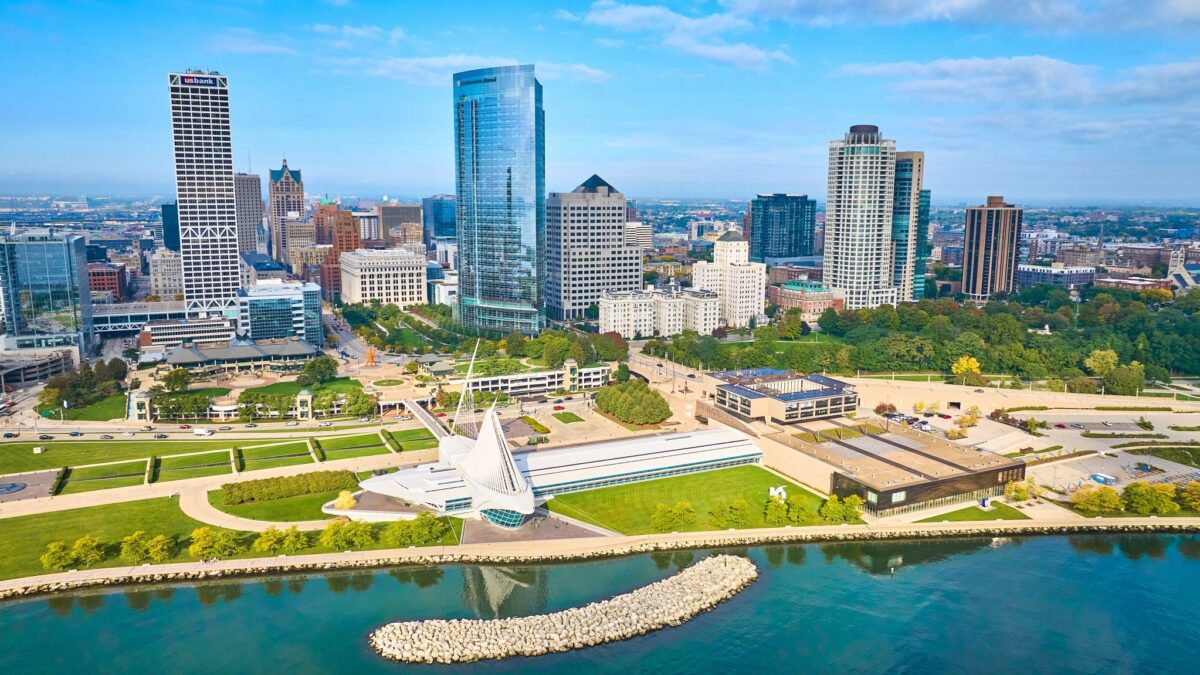
Milwaukee sits on the western shore of Lake Michigan with a personality all its own: brewing heritage, a legendary summer festival calendar, and housing costs far below its big neighbor Chicago, just 90 minutes south. The metro’s neighborhoods range from the cobblestoned Third Ward to lakefront suburbs like Shorewood and Whitefish Bay. If you’re eyeing a move in 2026, here are ten Milwaukee-area neighborhoods worth knowing.
TL;DR: Milwaukee pairs Great Lakes living with genuine affordability. The Third Ward, Bay View, and Walker’s Point lead for urban energy; Wauwatosa, Shorewood, and Whitefish Bay for suburban polish; and Greendale offers a unique historic planned-community feel. Summerfest and miles of lakefront trails anchor the lifestyle.
Third Ward
The Historic Third Ward is Milwaukee’s arts and warehouse district — cobblestone streets, converted industrial lofts, galleries, theaters, and the Milwaukee Public Market. It’s the city’s most polished urban neighborhood, popular with professionals who want a walkable, culture-rich base near downtown and the lakefront. Housing is primarily condos and loft apartments.
Bay View
On the city’s south side along the lake, Bay View is Milwaukee’s indie heart — a dense mix of craft breweries, coffee shops, record stores, and some of the city’s best casual dining on Kinnickinnic Avenue. Bungalows and duplexes dominate the housing stock. It draws young professionals and creatives who want neighborhood character without downtown prices.
Wauwatosa
Just west of Milwaukee, “Tosa” blends suburban comfort with a genuinely walkable village center — restaurants, boutiques, and a farmers market around the historic downtown. Good schools and easy freeway access make it one of the metro’s most popular family choices, with housing ranging from charming Cape Cods to newer builds.
Shorewood
Shorewood packs a lot into one square mile along the lake: dense, walkable streets, highly rated schools, and a commercial district on Oakland Avenue with restaurants and shops. Its mix of vintage apartments, duplexes, and stately homes near the lake attracts everyone from young professionals to established families. It’s among the priciest suburbs per square foot — and the most urban in feel.
Walker’s Point
Walker’s Point is Milwaukee’s late-night and LGBTQ+ hub, centered on the 2nd Street corridor of bars, clubs, and restaurants. Once purely industrial, its warehouses now hold breweries, distilleries, and loft apartments. It suits buyers who want nightlife at their doorstep and an edgy, evolving streetscape.
Riverwest
North of downtown along the Milwaukee River, Riverwest is the city’s bohemian quarter — artist studios, co-ops, dive bars, and community gardens. Housing is among the most affordable in the central city, mostly duplexes and older single-family homes. It’s the pick for artists, students, and anyone who values diversity and DIY culture over polish.
Brady Street / East Side
The East Side, anchored by Brady Street and the University of Wisconsin-Milwaukee campus, is the city’s youthful corridor — vintage shops, music venues, coffee houses, and lakefront parks like Bradford Beach. Apartments and duplexes house students and young professionals. It’s ideal for anyone who wants energy, affordability, and the lake within walking distance.
Brewers Hill
Overlooking downtown from the north, Brewers Hill is one of Milwaukee’s oldest neighborhoods, named for the 19th-century brewery workers who lived there. Restored Victorian and Italianate homes line its streets, many with skyline views. It’s a smaller, quieter historic district that appeals to preservation-minded buyers who want character close to downtown.
Whitefish Bay
North of Shorewood along the lake, Whitefish Bay is the metro’s classic upscale suburb — excellent schools, a charming Silver Spring Drive business district, and beautiful homes on tree-lined streets. Klode Park offers lakefront bluffs and beaches. It commands premium prices but delivers one of the region’s most complete suburban packages.
Greendale
Greendale is a curiosity worth knowing: one of three federally planned “greenbelt towns” built during the Great Depression, its historic downtown is a preserved time capsule of 1930s planning. Today it’s a quiet, affordable southwest suburb with good schools and a strong community feel — a genuinely unique option in the metro.
FAQ
What is the best neighborhood in Milwaukee for 2026?
For urban living: the Third Ward, Bay View, and the East Side lead. For families: Wauwatosa, Shorewood, and Whitefish Bay top the list. For value and character: Riverwest and Walker’s Point. Milwaukee’s range means there’s a strong match for most budgets.
Is Milwaukee affordable?
Yes. Milwaukee’s housing costs run well below the national average for major metros and far below Chicago, its nearest big-city neighbor. That affordability is a central part of the city’s appeal for relocators. For a national comparison, see our roundup of America’s 10 cheapest cities to live in 2026.
What is Milwaukee known for?
Brewing heritage (Miller and a thriving craft scene), Summerfest — billed as the world’s largest music festival — the Milwaukee Art Museum’s iconic Calatrava-designed brise soleil, and a deep sports culture around the Brewers and Bucks. The lakefront trail system is a defining feature of daily life.
How cold does Milwaukee get in winter?
Winters are genuinely cold, with average January highs near freezing and lake-effect snow. Locals embrace it — ice fishing, winter festivals, and the lakefront in snow are part of the culture. Good winter gear and a garage are practical investments.
Is Milwaukee a good place for young professionals?
For those prioritizing affordability and quality of life, yes. The Third Ward, Bay View, Walker’s Point, and the East Side offer dense social scenes at rents far below coastal cities, and the metro’s healthcare, manufacturing, and finance employers provide a solid job base.
Which Milwaukee suburbs have the best schools?
Whitefish Bay, Shorewood, and Wauwatosa are consistently cited among the metro’s strongest school districts. As with any district-level claim, check current state report cards from the Wisconsin Department of Public Instruction for the latest ratings.
Can you live in Milwaukee without a car?
It’s possible in the densest neighborhoods — the Third Ward, East Side, and Shorewood have walkable cores and bus connections — but most of the metro is car-dependent. Milwaukee’s bus system covers the city, though frequency varies by route.
What is Summerfest?
Summerfest is Milwaukee’s signature event: an 11-day music festival on the lakefront each summer, billed as the world’s largest, with hundreds of acts across multiple stages. It’s a centerpiece of the city’s identity and a major draw for visitors.