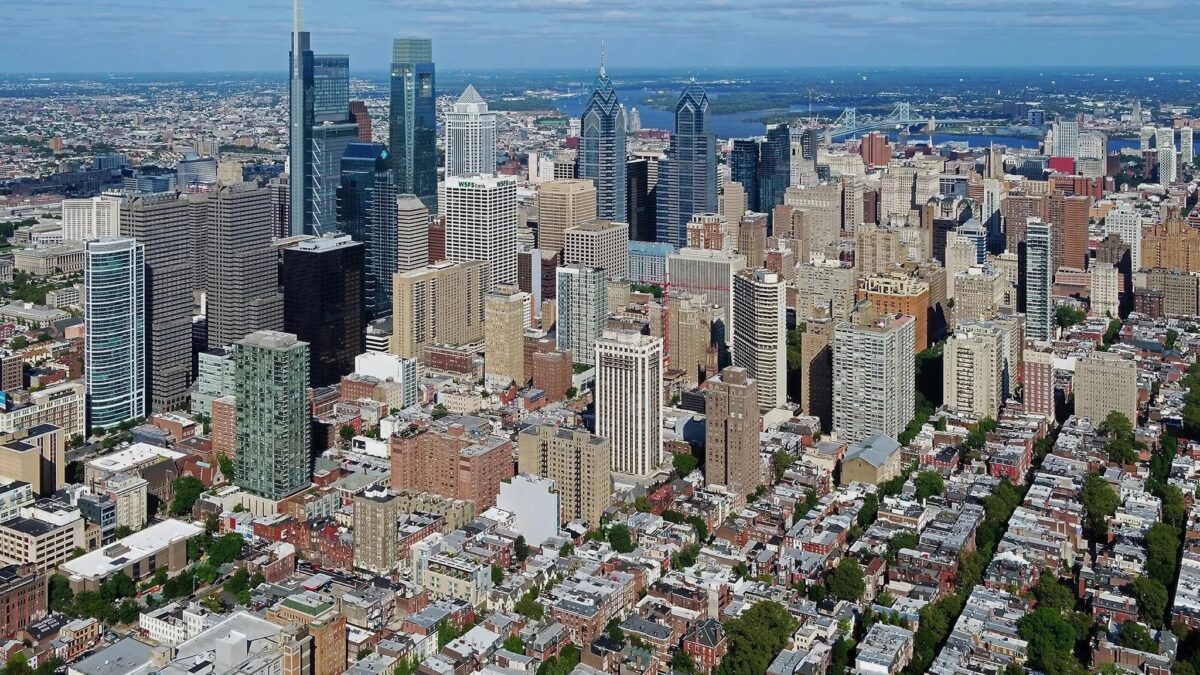
Philadelphia, the nation’s sixth-largest city, packs an enormous range of living options into its grid of brick rowhouses and leafy squares. From the old-money polish of Rittenhouse to the indie storefronts of Fishtown and the riverfront trails of Manayunk, each Philadelphia neighborhood has its own personality, price point, and pace. Whether you’re relocating for work at one of the city’s eds-and-meds employers — the University of Pennsylvania, Temple, or Drexel — or simply drawn by housing costs that run well below New York and Washington, here are ten neighborhoods worth knowing in 2026.
TL;DR: Philadelphia’s best neighborhoods for 2026 range from upscale Rittenhouse Square and historic Old City to artsy Fishtown and affordable Manayunk. Rowhouses dominate the housing stock, and most neighborhoods offer a walkable, transit-friendly lifestyle at prices well under coastal peers. Use the guide below to match your budget and vibe to the right part of the city.
Rittenhouse Square
Rittenhouse Square is Philadelphia’s most polished address — a tree-lined park surrounded by high-rise condos, luxury apartment towers, and handsome pre-war buildings. The streets around the square hold some of the city’s best restaurants, wine bars, and boutique shopping. It’s ideal for professionals and empty nesters who want a walk-everywhere lifestyle and are willing to pay Center City’s premium rents. Housing is mostly apartments and condos, with a smattering of grand historic townhouses.
Old City
Old City is where Philadelphia began, and it shows: cobblestone streets, 18th-century facades, and loft conversions in former warehouses. By day it’s a historic district anchored by the Liberty Bell and Independence Hall; by night, its galleries, bars, and live-music rooms give it one of the city’s best after-hours scenes. Expect converted lofts and condo buildings, and expect to pay for the history and the location.
Fishtown
Once a working-class riverfront district, Fishtown has become Philadelphia’s indie capital — a dense strip of coffee roasters, craft breweries, music venues, and inventive restaurants along Frankford Avenue. It’s popular with young professionals and creatives who want nightlife and culture without Center City prices. The housing stock is largely rowhouses, some beautifully renovated, others still waiting their turn.
Northern Liberties
Just north of Fishtown, Northern Liberties — “NoLibs” to locals — offers a similar energy with slightly more breathing room. Wide sidewalks, a piazza with outdoor movies and farmers markets, and a strong collection of restaurants and bars make it a favorite for thirty-somethings. Newer condo developments sit alongside classic rowhouses on quieter side streets.
Passyunk Square (South Philadelphia)
South Philly’s Passyunk Avenue corridor is the heart of one of the city’s great food streets, lined with Italian markets, Mexican taquerias, and Vietnamese pho shops reflecting decades of immigration. The surrounding blocks are classic Philadelphia rowhouses, often more affordable than neighborhoods north of South Street. It suits food lovers and buyers looking for genuine neighborhood character at a friendlier price.
University City (West Philadelphia)
Anchored by the University of Pennsylvania and Drexel, University City is the engine of the eds-and-meds economy that keeps Philadelphia growing. Victorian twins and apartment buildings house students, researchers, and medical professionals, and the commercial corridors along Baltimore and Walnut Streets keep improving. It’s the practical pick for anyone working at Penn, Penn Medicine, or the Children’s Hospital of Philadelphia.
Manayunk
Tucked along the Schuylkill River in the city’s northwest, Manayunk feels like a small town inside the big city — a Main Street of bars, restaurants, and shops, plus easy access to riverfront trails for running and cycling. Its steep hills are lined with rowhouses and converted mill buildings. It’s a strong choice for active buyers who want nightlife and outdoor access without Center City costs.
Queen Village
South of Old City along the Delaware River, Queen Village blends colonial-era homes with a relaxed, village-like commercial strip on Fabric Row. It’s quieter and more residential than Fishtown or NoLibs but still walkable to everything downtown. The housing mix of historic rowhouses and small apartment buildings appeals to professionals who want charm without the party.
Fairmount
Fairmount sits just north of the Benjamin Franklin Parkway, home to the Philadelphia Museum of Art and Fairmount Park’s miles of trails. Grand brownstones and Victorian homes line its streets, and the neighborhood’s cafes and wine bars draw a settled, professional crowd. It’s one of the most consistently desirable residential pockets in the city, with prices to match.
Chestnut Hill
At the city’s northwestern edge, Chestnut Hill is Philadelphia’s garden suburb within city limits — stone and shingle houses, a cobblestoned Germantown Avenue of independent shops, and the Wissahickon Valley’s hiking trails at its doorstep. It suits buyers who want suburban space and top-rated neighborhood schools while staying inside Philadelphia proper.
FAQ
What is the best neighborhood to live in Philadelphia in 2026?
It depends on your priorities. Rittenhouse Square and Old City lead for walkability and amenities; Fishtown and Northern Liberties for nightlife and culture; Manayunk and Passyunk Square for value; Chestnut Hill for space and schools. Philadelphia’s neighborhood diversity is one of its biggest strengths.
Is Philadelphia affordable compared to other East Coast cities?
Yes. Philadelphia’s median home price runs well below New York, Boston, and Washington, D.C., which is a major reason relocators choose it. Rents in popular neighborhoods have risen, but the city remains one of the most affordable large metros on the East Coast, according to analyses from sources like Zillow market data.
Which Philadelphia neighborhoods are most walkable?
Rittenhouse Square, Old City, and University City rank among the most walkable, with dense transit, grocery, and dining options. Fishtown, Northern Liberties, and Queen Village are also highly walkable, though car ownership is more common the farther you get from Center City.
Is Philadelphia’s public transit good?
SEPTA operates subways, trolleys, regional rail, and buses across the city. Neighborhoods near the Broad Street and Market-Frankford lines — including South Philadelphia, University City, and Fishtown — have the easiest car-free commutes. Service and reliability vary by line, so check your specific route before committing.
What is the job market like in Philadelphia?
Philadelphia’s economy leans heavily on “eds and meds” — the University of Pennsylvania, Penn Medicine, Temple, Drexel, and the Children’s Hospital of Philadelphia are among the region’s largest employers. Comcast, headquartered in Center City, anchors the corporate side, and the city’s life-sciences sector continues to grow.
Are Philadelphia rowhouses a good investment?
Rowhouses are the backbone of Philadelphia’s housing stock, and well-located ones in appreciating neighborhoods have historically held value. As with any older housing stock, budget for maintenance — many rowhouses date to the late 19th and early 20th centuries. A thorough inspection is essential.
Which neighborhoods are best for families in Philadelphia?
Chestnut Hill, Fairmount, and Queen Village are popular with families for their residential streets, parks, and school options. Many families also choose the near suburbs just across the city line, but these in-city neighborhoods offer the best blend of space and urban access.
What is there to do on weekends around Philadelphia?
Plenty. Fairmount Park offers miles of trails, the museum district anchors the Parkway, and the food scenes in Fishtown, Passyunk, and Reading Terminal Market reward exploration. For a change of scenery, see our guide to the best day trips from Philadelphia.