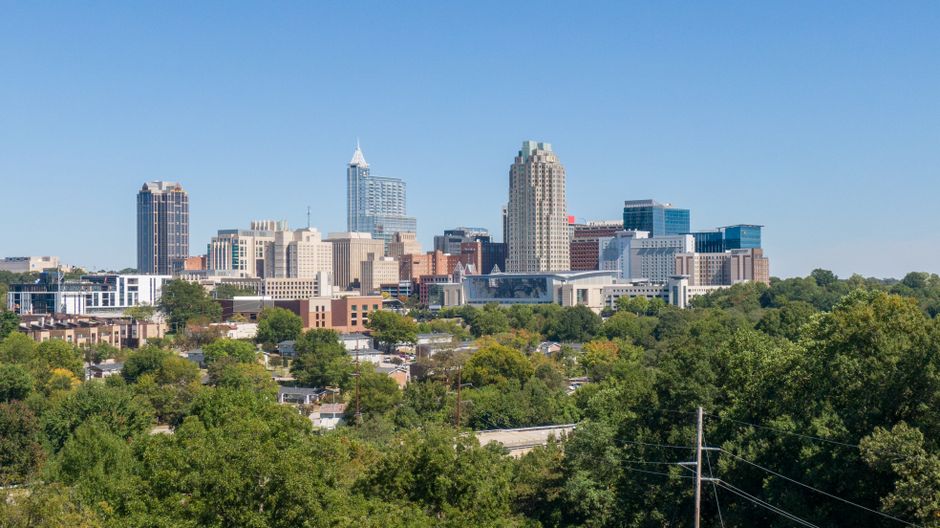
I landed in Raleigh on a Thursday with three days and no firm plans beyond checking out what everyone keeps saying about North Carolina's capital. The usual suspects were already in my notes: the museums, the parks, the restaurants that made every "best of" list. But after forty-eight hours of walking the downtown grid and talking to people at coffee counters, I'd already figured out which attractions justified the hype and which ones felt like obligations.
Raleigh's the kind of city that rewards moving past the obvious. It's not that the big-name spots are bad—most of them are actually solid—but they're also exactly what you'd expect. The real character lives in the corners most tourist guides skip over, in neighborhoods that feel lived-in rather than polished, in places where you bump into actual residents instead of wandering through another heritage center with your audioguide.
The State Museum of Natural Sciences Eats a Lot of Your Day
The North Carolina Museum of Natural Sciences on Bicentennial Plaza is a serious operation. Massive, professionally done, with a living roof and an actual swamp you can walk through indoors. Families love it. School groups love it. And if you're genuinely interested in paleontology or wetland ecosystems, you should go.
But here's the thing: it's also a time sink that doesn't always feel like it's moving. The crowds shuffle through the same exhibits whether it's Tuesday or Saturday. You can easily spend five hours there and feel like you barely scratched the surface. For a solo traveler, it can feel less like discovery and more like checking a box while standing shoulder-to-shoulder with other people checking the same box.
My take is that unless natural history is specifically your interest, you can skip it. The actual natural history—the real wetlands, the real creatures, the actual forest—is cheaper and more interesting just outside the city limits.

The North Carolina State Fair Is a Lot of People and Fried Food
If you happen to be in Raleigh in October, the State Fair is on everyone's radar. The fried Everything-on-a-Stick tradition is real, the Ferris wheel does spin, and yes, you'll eat something you probably shouldn't. It's an institution.
But it's also profoundly crowded, pricey by the time you factor in parking and admission, and honestly designed more for families with kids than solo travelers just looking to wander. The food is fun for Instagram but repetitive when you're actually eating your way through it. I watched people wait forty minutes for fried Oreos, which, fine, but seemed like a lot of waiting for a novelty that tasted like regret.
What I'd Actually Recommend Instead: Dorothea Dix Park
About a mile east of downtown sits Dorothea Dix Park, a sprawling 308-acre property that used to be a psychiatric hospital. It's still being developed as a public park, which means it doesn't have the manicured polish of Pullen Park, and that's exactly why it's better for solo exploration.
The walking trails are real—they loop through actual forest, not landscape-designer approximations of nature. There's a meadow that opens up suddenly and makes you stop. The lake has real turtles and herons, not a petting zoo. And unlike most city parks, you can actually be alone here without feeling like you're doing solo tourism wrong. Nobody's watching. Nobody's photographing their family. You're just walking.
It's free, the parking is easy, and if you're looking for an hour or three of genuine quiet in the middle of a city, this is where to find it. The trails connect, so you can make your own route. That matters when you're traveling solo.

Downtown's Restaurant Scene Is Good, But Cluttered
Raleigh's downtown has real chefs, real restaurants, and real effort behind the food. You've probably heard of some of them. They're in the guidebooks. They have long reservation lists.
And they're competitive in a way that can feel exhausting when you're eating alone. Everyone's trying hard. The plating is careful. The technique is there. But there's also an expectation of experience, a sense that you're participating in a scene rather than just eating dinner. For a solo traveler, sitting at a table while others navigate couples or group dynamics can feel isolating rather than nice.
Better approach: skip the obvious neighborhood spots during peak hours and seek out the places where actual Raleigh workers get lunch. The food is actually better, the pace is calmer, and you're not competing for a seat with people checking their phones for how their Instagram story is performing.
Try Local: Gonzo's Tacos and Places Like It
Gonzo's isn't fancy. It's not in most travel guides. It's a taco spot in Raleigh where people order at the counter and eat standing up or sitting on mismatched stools. The carnitas are legitimately good—fall-apart tender, proper spicing, the kind of thing that takes actual skill to get right. The al pastor has char marks from a real spit. And a full meal with a drink costs about thirteen dollars.
What makes it better than the fancier spots isn't the food alone—though that matters—it's the atmosphere. Nobody's there for the experience of being there. They're just eating. You can sit quietly and eat your tacos and read on your phone, and it's completely normal. The person next to you is probably a construction worker on lunch break or someone from the neighborhood. There's no performance to it.
There are versions of this all over the city—Vietnamese places in West Raleigh, a Korean spot near State campus, barbecue joints that aren't trying to be heritage attractions. These are the places that reveal what Raleigh's actually eating, rather than what it's packaged for tourists to eat.

The Art Museums Are Serious, But the Streets Have Better Work
The North Carolina Museum of Art and the Contemporary Art Museum are legitimate institutions with solid collections. If you're a regular museum-goer, go. If you're not, honestly, they're a bit formal for the payoff.
What's more interesting, at least to me, is the street art scattered across downtown and South Raleigh. There's no guided tour, no admission fee, no placard explaining the cultural significance. Just murals on warehouse walls, pieces on building sides, the kind of work that gets painted over eventually so there's actual risk to it. It's ephemeral in a way that museums, by definition, aren't. You find it by walking wrong turns and noticing what's actually happening on the sides of buildings.
The best public art in Raleigh isn't on museum walls. It's on the places where people actually live.
Pullen Park Works, But It's For a Specific Mood
Pullen Park is fine. The pond is there, the zoo is there, the amusement park is there, the gardens are there. It's objectively functional and genuinely pretty in spots, especially if you have a lawn-sitting interest and a book.
But it's also the answer to every question about where to go in Raleigh, which means it's crowded with that energy—everyone having the same idea at the same time. You can enjoy yourself, but you're doing it alongside three hundred other people having the same enjoyment.
If you want a park experience, Dorothea Dix is more interesting. If you want to sit outside and read somewhere quiet, anywhere on East Jones Street or around the Seaboard corridor has better bones and fewer people. Pullen Park isn't overrated so much as it's the default, which means it attracts defaults.
The Neighborhoods Are Where Raleigh Actually Lives
The real time for a solo traveler in Raleigh is wandering neighborhoods that don't have their own tourism board. Oak Park has actual character—older homes, tree-covered streets that look like they know something you don't. Glenwood has bars and coffee shops and a lived-in feel that downtown's still reaching for. South Raleigh, off Fayetteville Street, has record shops and thrift stores and the kind of density that makes walking around feel like you're discovering something rather than following a map.
These areas won't look like the Raleigh you saw in the tourism videos. They're messier. They're less polished. They're also where actual Raleigh people spend their time, which is worth something. You'll find conversations in coffee shops. You'll find real bookstores. You'll stumble into bars with interesting people instead of obvious tourists.
That's the Raleigh that stuck with me.