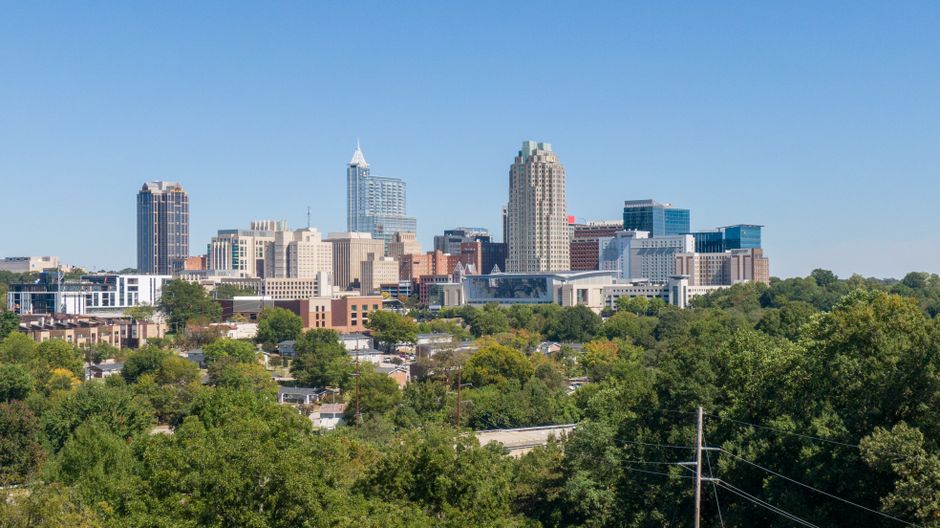
I rolled into Raleigh on a Thursday with the kind of expectations you get from scrolling through Instagram and reading every listicle about North Carolina's capital. The city's got a solid reputation—tech hub, nice restaurants, that whole Research Triangle thing. But after a week bouncing between the obvious attractions and the places people actually talk about over coffee, I've got opinions. Some of the stuff everyone visits? It's fine, but overhyped. Meanwhile, there's a whole other Raleigh happening just off the main drag that most tourists miss entirely.
This isn't about claiming some spot is objectively bad. It's about being honest about where your time is actually worth spending in a city that's still figuring out its identity beyond the hype machine.
The Overrated Pilgrimage: North Carolina Museum of Natural Sciences
The Natural Sciences Museum gets written up constantly as *the* thing to do in Raleigh. It's free, it's massive, it's got an aquarium component. On paper, it's great. The reality? It's packed, the indoor trails feel like navigating a shopping mall with taxidermied animals, and you're shoulder-to-shoulder with school groups trying to find the bathroom. The naturalistic exhibits are solid—I'm not saying the museum is bad—but it's not the transformative experience people make it out to be.
The outdoor nature trails on the property are the redeeming factor, but here's the thing: you don't need to wait in line and deal with the crowds to get a decent nature walk in Raleigh. If you're going to spend two hours here, spend ninety minutes and call it even.

The Real Alternative: Shelley Lake Park and Reedy Creek Trail
Instead, head to Shelley Lake Park on the city's northeast side. It's a proper walk around an actual lake with tree coverage that feels legitimately removed from downtown. The loop is about two miles, quiet on weekday mornings, and the restoration areas give you the feeling of being in actual ecology work, not just walking past glass cases.
If you want something more involved, Reedy Creek Trail just north of the city runs nearly five miles one-way through bottomland forest. Locals jog it. Birdwatchers come here. You might see a heron. The parking lot has space. Nobody's trying to sell you a souvenir at the end.
Downtown's Darling: Fayetteville Street's Hype Problem
Fayetteville Street is Raleigh's revitalization poster child. The city's spent serious money making it look like somewhere you'd want to be. There are festivals, it's pedestrian-friendly, and yeah, it looks nice. But walk it at different times and you realize it's performing an idea of what a downtown should be rather than naturally being one. Some days it feels like people are there because it's supposed to be the place to be, not because something genuine is happening.
The restaurant and bar density is high, which is good, but they tend to cater to the same crowd—young professionals, tourists, people looking for an Instagram moment. It's not bad, but it's not the organic neighborhood energy people talk about either.

Where the Actual Neighborhood Vibes Are: Person Street and Beyond
Go a few blocks east to Person Street and the surrounding blocks—everything south toward Martin Luther King Jr. Boulevard and the surrounding neighborhoods. This is where you'll find cheaper ramen, older bars that don't have craft cocktails that cost sixteen dollars, actual community gathering spaces rather than designed experiences. There's The Pit, which is legitimately good barbecue (not fancy barbecue, actual barbecue), and the surrounding businesses feel like they're there because people actually eat there, not because of a downtown development grant.
The energy shifts immediately. Person Street has been undergoing slow, less-promoted gentrification, but it hasn't completely homogenized yet. Independent coffee shops exist alongside longstanding neighborhood spots. It's messier, less polished, and infinitely more real than the six blocks everyone photographs.
The Big Science Draw That Mostly Bores: North Carolina Museum of Art
I know, I know—the North Carolina Museum of Art does rotating exhibitions and has some legitimately good pieces. The outdoor park with the land art installations gets praised constantly. But unless there's a specific exhibition you're actually interested in seeing, the museum itself is a fairly standard mid-sized institution. The "destination" vibe it's developed online doesn't quite match the experience. You'll spend forty minutes there whether you're genuinely interested in art or just checking a box.
The outdoor park is better than the museum itself, which tells you something. And honestly, if you're going to spend time in a North Carolina museum, that effort might be better spent elsewhere.

The Overlooked Discovery: Artspace and the Warehouse District
Artspace, just south of downtown, is where actual artists live and work. It's a converted warehouse complex that functions as both studio space and a community hub. On First Friday, you can walk through artist studios, talk to people making things, drink local beer, and get a sense of what the creative community actually does rather than what the tourism board says it does.
The whole warehouse district around there—South West Street, the surrounding blocks—has galleries, smaller studios, and events that feel less coordinated and more organic than downtown's polished efforts. A Saturday afternoon poking around Artspace gives you a better sense of Raleigh's actual contemporary culture than most official "cultural" destinations.
The Park Everyone Mentions: Pullen Park's Inconsistent Reality
Pullen Park is central, accessible, and has a lot going on—lake access, gardens, trails, a zoo. It also gets extremely crowded on weekends, the zoo can feel a bit dated, and depending on when you visit, the condition of the greenspace varies. It's not a bad park, but the hype-to-payoff ratio is off. You feel like you're supposed to spend half a day there, when an hour walk around the perimeter is probably what you actually want.
The botanical gardens within the park are genuinely nice, but they require separate admission and can feel cramped during peak times.
The Actual Green Space: Lake Wheeler and the Greenway System
Lake Wheeler, south of downtown, offers actual solitude. It's where locals take their kayaks and fishing rods. The surroundings feel less designed and more genuinely natural. The Neuse River Greenway and its branches give you miles of protected bike and walking paths without the polished feel of downtown's planned walkways.
If you rent a bike—and Raleigh has decent bike infrastructure—the greenway system lets you move through and around the city on your own terms. It's not as easy to photograph as Fayetteville Street, which is partly why it stays quiet. But that's also why it's worth the detour.
The Takeaway: Raleigh Rewards People Who Slow Down
The overrated stuff in Raleigh isn't bad. It's just designed for efficient tourism, which is inherently rushed. Museums, downtown districts, marquee parks—they all exist in a framework of "here's the thing you should see."
The underrated parts of the city are quiet, scattered, and require a little more effort to find. They're not Instagram-friendly. They don't have unified websites or hour-long documentary recaps online. But they're where Raleigh actually happens.
If you're here for a long weekend and want to hit the main spots, hit them. But save real time for the neighborhoods, the smaller parks, the places where people aren't performing tourism. That's where the city makes sense.