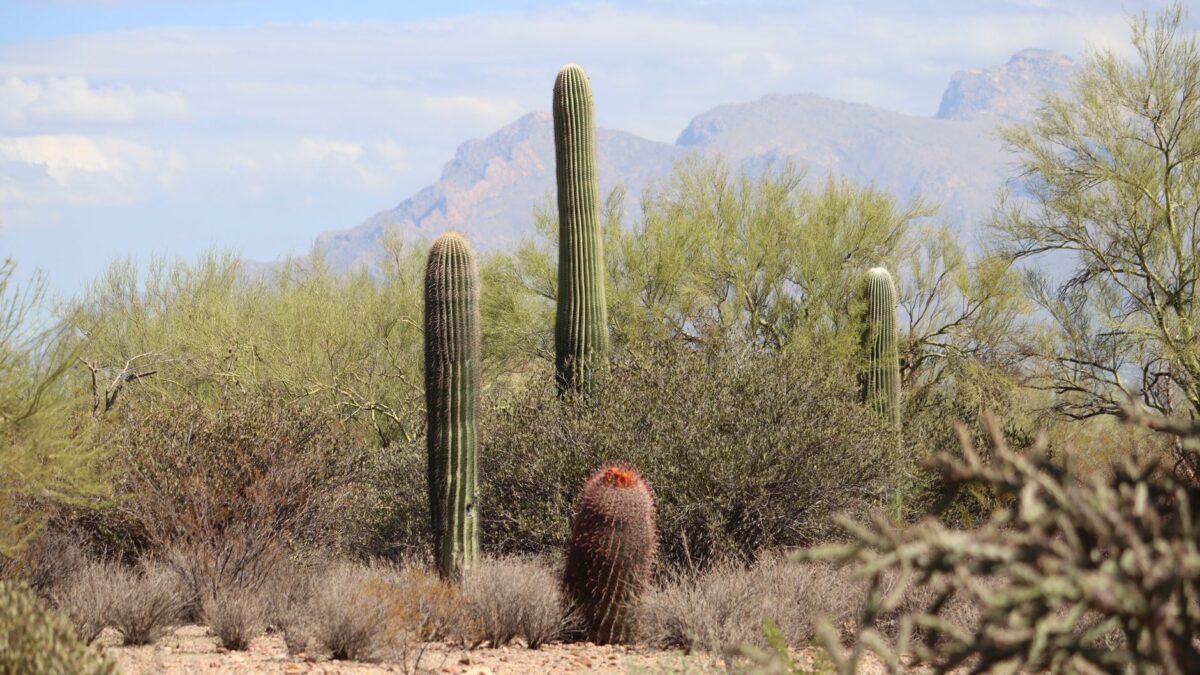
Every winter, thousands of Midwesterners trade snow shovels for saguaros — and a growing number never go back. Retiring in Tucson, Arizona has quietly become one of the West’s best-value retirement plays: a real city of nearly a million people with a $320,000 median home price, world-class desert scenery, and a tax code that leaves your Social Security check alone. But 100-degree summers and congested surface streets are real trade-offs. Here is the honest 2026 breakdown.
TL;DR: Retiring in Tucson, Arizona is worth it in 2026 if you want affordable desert living: median home around $320K, about 350 days of sunshine a year, strong healthcare anchored by Banner-University Medical Center, no state tax on Social Security, and a 2.5% flat income tax. The catches are brutal summer heat, traffic on surface streets, and winter competition with snowbirds.
Cost of living: the numbers favor Tucson
Tucson is one of the West’s genuine bargains. MarketWatch’s August 2026 retirement roundup puts the median home price at $320,000, with a retired couple’s monthly expenses running $3,700–$4,000. Redfin data from August 2026 shows a median sale price of $319,788 — well below the Arizona statewide median of $428,217. The Honest Local’s September 2026 analysis puts the median at $324K, roughly 25% below the national median, with one-bedroom rents around $1,645 — about $300 under the national figure.
Climate and outdoors: 350 days of sunshine
Tucson’s calling card is weather: roughly 350 days of sunshine a year, ringed by five mountain ranges. That translates to year-round hiking in Saguaro National Park, the Arizona-Sonora Desert Museum, and a pickleball scene so active that Udall Park functions as a regional hub for players. The trade-off, covered below, is summer — but from October through April, the climate is close to unbeatable.
Healthcare: a genuine strength
Healthcare is a top retiree concern, and Tucson delivers. Banner-University Medical Center and TMC Health anchor the system, with the former nationally recognized for geriatrics and nephrology care. MarketWatch notes the area’s high ratio of primary-care doctors per capita — a practical detail that matters more than rankings when you need an appointment. Tucson International Airport offers commercial service, with Phoenix Sky Harbor about two hours away for everything else.
Taxes: Arizona treats retirees well
Arizona is not a zero-income-tax state, but it is close to painless. The state levies a flat 2.5% income tax — among the lowest rates in the nation for states that tax income — and Social Security benefits are fully exempt. Military retirement pay is exempt too, government pensions get a $2,500 subtraction, and there is no estate or inheritance tax. IRA and 401(k) withdrawals are taxed at the 2.5% flat rate, so plan withdrawals accordingly.
Food, culture, and lifestyle
Tucson punches above its weight culturally. It was named the first UNESCO Creative City of Gastronomy in the United States, and the Mexican food scene alone justifies a scouting trip. Beyond that: a symphony orchestra, regional theater, the annual Tucson Folk Festival, and the University of Arizona’s lectures, sports, and lifelong-learning programs. This is a real city with real depth — not a golf-course suburb with a zip code.
The downsides: heat, traffic, and snowbirds
Honesty first. Summer temperatures exceed 100 degrees for weeks at a time — you will plan your life around air conditioning from June through September. Tucson also has no major freeways, so surface-street traffic is often congested. And in winter you will compete with snowbirds and University of Arizona students for restaurant tables, tee times, and rentals. Desert dust can also be an issue for anyone with respiratory sensitivities.
Where Tucson retirees actually live
If you want the full active-adult package, SaddleBrooke, about 25 miles north of Tucson in the Catalina foothills, is the flagship 55+ community: 54 holes of golf, fitness centers, pools, 150+ clubs, and homes from the $400Ks to $800Ks. Closer in, neighborhoods on the east and northwest sides offer single-story ranch homes with mountain views at prices far below comparable Phoenix areas — see our best neighborhoods in Phoenix guide for the contrast. And if you are weighing other Sun Belt options, our Knoxville retirement guide covers a greener, cheaper alternative.
Frequently Asked Questions
Is Tucson a good place to retire in 2026?
For most retirees, yes — if you can handle the heat. A $320K median home, 350 days of sunshine, strong healthcare, and no state tax on Social Security make it one of the West’s best retirement values, per MarketWatch’s 2026 analysis.
How much does it cost to retire in Tucson?
MarketWatch estimates $3,700–$4,000 per month for a retired couple in 2026. The median home price sits around $320K (Redfin, August 2026), roughly 25% below the national median.
Does Arizona tax Social Security?
No. Arizona fully exempts Social Security benefits from state income tax. Other retirement income — IRA and 401(k) withdrawals, most pensions — is taxed at the state’s flat 2.5% rate.
What is the biggest downside of retiring in Tucson?
Summer heat: temperatures top 100°F for weeks. Other drawbacks include congested surface streets (no major freeways), winter competition with snowbirds, and desert dust.
What are the best 55+ communities near Tucson?
SaddleBrooke, about 25 miles north in the Catalina foothills, is the premier 55+ active-adult community with 54 holes of golf, 150+ clubs, and homes from the $400Ks to $800Ks.
How is healthcare in Tucson for retirees?
Strong. Banner-University Medical Center (nationally recognized for geriatrics) and TMC Health anchor the system, and the area has a high ratio of primary-care doctors per capita.
Is Tucson cheaper than Phoenix for retirees?
Yes. Tucson’s median home price of about $320K runs well below Phoenix-area prices, and everyday costs trend lower — though Phoenix offers more specialists and direct flights.
When is the best time of year to visit Tucson as a retirement scout?
Visit twice: once in winter (October–April) to see it at its best, and once in August to make sure you can tolerate the summer heat before committing.