
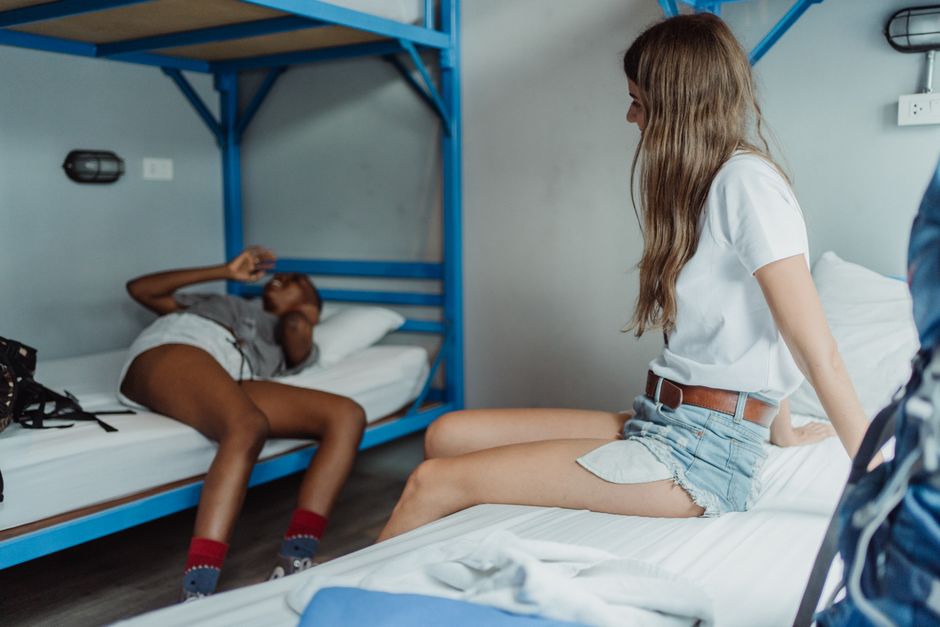
I arrived in Austin on a Thursday morning with a flexible schedule and a modest per-diem. The usual instinct—book a chain hotel and call it done—felt wrong for this city. Austin's got a particular texture to it that lives in the neighborhoods and dive bars, not in climate-controlled corridors. So I spent my first few nights bouncing between hostels on the east side, catching the rhythm of how the city actually moves. If you're doing Austin right on limited money, you're not just saving cash; you're positioning yourself to actually see the place.
The hostel scene here is solid. It's not Europe-level density, but it's way better than it was fifteen years ago. You've got real options depending on whether you want to be in the middle of the action or tucked into a neighborhood where locals still outnumber tourists. Budget motels are scattered across town too—some are legitimately fine, others require honest assessment before you commit. Extended-stay places are sometimes your best play if you're staying more than a few days, though the clientele can be mixed.
Here's what I found actually works, and what's worth the trade-off.
Hostels: Where Most Budget Travelers Cluster
The Firehouse Hostel, located on East 6th Street, is probably Austin's most established option. Dorm beds run somewhere in the $30–$45 range depending on season and how far ahead you book. The place has the bones of an actual firehouse, which gives it more character than your standard industrial-style conversion. Private rooms exist if you want to trade money for solitude—expect $60–$80 depending on size. The location is excellent if you're into the bar scene; you're literally on one of the main strips. It's also reasonable walking distance to downtown if you're the type who'll trek there for breakfast tacos at dawn. The common areas are social, which can be great or exhausting depending on your mood and who's staying that week. I'd say the cleanliness is standard hostel—clean enough, nothing fancy. The wifi works. Bathrooms are shared, obviously.
Hi-5 Hostels sits over on South Congress and operates on a similar model. Dorms in the $25–$40 ballpark, private rooms starting around $50–$70. This location is actually better if you want to feel like you're in a real Austin neighborhood rather than Tourist Central. South Congress has its own gravity—vintage shops, food trailers, younger dive bars. The hostel itself is tight and efficient, run by folks who've clearly thought about what budget travelers actually need. It's smaller than Firehouse, which means less chaotic but also fewer potential hangouts if you're traveling solo and looking to meet people.
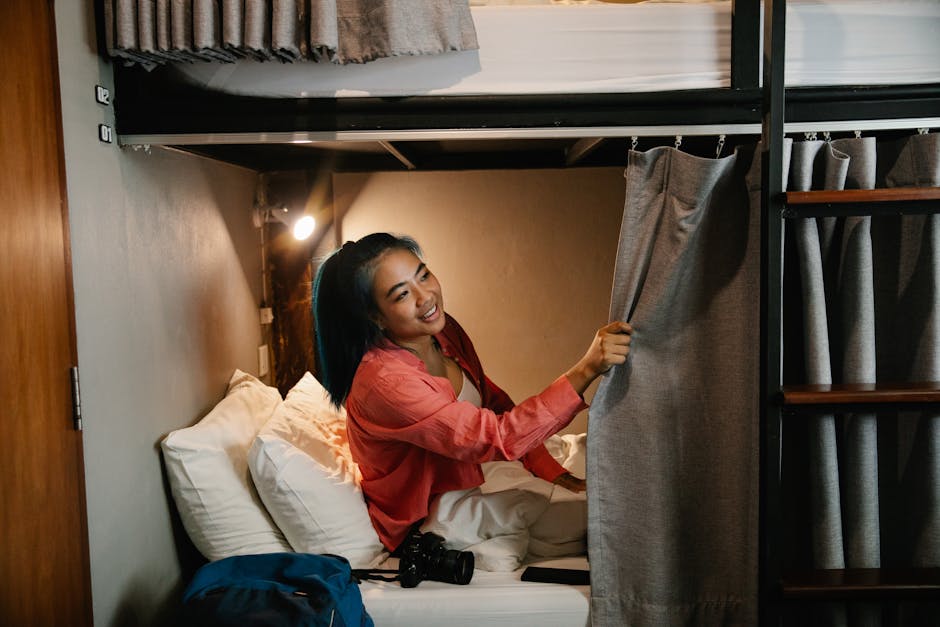
Budget Motels: The Underrated Option
Don't dismiss the motel circuit if you're staying a few nights and value a private room. There are several scattered around South Austin and off I-35 North, and while they're not Instagram-worthy, plenty are legit. You're looking at roughly $50–$70 a night for an actual private room with a bed, bathroom, and a door that locks. That's hard to beat compared to a hostel private room.
The catch is location—most budget motels aren't walking distance to anywhere interesting. They cluster near highways where land is cheap. That said, Austin's bus system (CapMetro) is better than people think for a Texas city, and rideshare is everywhere if you're willing to spend $8–$12 to get downtown. Some budget motels are cleaner and better-maintained than others; I'd recommend reading recent reviews and maybe calling ahead to ask when the rooms were last renovated. Older doesn't always mean worse, but you want to know what you're getting into. A few options have been around for decades and are institution-level clean; others feel forgotten. The difference is usually obvious from photos and recent feedback.
Extended-Stay: The Smart Play if You're Here 4+ Days
If your trip is a week or longer, extended-stay motels stop being a compromise and become your actual best deal. Places like Motel 6 or similar budget chains often drop their nightly rate significantly if you commit to a week. Suddenly you're paying $40–$55 per night instead of $60–$75, and you get a kitchenette, which means you can keep grocery staples and skip $14 breakfast tacos every single morning.
These places have the feel of somewhere people actually live, not just pass through. That's not always comfortable if you're expecting hotel service, but it's real. The clientele is mixed—some are travelers stretching their budget, others are people in permanent housing transitions. It's fine, just honest. Cleanliness varies by property and management; again, read reviews from the last month and don't assume. The advantage is privacy, kitchen access, and if you're working remote or need to settle somewhere for a few days, the psychological shift of having a real living space versus a dorm cubicle is worth something.

Neighborhood Matters: East Side vs. Downtown Proximity
Most budget hostels end up east of I-35 or down on South Congress. That's intentional—property costs mean downtown proper is impossible on a backpacker budget. The good news is that East Austin and South Congress are actually where Austin is, if you care about that.
East 6th Street and surrounding blocks have density, bars, restaurants, and that particular Austin energy. You can walk to multiple decent breakfast spots, vintage shops, and genuinely weird attractions. It's rowdier at night and younger-leaning. South Congress is different—slightly more spread out, more neighborhood feel, better for daytime wandering. Neither requires a car to function if you don't mind a rideshare now and then, and both connect to downtown via bus in under thirty minutes if you want to see Congress Avenue or the Capitol.
North Austin or areas way off I-35 East are usually cheaper, but you're genuinely isolated if you don't have a vehicle or money for constant Ubers. I'd eat the slightly higher accommodation cost to stay where things are actually happening.
Practical Notes on Booking and Timing
Austin has seasonal flux. South by Southwest (mid-March) books everything solid and jacks up prices; same with weekends around Formula 1 (October) and major music festivals. Outside those windows, you've got room to negotiate or book last-minute. Weekday rates are almost always cheaper than weekends, even in the same hostel.
Book hostels through their websites directly when possible—they sometimes undercut Hostelworld or Booking.com pricing. For motels, calling ahead is worth your time; front desks often offer discounts not listed online, especially for longer stays or if you ask politely what rates they have for that specific night. Nobody's going to volunteer a better price; you have to ask.
Season matters too. Summer (June–August) is hot and quiet; locals joke that tourists go away. That's when you can find real deals. Fall and spring are sweet spot—decent weather, more affordable than peak season, and Austin still feels active.

What Actually Saves Money Beyond Just the Room
The cheapest room doesn't matter if you're spending $20 a meal on tacos that you could've made for half that if you had kitchen access. Extended-stay places and some budget motels with kitchenettes start to look smarter when you factor in food costs over several days.
Breakfast tacos are Austin gospel, but they're $3–$4 each. Migas, barbacoa, whatever. The real deal spots are cheap, but eat three breakfasts at $3.50 each for a week and you've spent $73.50. That's money. Having a fridge and access to a grocery store (there's an HEB or Walmart near most areas) changes that math.
Also: if you're staying hostel and planning to drink on East 6th, know that happy hour exists and is real. Most bars have solid specials 4–7 p.m. Knowing that saves about half on per-drink costs versus evening pricing. That's not directly lodging savings, but it's part of the budget travel equation.
The Real Talk on Safety and Comfort
Austin's reputation for being weird and friendly is actually real in my experience, not just marketing. That said, South and East Austin can feel rough if you're not used to urban energy, especially after dark. That's not a specific warning—it's just city-normal. Bad things happen everywhere; Austin isn't unusually dangerous, but areas where budget accommodation clusters aren't, like, historic downtown neighborhoods.
Dorm hostels mean you're never truly alone, which some people find comforting and others find violating. Noise can be an issue. If you need quiet to sleep, negotiate for a private room or bring earplugs. Basic dignity.
Budget motels are your own private space, which is a real advantage for sleep and peace of mind. Front desk security and lighting vary. Read recent reviews. If a place feels off when you arrive, you can usually find somewhere else—Austin's got options.
Clean sheets, working locks, and management that responds to issues matter more than thread count or whether there's a pool.



