I rolled into Austin on a Thursday morning expecting the usual: live music venues packed with tourists, Barton Springs overcrowded by noon, food trucks with forty-minute waits. But I've learned that Austin's reputation as a "weird" city tends to attract people who then congregate in exactly the same five-block radius downtown. After three days of wandering—getting a little lost, backtracking, asking a bartender where locals actually go—the real Austin started revealing itself.
It's quieter than you'd expect. More intentional. Less neon, more neighborhood. The kind of place where you can sit on a museum bench and actually hear yourself think, or find a park that hasn't been optimized yet for Instagram. These aren't "undiscovered" by any stretch—locals know them. But they're not on the walking tours, and that makes all the difference.
Elisabet Ney Museum: A Quirky Sculptor's Time Capsule
On a tree-lined stretch of 41st Street north of downtown, this small museum occupies a nineteenth-century limestone castle built by a sculptor who basically refused to die. Elisabet Ney arrived in Austin after fleeing Europe, set up a studio in what everyone thought was a bizarre marble structure, and spent decades making work that nobody particularly wanted. The building itself is the main event—it's genuinely strange in the way old Austin felt strange, not manufactured-weird like you get on 6th Street.
I spent forty-five minutes inside, alone except for a docent who seemed genuinely excited to have a visitor. The sculptures are competent but not revolutionary; what gets you is the space itself. High ceilings, studio light, shelves of half-finished busts and sketches. It feels like she just stepped out and might return any minute. There's something about a small museum that isn't trying to be a major institution—nobody's engineered the experience, so the experience is better. Admission is modest, hours are afternoon-only, and it's the kind of place that closes between rooms if staff gets thin.
Mount Bonnell: The View Without the Wait
Everyone in Austin knows about Zilker Park. So everyone goes to Zilker. By contrast, Mount Bonnell—a limestone bluff about a hundred feet high on the city's western edge—gets steady foot traffic but nothing like the central parks. The view from the top is genuinely excellent: Congress Avenue Bridge to the east, the Hill Country rolling west, downtown poking up in the middle distance.
The trail itself is a brisk climb of maybe a quarter-mile, steep enough to feel like you're doing something but short enough that you can't use that as an excuse to skip it. The parking situation is typical Austin chaotic—narrow residential streets, limited spots—but I found a space after circling twice. Early morning is ideal if you want to avoid other people; I was up there at 6:45 a.m. with maybe three other folks and the light was exactly what you wanted it to be. No food vendors, no facilities, no retail. Just a viewpoint. Sometimes that's enough.
Bremond Block: Where Actual Austin Built Actual Homes
A cluster of restored Victorian homes in East Austin, just north of downtown, preserved largely because a single family held onto the land long enough for people to recognize its value. Walking through the Bremond Block—and you can really only walk through it; it's not a museum, just a neighborhood—gives you the strangest feeling for what this city looked like when it had some architectural coherence.
I parked nearby and spent an hour drifting past painted timber homes and stone foundations, reading the small plaques describing who built what and when. There's a café on the edge of the block, but mostly it's quiet residential space that hasn't been gentrified into cuteness. That's changing, obviously—East Austin development moves fast—but right now there's still a sense of people actually living here, maintaining these places, not performing heritage for tourists. The neighborhood is shifting, which is why going now matters; in three years it might have the vibe of a historic district theme park.

Walnut Creek Metropolitan Park: The Park That Doesn't Advertise
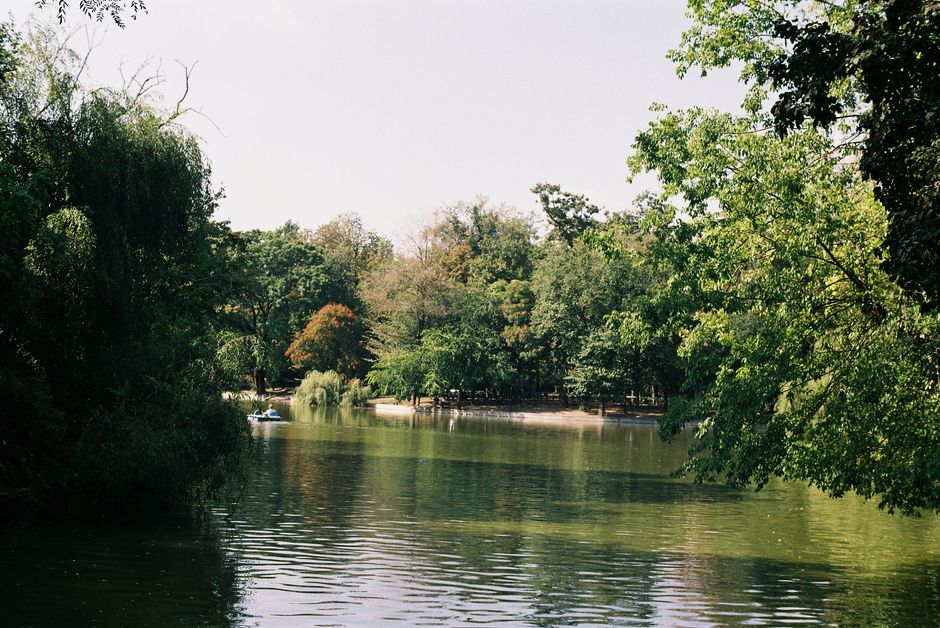
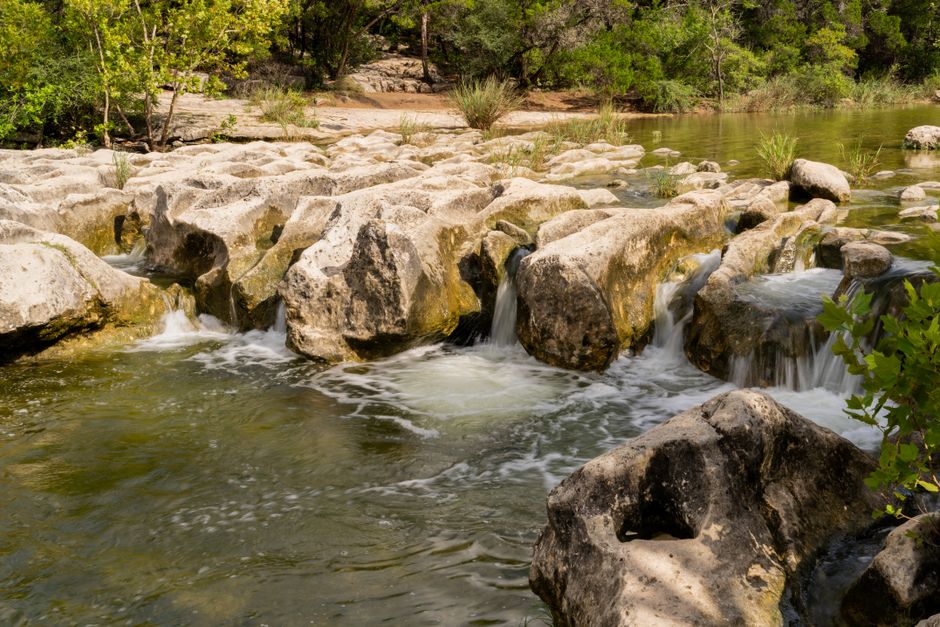
North of downtown, away from the main tourist corridor, Walnut Creek is one of those parks that exists because the city needs green space, not because anyone decided it would be picturesque. It's legitimately beautiful anyway—rolling terrain, creek access, hiking trails that actually go somewhere rather than looping back to a parking lot after three miles.
I saw three other people during an hour-long walk. There were dog walkers, a couple of cyclists. The trails are well-maintained but not manicured; there's still the feeling of actual native terrain rather than landscape design pretending to be wilderness. The creek runs year-round, or at least it was running the Thursday I visited. Parking is easy, the entrance is anonymous enough that you need to look for signage, and there are benches placed seemingly at random rather than at "scenic vistas." If you want to understand what the area looked like before Austin became Austin, this is closer to the reality than any curated historical site.
The Contemporary Austin: Where the Art World Stays Small
Two locations—one in a former car dealership on East Austin's creative corridor, one at the Jones Center in a converted 1950s ice house—run as a single nonprofit that takes contemporary art seriously without the intimidation factor of bigger museums. I dropped into the Jones Center location (a glass structure added to the original ice house, visible from the parking lot) on a quiet Friday and had nearly exclusive access to the current show.
It's the kind of place where you notice the work instead of performing the experience of noticing. The staff doesn't hover; the galleries don't feel designed to maximize dwell time. Contemporary Austin punches well above its visitor-count weight, probably because it's serving actual artists and engaged locals rather than tourists checking a box. Admission is free or donation-based depending on the location. You get the sense that if you came back next month, the institution wouldn't have changed its fundamental character to accommodate a surge in visitors.

Local Eats Not on the Tour Circuit
I spent a lot of time looking for breakfast tacos that weren't positioned as "destination breakfast tacos." Found them at a couple of strip-mall spots in North Austin where contractors were ordering by the bag and nobody was taking Instagram photos. The difference is real—when food becomes a tourist product, something gets lost in the translation. Not the quality, necessarily, but the casualness.
The same applies to barbecue or anywhere else. The places tourists are directed to have earned their reputation, but they've also earned crowds. Ask a bartender at a neighborhood place where he eats lunch. That's actually better intelligence than any review. I learned that the neighborhoods north of downtown (roughly near UT campus) and east of Congress Avenue have more density of places where people are eating for lunch rather than making a pilgrimage. This changes seasonally and by the week; part of the fun is that nothing feels permanently solved.
The Rhythm of the City Matters More Than the Checklist
Three days in Austin taught me that the city's actual texture—not the brand identity, but the day-to-day reality—is better found by accident than planned. The parks, museums, and neighborhoods I actually remembered weren't the ones I'd researched beforehand. They were the ones I found by walking a direction and seeing what was actually there.
This sounds like obvious travel advice, and it is, but it's worth saying anyway: the parts of Austin that matter most are the ones you'll discover by showing up without a full itinerary. Eat lunch where you're hungry. If a park entrance catches your eye, go in. Talk to people working at coffee shops about where they spend time. The"weird" Austin you've heard about is real, but it's not concentrated downtown—it's distributed through neighborhoods and small institutions that don't need your tourist dollar to justify their existence. That's actually what makes it worth visiting.