
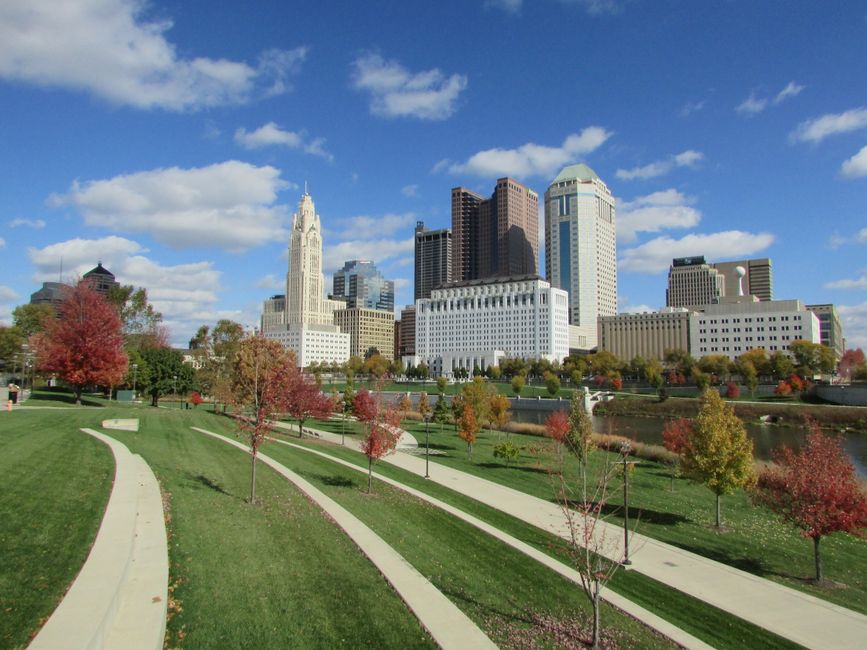
I've spent enough Friday afternoons crawling out of Columbus on I-270 to know which escapes actually work when you've got 48 hours and maybe a tank of gas that's three-quarters full. The city sits at a real crossroads—close enough to real geology, small-town charm, and actual forests that you don't need to plan a whole expedition. Some weekends I point the car south; other times I swing northwest and catch something completely different. The places below aren't theoretical. They're the ones you drive to when work lets out, when the weather finally breaks, when you need to step outside the city grid for a couple of days.
None of these require much advance booking or special gear, though timing matters. An hour drive in February looks different than the same drive in May. I've learned which destinations shine in different seasons, and where it's better to come back another time of year.
Hocking Hills: The Closest Real Wilderness
South of Logan, about 70 minutes out, the landscape drops away in ways that feel completely foreign once you're standing at the rim of Old Man's Cave or hiking the narrow trail above Ash Cave. The Hocking Hills region is less of a secret than it used to be, but that doesn't make it less worth the drive. Most people park at one of the state parks—Old Man's Cave and Ash Cave are the two that draw real crowds—and walk the gorge trails for two, maybe three hours, then head back to Columbus satisfied they've done the outdoors thing.
If you're going in warm months, go early and plan to spend the whole day. Parking fills fast, especially weekends. Bring water that actually weighs something; the trails are shadier than you'd think, but the gorges funnel sun straight down. October is genuinely the best time—the crowds thin out, the humidity breaks, and the geology pops in ways it doesn't in muggy July. Winter is possible if you don't mind wet rocks and hiking boots testing your balance. Summer weekends feel like a Columbus extension: hot, crowded, everyone tired by noon.
Stay in Logan itself if you want lodging, or grab coffee and breakfast at one of the cafés on Main Street before heading to the trailhead. The drive down US-33 is straightforward enough that you can leave Saturday morning and still catch the good light.
Chillicothe: History You Can Walk
Forty-five minutes south, Chillicothe is a very different animal. It's a former state capital with actual architecture—brick storefronts, a working river, and the kind of town square where someone sat down and planned things in 1810. Paint Creek meanders through downtown in ways that feel accidental but probably aren't. The real draw for most people is Hopewell Culture National Historical Park, just outside town, where you can walk through earthworks built by people who were doing something sophisticated here 2,000 years ago. The park is free, and the mounds are real enough that standing inside one shifts your sense of time.
Walk the downtown for lunch. The restaurants aren't fancy—you'll find burgers, sandwiches, the occasional decent taco place. But the storefronts are interesting, and there's usually an antique mall or two where you can kill an hour. The old courthouse is worth a look if it's open. Spring and fall are best; the summers get humid and there's not much shade on the mounds. Winter isn't bad either, just colder than you'd expect on open ground.
If you're interested in something more immersive, Chillicothe has museums dedicated to the region's industrial and architectural history. They're low-key operations, but the people running them actually know what they're talking about. It's the kind of place where a four-hour stop turns into the whole day because nothing feels rushed.
Granville: College Town Without the Fuss
North about 35 minutes, Granville wraps itself around Denison University in ways that make the whole place feel like a movie set where nothing too terrible happens. The village green is genuinely pretty, with bookstores, restaurants, and coffee shops that serve actual good coffee—the kind of place where you can spend a morning without apologizing. The town was planned by a land developer in the 1800s who apparently cared about aesthetics, and it shows in the street layout and the way buildings relate to each other.
Walk around. Pop into the Granville Library if it's open—it's a functional public library in a genuinely beautiful building. Have lunch at one of the places facing the green, and don't expect anything pretentious. The bookstores are worth browsing. If you're there with a partner or friend, you can stretch a morning into most of an afternoon without effort. For geeks or history people, the Granville area has some decent geology—you're starting to see the edge of some real glacial landscape changes—but you're not driving here for that.
The drive north is flat and easy, which makes it good for a quick solo trip when you want calm rather than adventure. Spring is pleasant. Summer is warm but not brutal. Fall is probably best, when the green has some color and it's not sweltering in the restaurants. Winter is fine too; the green is less lush, but the buildings look better in gray light.
Yellow Springs: Weird, Walkable, Worth Your Time
West about 30 minutes on US-40, Yellow Springs has been the place Columbus people go to feel like they've left Columbus. It's small—you can walk the main drag in maybe 20 minutes—but in that space there are vegetarian restaurants, independent bookstores, a brewery that's been there long enough to know what it's doing, and enough murals and public art that you feel like you've stepped into a different version of Ohio entirely.
The town sits at the edge of Glen Helen Nature Preserve, which has real hiking if you want it, or simple paths if you don't. You can walk from downtown into the park pretty easily. The Clifton Mill is nearby too—a restored mill with a waterfall and grounds that look staged until you realize they're just maintained. It's about ten minutes south of town and worth the short drive. Most of a weekend here breaks down as coffee in the morning, lunch at one of the vegetarian or farm-to-table places, a walk or hike, dinner somewhere good, then back to Columbus feeling like you've done something that actually happened.
Best in fair weather—spring, fall, early summer before the heat locks in. The restaurants are real destinations, so check hours and plan accordingly. There's a sense of performance to Yellow Springs that some people love and others find exhausting. For a solo trip or a couple looking for a genuine break, it works better than you'd expect for somewhere this close to the city.
Marietta and the Ohio River
This one's longer—90 minutes or so southeast toward the West Virginia border—and it scratches a different itch entirely. Marietta sits at the confluence of the Muskingum and Ohio rivers in a place that feels like it's been aging slowly for 200 years. The river is the main character. Walk along the riverfront, watch the actual industrial barges move through, and understand what meant something in transportation before interstates existed.
There's decent history here without feeling overstuffed with it. The Campus Martius Museum is a solid stop if you care about early settlement history; if not, the riverfront walk is enough. The downtown has character—real bars where people actually live there, not date-night destinations. The Ohio River Museum is genuinely interesting if you're the type to spend two hours learning about river navigation and industrial change. There's a brewing scene that's less polished than Yellow Springs but good.
The drive down is easy once you clear the exurbs. Stay overnight if you can, because the visit only works if you're not rushing. Spring and fall are best. Summer gets humid. Winter is gray but not unpleasant. It's the longest drive of these options, but if you want to feel like you've actually left Columbus and gone somewhere with its own momentum, Marietta delivers that in ways closer destinations don't quite manage.
Timing and Logistics That Actually Matter
The distance from Columbus is fine most of the time, but seasonal weather changes how these trips feel. Spring is the safest bet—everything's opening, the roads are clear, the temperatures are reasonable. Fall might be better if you hate spring rain; October especially is dry and sharp. Summer requires early starts and acceptance that you'll be hot. Winter works if you don't mind cold and accept that parks close early and some places have reduced hours.
Gas and food are straightforward. None of these trips require special preparation beyond checking park hours or restaurant schedules. Gas is cheaper closer to Columbus than in smaller towns. Bring water, especially if you're hiking. Sunscreen in summer. A light jacket in spring and fall—the shade under those gorges in Hocking Hills is colder than the parking lot.
Don't overthink this. The point of these trips is that they're close enough to happen on a whim, but far enough that they feel like an actual change of scenery. A Friday evening drive puts you anywhere on this list by nightfall. A Saturday morning departure means you're back in Columbus by Sunday evening with something real to show for the time.
Frequently Asked Questions
what is the best day trip from Columbus Ohio
It depends on what you want. Hocking Hills offers the best hiking and gorge scenery about 70 minutes south. Yellow Springs works best for a walkable small town with restaurants and shops, about 30 minutes west. Chillicothe gives you history and archaeology 45 minutes south. Granville is a pretty college town 35 minutes north. Start with what interests you most, then check drive times and weather.
how far is Hocking Hills from Columbus
Hocking Hills is roughly 70 minutes from downtown Columbus, depending on traffic and which specific trailhead you're heading to. The main parks—Old Man's Cave and Ash Cave—are all in that same general timeframe. It's close enough for a full day trip if you leave early, or easier as an overnight weekend.
what to do in Yellow Springs Ohio
Yellow Springs has a walkable downtown with bookstores, restaurants, a brewery, and public art. Glen Helen Nature Preserve is right there for hiking or simple walks. The Clifton Mill and waterfall are nearby. It's best approached as a morning-to-evening trip where you walk, eat well, and spend time outside without doing anything strenuous.
is Chillicothe Ohio worth visiting
Yes, especially if you care about history or archaeology. Hopewell Culture National Historical Park is the main draw—you can walk through earthworks built 2,000 years ago. Downtown has actual architecture and a few decent restaurants. The whole trip takes about four hours from Columbus, so it works as a solid half-day or full-day outing.
Which day trip would you take first?


