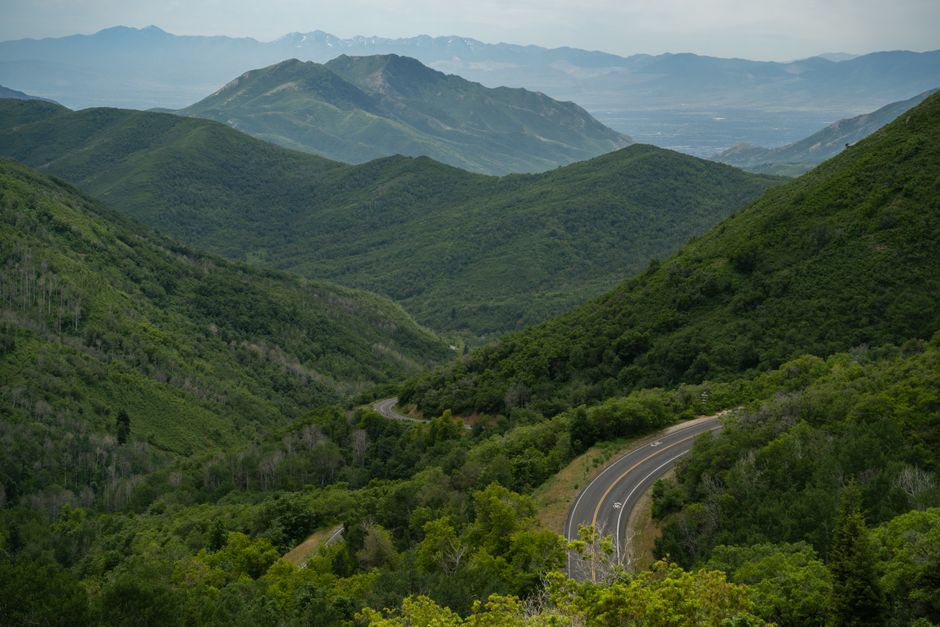
I landed in Salt Lake City on a Tuesday morning and spent the first couple days doing the obvious stuff—Temple Square, a walk around Memory Grove, coffee in the Avenues. By day three, I realized what everyone else already knows: the real appeal of being here isn't the city itself. It's what's within an hour or two in every direction.
The Wasatch Range and the Colorado Plateau are basically Salt Lake's backyard. You can wake up, drive forty minutes, and be in a completely different landscape. I've pieced together the ones that actually merit a full day trip—not the usual Instagram carousel of «best places,» but destinations where you'll have something real to do and won't feel like you're just checking boxes.
Antelope Island (35-45 minutes north)
The drive north toward the Great Salt Lake can feel monotonous until you actually get there. Antelope Island is a narrow strip of land that juts into the lake itself, and it's the kind of place that surprises you with how different it feels from the city.
The main draw is the wildlife. Bison herds roam the northern sections of the island—you can see them from the car on Scenic Loop Drive, which takes about an hour to complete at a leisurely pace. There's also pronghorn, bighorn sheep, and in spring and fall, migrating birds that attract photographers who actually know what they're doing. The visitor center has exhibits on the lake's ecology and history, which is useful if you want to understand why the water tastes like minerals and looks vaguely apocalyptic.
Bring good shoes if you want to hike—the trails range from easy walks around the beach area to more rugged paths inland. The Frary Peak trail is doable in a couple hours and offers views across the entire lake. Spring (April-May) and fall (September-October) are best; summer can be searingly hot, and the salt smell gets stronger as temperatures rise. Winter is fine if you don't mind wind.
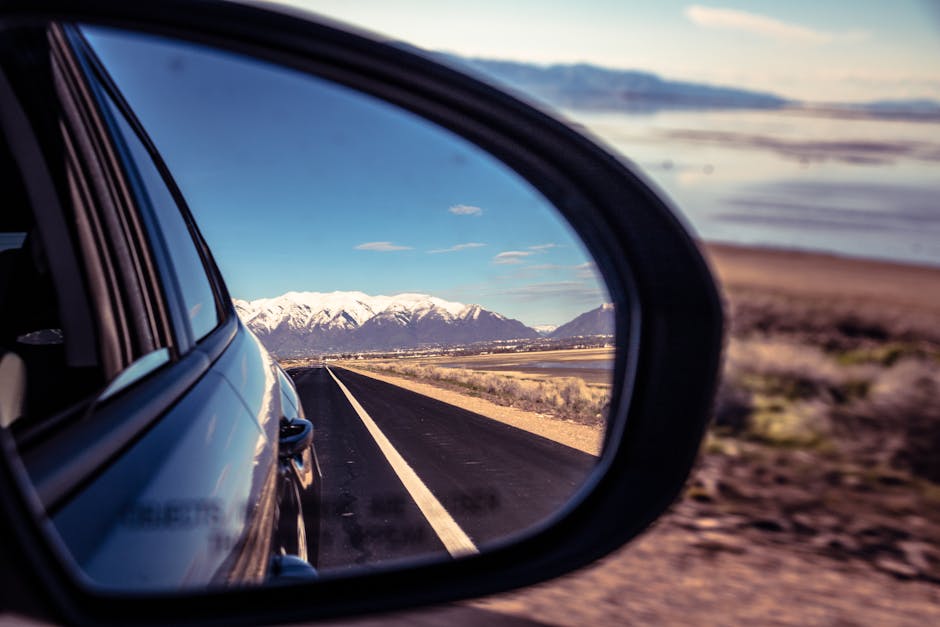
Provo and Sundance (45-75 minutes south)
Provo itself isn't a day-trip destination—it's a college town that doesn't have much to offer a visitor beyond decent restaurants and the fact that you're already there. But combine it with Sundance Resort and you've got a solid half-day itinerary.
Sundance is up Provo Canyon, about thirty minutes past the city proper. In winter, obviously, it's a ski resort. But summer and fall are when it becomes a real draw for day-trippers. The mountain air alone is worth the drive if you're exhausted by Salt Lake's urban density. There are hiking trails ranging from easy to strenuous, a fly-fishing operation on the property, and honestly just walking around the resort village is pleasant if you don't mind spending money on food. The summer concert series brings in musicians that make the ticket worth it if the timing aligns.
Better yet, drive up Provo Canyon itself. The scenic road winds alongside the Provo River and has several turnouts and easy walks. Bridal Veil Falls is a short hike from a parking area and worth the fifteen-minute scramble. Late September and early October are the sweet spot—not too hot, not crowded, aspens just starting to turn gold. Winter works too if the canyon roads are clear, but they don't always are.
Dead Horse Point State Park (115-140 minutes southeast)
This is the one that takes actual commitment, but it's worth it. You're driving toward Moab, but you stop about fifteen miles before you get there at Dead Horse Point State Park.
The payoff is views. Genuinely impressive views. The park sits on a narrow mesa with thousand-foot drop-offs on three sides, and you're looking out over the Colorado River winding through red-rock country. There's a loop drive through the park that takes an hour or so depending on how often you stop, and multiple trailheads of varying difficulty. The Rim Trail is a fairly easy walk along the mesa edge. If you've got hiking legs, the Kayenta Trail descends into the canyon itself and gives you a different perspective.
Spring and fall are obvious choices here—temperatures stay reasonable and visibility is consistently good. Summer heat in red-rock country is real; the exposed loops offer almost no shade. Winter is pleasant on the rare days when it's clear, but weather can change fast. Go earlier in the day if you can; the drive back to Salt Lake is draining if you're tired, and you'll be in decent shape to make it back before sunset. If you want to make a full day of it, grab lunch in Moab proper—it's only fifteen minutes further and has actual restaurants, unlike the park.

Little Wild Horse Canyon Loop (90-110 minutes southeast)
This one requires more local knowledge than the other trips, and it's worth it specifically for the experience rather than a single landmark. It's a slot canyon hike near Castle Valley, roughly the same distance as Dead Horse Point but a different route once you're there.
The hike itself is a loop through two narrow canyons—Little Wild Horse and Bell Canyon—and you're basically walking through sculpted red rock the entire time. At certain points the canyon walls are only a few feet apart, and water has worn the stone smooth over millennia. It's not as well-known as some of the bigger Moab attractions, which means fewer people and a quieter experience.
The drive involves heading toward Castle Valley and then some backroads that require careful navigation; use offline maps because cell service is spotty. The hike is six miles total, takes about two to three hours with photo breaks, and moderate fitness gets you through comfortably. Fall and spring are ideal; summer heat in a narrow canyon without shade is punishing. Check conditions before you go—flash flood risk is real in slot canyons after rain, even rain that fell miles away upstream.
Mirror Lake (90-100 minutes east over Parleys Canyon)
If you want to stay closer to the ski resorts and mountains, Mirror Lake offers alpine scenery without the resort infrastructure. The drive takes you over Parleys Canyon toward the Uinta Mountains and is genuinely scenic the entire way.
Mirror Lake itself is a mountain lake backed by peaks, with a reflection that's legitimately perfect on calm mornings. There's a loop trail around the lake—easy, scenic, takes about an hour to walk without rushing. Picnic spots are scattered around, and the water is cold enough that you can swim if you're either very brave or very overheated. The main parking area can fill up on weekends in summer, so go early.
The best time is late June through September when the high pass is open and snow isn't blocking access. October can work if weather cooperates. Early-morning visits mean you'll actually see a mirror reflection; by afternoon the water gets choppy. Bring real layers even in summer—elevations are high enough that temperature swings are significant.

Practical considerations before you go
Most of these drives are manageable in a regular passenger car, but some back roads (especially the approach to Little Wild Horse) benefit from higher clearance or all-terrain tires depending on recent weather. Check current conditions on the Utah State Parks website or the local ranger district office.
Cell service is spotty everywhere outside the immediate Provo-Salt Lake corridor. Download offline maps on Google Maps or AllTrails before you leave if you're hiking unfamiliar territory. Gas stations close to these areas are limited; fill up before heading out. Parking at popular sites fills up by mid-morning on weekends, particularly in summer.
Weather shifts fast in the mountains and canyon country. Rain in one spot doesn't mean rain everywhere, but it's worth checking the forecast for the specific area you're headed. Spring and fall offer the most consistently pleasant weather across all five destinations.