I landed at SLC in early March expecting the usual ski-town energy and maybe a temple tour. What I didn't expect was how quickly the city opens up once you leave the downtown corridor. Spent my first afternoon wandering the blocks around Main Street, the standard move, then realized I'd barely scratched the surface. The real Salt Lake City—the one locals actually inhabit—sits just beyond the obvious landmarks, in neighborhood pockets and up canyon roads most visitors never drive.
The first thing that struck me was how much green space exists here that isn't in the brochures. Canyons rise immediately from the city's edges. Parks hide in residential zones. And the local coffee shops, galleries, and curiosity museums? They're profitable enough to survive without tourist traffic, which means they're built for actual people with actual tastes, not for photos.
I spent three weeks here, mostly moving on foot or bus, and collected a mental map of the places I'd come back for.
Ensign Peak Park and the Overlooked Overlook
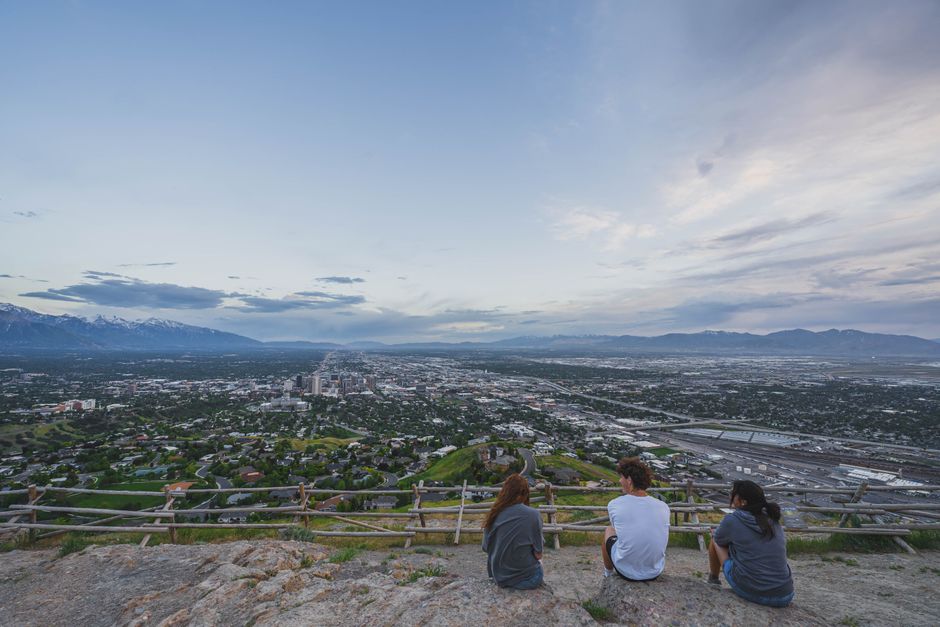
Everyone knows about the Beehive House. Nobody talks about Ensign Peak. It's a 20-minute walk from downtown, nestled between City Creek Canyon and the Capitol, and the trail is maybe two miles round trip on a day hike that gains about 350 feet. The payoff is a full panorama of the valley from a spot that's usually quiet enough to hear yourself think.
The trailhead sits in a residential area north of North Temple. There's parking, though limited. The path itself is straightforward—no scrambling, well-maintained, and open year-round. On a weekday afternoon in mid-March, I saw maybe four other people total. The views don't photograph like Snowbird or the Timp, but that's precisely why the crowds stay away. From up there, you see the real shape of the city: the grid, the sprawl, the mountains closing in on three sides. On clear days, you can spot the Salt Lake and the Wasatch Front stretching north.
Folks who live here use it as their quick outdoor fix when they don't have time for a canyon drive. It doesn't feel like a tourist attraction, which is the whole appeal.
Red Butte Garden and the Botanical Quiet
Red Butte sits on the University of Utah campus but functions almost like its own world. It's a 150-acre botanical garden that charges $15 for a day pass—steep compared to city parks, reasonable if you actually spend time there. Most tourists skip it in favor of Temple Square, which is free and famous. That's the gap worth exploiting.
I went on a Thursday morning and had entire sections to myself. The garden is organized by ecosystem—a water-wise garden, a woodland shade section, native plants from the Intermountain West. There are benches positioned to catch views. A small amphitheater. The kind of layout that rewards wandering rather than rushing. The staff seemed genuinely interested in plants, not herding visitors through.
The desert ecology section in particular stuck with me. Utah's ecosystems are hyperspecialized—plants adapted to extreme conditions—and seeing them grouped by adaptation rather than alphabetical order changed how I thought about what grows here. If you have any interest in Western botany or just need somewhere quiet to sit, this beats downtown by a mile.
The Utah Museum of Fine Arts (and the People Who Actually Go There)
The UMFA is on campus, also attached to the University of Utah, and functions as a genuine art museum rather than a monument to itself. Free admission, which means it doesn't feel like you're purchasing an experience. The building is modern and doesn't overwhelm you with scale.
I spent two hours there on a rainy day and moved through galleries at my own pace. The collection is respectable—some contemporary work, Western American pieces, a rotating series of loans from elsewhere. What mattered more was the absence of crowds. A few students, a handful of adults on weekday afternoons. No audio tours, no crowds stopping in front of every piece for a photo.
The museum also doesn't brand itself as a tourist stop, which keeps the energy centered on the actual art. There's a small cafe if you want to camp out. The surrounding campus area is also navigable without feeling touristy—you can actually walk to it through university neighborhoods and start to see how this city functions outside the downtown tourism zone.

Gilgal Sculpture Garden and the Weirdness Nobody Expects
Gilgal is a small, free sculpture garden tucked into a residential neighborhood in the Marmalade district, northwest of downtown. A local artist named Tom Gilgal accumulated sculptures, architectural fragments, and stone pieces over decades and arranged them in the backyard and adjacent lot. It's visitable by appointment or during limited open hours, which filters out the casual wanderers.
What you find is genuinely strange and personal in a way public art rarely is. Egyptian sphinxes next to stone serpents, architectural salvage repurposed as garden elements, totems and obelisks arranged without apparent system. It's not high art, and it's not meant to be. It's one person's sustained vision applied to a small plot of land. The kind of thing that would never get funding through a public arts board but survives because someone cared enough to build it.
I went on a Saturday morning and had the place nearly to myself. It changes how you think about a city when you see that kind of personal devotion to creating something unusual in a residential zone. It's cheap or free, takes 30 minutes, and reminds you that places are shaped by individuals, not just by institutions.
Liberty Park and Neighborhood Coffee Culture
Liberty Park is smaller than it sounds—roughly 20 acres in a walkable neighborhood on the east side of downtown—but it's where locals actually hang out. Trees, grass, pathways, a playground that's weathered and used rather than pristine. On weekends, you'll see people actually using it: dogs, families, people reading on benches.
The real value, though, is the surrounding neighborhood. The coffee shops and small businesses on and around South Temple aren't trying to be Instagram-friendly. There's a used bookstore that operates on genuine chaos. A vintage furniture shop that's cluttered enough to make sense. Local coffee places that make their own syrups and don't serve iced sugar water with a shot of espresso if you're not specific about what you want.
I camped out at a table for three hours one morning, working and people-watching, and nobody hassled me to move or implied I should buy something else. The parks around here feel like actual neighborhood spaces—places people return to, not places they visit. Spend a morning here and you'll see how the city functions when it's not performing for tourists.

Memory Grove Park and the Canyon That Doesn't Show Up in Guidebooks
Memory Grove is technically well-known among locals, but it doesn't feature in the major travel guides the way Snowbird or the Beehive House do. It's a canyon park about 15 minutes north of downtown, managed by the city, with trails ranging from easy walks along the creek to moderately steep climbs that gain real elevation.
I did the lower loop one morning, maybe 3.5 miles, following a creek through oak and cottonwood. There's water, which matters in the desert. The air moves differently in a canyon—cooler, more complex. The trails get busy on weekends, sure, but midweek they clear out significantly. The creek is sometimes dry depending on the season, but even when it's running, it's a quiet place to move through.
The park connects to the larger foothills system if you want to gain elevation. It's close enough to the city that you can get there in a short drive, far enough that it feels removed from urban noise. This is the kind of place locals bring visiting friends when they want to show them something real about the landscape without driving an hour to a named canyon.
The Ephemeral Neighborhoods Beyond Downtown
Salt Lake City's real character lives in neighborhoods most tourists never reach. The 9th South corridor has become a collection of independent shops and restaurants that don't depend on hotel traffic. The Avenues neighborhood on the east side is a grid of streets climbing into the foothills, lined with old houses and local businesses that have survived by serving the people who live there.
I walked through both and found the rhythm of a place that functions independent of tourism infrastructure. Grocery stores for locals, not gift shops. Restaurants that were busy at lunch because office workers actually went there. Parks and neighborhood gathering spots that made sense for the people who lived nearby.
This is the hardest part of a city to grasp as a visitor, but also the most valuable. You can't manufacture the authenticity of a neighborhood where people actually live their lives. You just have to walk through it, sit down somewhere, and watch how things work.
Getting Off the Main Drag
The real lesson from wandering Salt Lake is that tourist infrastructure and actual city life exist almost in parallel. Temple Square will always be there, always be famous, always be crowded. That's fine. It's part of the city.
But the city that actually sustains itself—the one where people work, eat, go on weekends, take their kids to parks, build gardens and sculptures in their yards—sits just beyond the outlined walking tours. It takes minimal effort to find. Walk north from downtown instead of south. Follow a canyon into the foothills. Stop at a coffee shop in a neighborhood you haven't heard of. Sit in a park and watch who shows up.
Salt Lake City opens up quickly if you get off the main sequence.