I showed up in Charlotte on a Friday evening with the usual new-transplant questions: Where do people actually live here? Which neighborhoods don't feel like you're commuting an hour to anything fun? And maybe most important—where can I afford to rent without selling plasma twice a week?
Charlotte sprawls. The city proper has over 900,000 people, but the metro pushes past 2.6 million. That means neighborhoods here have real texture. You're not picking between five interchangeable downtown blocks. You're picking between Uptown glass towers and tree-lined streets in Dilworth. Between graffiti-art murals in NoDa and actual houses with yards in Myers Park. The best fit depends on what you do for work, whether you have a car, and—honest answer—how much you're willing to pay.
South End: The Default Choice for Finance and Tech
South End is where young professionals cluster like they're following a map. The neighborhood sits maybe 10 minutes south of Uptown, runs along South Tryon Street, and has the density of a small downtown without feeling corporate. There are breweries—Resident Culture, Birdsong—that actually get crowded on weekends. The restaurants rotate. Last year something was trendy; this year it's something else. That's the deal.
The appeal is obvious: short commute if you work in Uptown (and a lot of finance and tech does), walkable to dinner and drinks, relatively new construction so your apartment probably doesn't feel like it's held together by hope. The downside is equally obvious—it's expensive. Rent here runs $1,400 to $2,000+ for a one-bedroom. If you're making $50,000 a year, South End is aspirational. If you're making $70,000+, it's doable.
The neighborhood suits people in their late twenties and thirties who work in finance, law, or tech, have either no kids or are willing to accept smaller schools, and want walkability without being downtown-proper. It's not edgy. It's not cheap. But it works for what it promises.
NoDa: When You Actually Want Street Art, Not Just Photos of It
NoDa—North Davidson—is Charlotte's arts district, and yes, it has murals. Lots of them. But the actual draw is simpler: the neighborhood has studios, galleries, live-music venues, and an older warehouse footprint that hasn't been fully gentrified into invisibility. People who move here tend to work in creative fields or at least spend their free time thinking about art and music instead of fantasy football.
The vibe is loose in a way South End isn't. There are dive bars, coffee shops where people actually work, and streets where foot traffic on a Saturday night includes people who might be playing a show later. Rent is cheaper than South End—typically $1,100 to $1,700 for a one-bedroom—but the neighborhood is actively gentrifying. If you move here now, you're timing the wave. In five years it might be South End 2.0.
NoDa suits young professionals who work remotely or in fields where a slight commute doesn't kill you, who want neighbors with actual hobbies beyond "going to the gym," and who care about community character. If your job requires you in Uptown by 8:45 a.m. every day, NoDa's a grind. If you have flexibility, it's worth it.
Plaza-Midwood: The Neighborhood That Tries to Be Everything
Plaza-Midwood is the compromise zone. It sits east of Uptown, anchored around Central Avenue, and functions as the neighborhood that young professionals pick when they want walkability and decent restaurants but didn't get into South End or NoDa, or wanted to keep more money in their pocket.
The character here is mixed. There are good coffee shops, bars that get busy, used bookstores, and a Vietnamese restaurant that's legitimately excellent. But there's also a fair amount of strip-mall real estate, some blocks that feel emptier than others, and a general sense that it's still figuring out what it wants to be. That said, the neighborhood is definitely improving. Chain stores coexist with independent businesses, and the price point keeps it accessible.
Rent runs $1,000 to $1,600 for a one-bedroom. You get more space for your money than South End. You're closer to Uptown than NoDa, but farther than South End. It's a solid choice if you're pragmatic about trade-offs—you get some walkability without betting your entire budget on a neighborhood that's already peaked in trendiness.
Uptown: It's Expensive, Dense, and Exactly What It Says On The Tin
Uptown is Charlotte's actual downtown core—high-rises, office towers, the financial district. It's where Bank of America was born and where most major employers have regional headquarters. If you work downtown and want a 10-minute walk to your office, Uptown is the place. If you don't work there, Uptown is a harder sell.
The neighborhood is actively downtown. That means foot traffic at 8 a.m. from commuters, a restaurant scene that's heavier on business lunches than neighborhood character, and a nightlife that's real but corporate. There are good rooftop bars. There are contemporary art museums. But you're also paying for views and convenience, not community. Rent starts around $1,300 and easily exceeds $2,200 for a newer one-bedroom.
Uptown works for young professionals who prioritize a short commute above all else, don't mind living around office buildings, and have the budget to justify premium pricing for convenience. It's less about neighborhood character and more about location math.
Dilworth: The Older Neighborhood That Actually Feels Like Charlotte
Dilworth is southwest of Uptown, full of 1920s-era bungalows, actual sidewalks, and tree coverage that makes summer feel slightly less brutal. It's the oldest streetcar suburb in Charlotte, which means the neighborhoods were literally designed for walkability before anyone used that word unironically.
The feel here is residential without being quiet. There's a main strip—Morehead Street—with bars, restaurants, and neighborhood energy. But the streets are mostly houses. You actually know your neighbors because you see them. There's less of the transient-apartment-dweller vibe and more of the "I might stay here five years" energy. Rent is cheaper than South End or Uptown but pricier than NoDa or Plaza-Midwood—probably $1,100 to $1,700 for a one-bedroom apartment, with rental houses running higher.
Dilworth suits young professionals who are tired of pure downtown energy but want walkability, who value trees and history, and who don't mind a slightly longer commute if the trade-off is a neighborhood that feels like it actually has roots. It's where people who "thought they'd just be in Charlotte a couple years" end up buying a house.
Myers Park and Eastover: For The Long Game
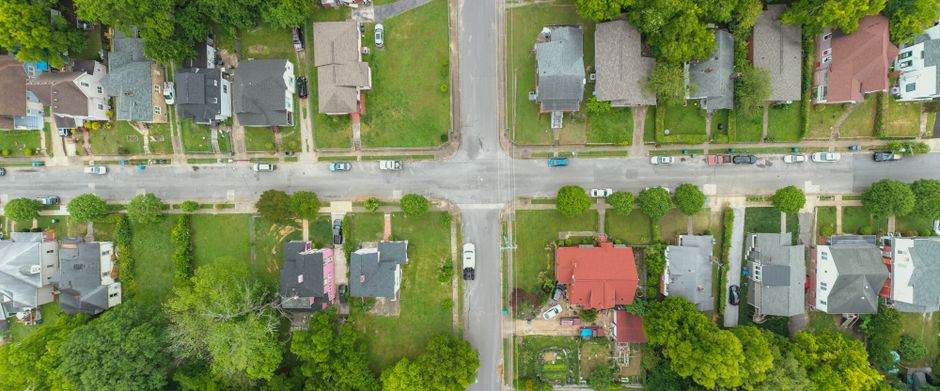
Myers Park and Eastover sit south of Uptown, are full of substantial homes, tree-lined streets, and a vibe of permanence. They're Charlotte's most established, moneyed neighborhoods. If you're under 30 and in these areas, you either grew up in Charlotte's elite circles or you're renting a small place on the edge of these neighborhoods at South End prices.
They're worth mentioning because young professionals do end up here—usually in their early thirties with a decent salary, or with family money, or both. The neighborhoods are genuinely beautiful, schools are excellent, and if you're thinking about staying in Charlotte long-term and buying property, these are the neighborhoods where your investment appreciates. But they're not where you go to feel young professional energy. They're where you go to feel established.
If you're looking at Myers Park or Eastover right now, you're probably not in the target reader for this article. You're five to ten years ahead in the timeline.
The Real Moves: Timing, Commute, and Budget
The honest answer is that no single neighborhood works for every young professional. Your move depends on three overlapping factors: where your office actually is, how much you can spend, and whether you want walkable urban energy or quiet residential space.
If you work in Uptown and can spend $1,800+: South End wins. If you work anywhere and want walkable indie character and don't mind a slight commute: NoDa. If you work in Uptown and need to keep rent under $1,500: Plaza-Midwood. If you want neighborhood history and tree coverage but still want to walk to drinks: Dilworth. If you work outside Uptown and want actual peace: look at the neighborhoods around these—Elizabeth, Southend-adjacent areas, or farther out.
Charlotte's biggest asset is that it has neighborhoods with actual differences. You're not picking between downtown tower, downtown tower, and downtown tower. You can actually make a choice based on what you want your day-to-day to feel like.
Frequently Asked Questions
What is the most affordable neighborhood for young professionals in Charlotte NC
NoDa and Plaza-Midwood typically offer the best value, with one-bedroom apartments ranging from $1,100 to $1,600. Both neighborhoods have walkable main strips, bars, and restaurants, though NoDa skews more artsy and Plaza-Midwood feels more mixed-use and commercial. South End and Uptown are significantly more expensive at $1,400 to $2,200+.
Where do young professionals live in Charlotte
South End is the most concentrated area, popular with finance and tech workers because of its proximity to Uptown, walkable restaurants and breweries, and newer construction. NoDa and Plaza-Midwood attract creative professionals and those prioritizing neighborhood character over convenience. Dilworth appeals to those wanting tree-lined residential streets with some walkability. Each has its own demographic draw depending on job location and lifestyle preference.
Is South End Charlotte safe for young professionals
South End is generally considered safe and is one of Charlotte's most actively developed, well-lit neighborhoods with good foot traffic and police presence. Like any urban area, standard city precautions apply—awareness of your surroundings, avoiding isolated blocks late at night, and typical street safety practices. The neighborhood's density and commercial activity are actually security assets.
Which Charlotte neighborhood is best for a short commute to uptown
South End and Uptown itself offer the shortest commute times—typically under 15 minutes by car or walking distance. Dilworth and Plaza-Midwood add 10-15 minutes depending on exact location. NoDa sits farther north, making the commute 20-30 minutes depending on traffic. Your commute time varies significantly based on your exact workplace address within Uptown.
Which neighborhood catches your eye?