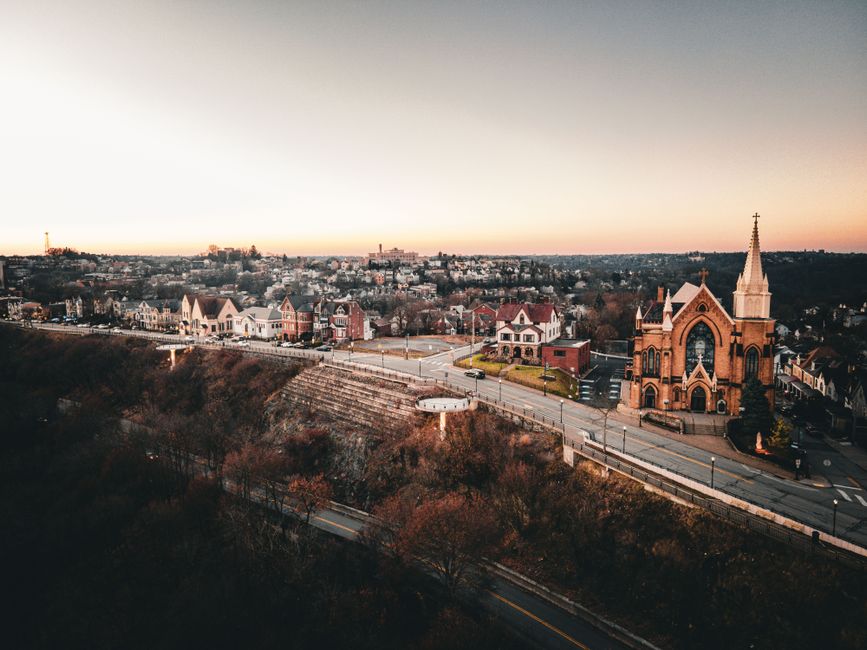
I landed at Pittsburgh International on a gray November afternoon, dragged my suitcase out to the rental car, and immediately realized I'd made the right call looking beyond downtown. The city's not big by major-metro standards, but it sprawls across those famous hills in a way that makes picking a neighborhood matter. After three separate trips here—one for work, two purely because I kept finding reasons to come back—I've learned which blocks you actually want to spend three days or three weeks walking around, where you can find a decent coffee without feeling like you're crossing a border, and where your Airbnb won't be on a highway overpass.
Pittsburgh's moved fast these last decade or so. The old steel-town reputation isn't entirely unfair, but the neighborhoods that matter for travelers are nothing like the 1985 postcards. They're mixed-income, walkable-ish, and actually interesting without being aggressively trendy. Here's what I've figured out about where to book.
Lawrenceville: The Default Choice, and Mostly for Good Reason
If you're landing in Pittsburgh with no strong opinions, Lawrenceville is the path of least resistance. It's on the northeast side, accessible without a car if you use the T (that's the transit system), and packed with enough bars, restaurants, and vintage shops that you'll spend half your time just wandering Butler Street. The neighborhood has that gentrified-but-not-completely-sterile feel—there are still nail salons next to expensive cocktail bars, older residents alongside twenty-somethings, actual diversity rather than the homogenized Brooklyn-clone vibe you get in some neighborhoods.
Walkability is solid. You're not conquering steep hills on every block like you are in some parts of the city. Most of what matters is within a ten-minute walk if you stay near the main drags. The nightlife is real: bars pour until 2 a.m., there are live music venues, and you can find anything from dive bars to places where they take their gin seriously. It does get a little rowdy on weekends, especially around 40th Street, but it's not dangerous—just the normal noise level of a neighborhood that's popular with the twenty-five-to-thirty-five crowd.
Nightly Airbnb rates run roughly $90 to $180 depending on season and how much space you want. You'll find cheaper places in less central spots within Lawrenceville itself, pricier options right on the strip. Safety at night is fine; I've walked back to rentals past midnight multiple times without thinking twice. The worst you'll encounter is drunk college kids and the occasional aggressive panhandler, which honestly puts it below most comparable neighborhoods in other cities.
South Side: Nightlife Central (and Loud If You're Not There for It)
Let me be honest: if quiet is what you want, skip South Side. If you came to Pittsburgh because you read about the bar scene and you actually want to experience it, this is where you stay. The South Shore district runs along the river, has the kind of concentrated nightlife you'd expect in a much bigger city, and the walkability is excellent because the bars and restaurants are genuinely built for foot traffic.
This is the neighborhood where people go on Friday nights. There's live music most nights, the beer halls are packed, and you can bar-hop for hours without the walk feeling long. The original location of what became a regional chain of beer-centric spots is here, and the whole district still has that gravitational pull. It's fun if you're into that scene.
The downsides are real, though. It's loud. Genuinely, genuinely loud until 2 or 3 a.m. on weekends. If you're a light sleeper or you came to Pittsburgh to relax, you will regret this choice. Safety is fine—I've never felt unsafe here, and the foot traffic keeps things visible—but you're dealing with a lot of drunk people, some of whom haven't learned their limits. It's not dangerous, but it's rowdy.
Airbnb rates are comparable to Lawrenceville, maybe $85 to $175 a night. The good deals often come with the warning that you're renting above or between bars, which, yes, is exactly as loud as it sounds. If you want a quieter base with good South Side access, look just outside the core district—still walkable but a block or two away from the absolute epicenter.
Shadyside: Money and Quiet, With a Trade-off on Character
Shadyside is Pittsburgh's wealthy neighborhood, and it shows. Tree-lined streets, storefronts that look like they were designed by committee, a very clear sense that you're in a place where people with disposable income live and shop. Walnut Street is the main drag—genuinely walkable, genuinely safe, geniune selection of restaurants and shops that skew toward the higher end.
This is the neighborhood where you go if you want to walk around at night without thinking about it for a second. The streets are well-lit, there's always people around, and the clientele is the kind that doesn't cause problems. It's orderly. Almost aggressively so. There's not a lot of edge here, which is exactly what some people want and what others find boring.
The nightlife exists but it's subdued compared to Lawrenceville or South Side. You're not bar-hopping, you're going to dinner and maybe a cocktail bar where they know your name by the second visit. Some visitors find this perfect; others feel like they came to the wrong neighborhood. No judgment either way—it depends what you're after.
Nightly rates run higher here: $120 to $220 is typical, and you'll pay more for anything nice. But the money buys you a certain kind of stay—safe, quiet, comfortable, with good restaurants but without the sense that you're in the middle of the action. It's a fine choice if you want Pittsburgh without too much Pittsburgh in it.
Strip District: Grittier, Cheaper, and Actually Walkable in an Unexpected Way
The Strip is Pittsburgh's old warehouse district turned neighborhood, and it hasn't fully gentrified the way Lawrenceville has. There's still actual industry mixed in with galleries and studios and restaurants trying to claim space in between. It's become a real place to live and not just a place to visit, which changes how it feels.
Walkability is strong because the scale is human. The buildings aren't too tall, the streets are legible, and there's enough visual interest that you don't get bored walking the same blocks multiple times. Nightlife is developing—there are bars and restaurants, live music venues, galleries with opening nights that turn into informal parties—but it doesn't have the machine-like efficiency of South Side's scene. Things feel more organic, less like they were designed by a marketing firm.
Safety at night is fine, though the vibe is different. You're in an older neighborhood, there are fewer people wandering around after dark than in Shadyside or Lawrenceville, but what people are there seem to have actual lives and reasons to be there rather than being out for the express purpose of nightlife. I've felt completely safe here at all hours, but it doesn't have the same bright-lit tourist-friendly feeling as some other neighborhoods.
Airbnb rates are the lowest of the neighborhoods worth considering: $70 to $140 a night is typical. You get more space for your money, and the neighborhood has genuine character rather than curated aesthetics. If you're on a tighter budget or you want to feel like you're actually living in Pittsburgh rather than visiting it, this is worth serious consideration. The trade-off is that it's less polished and some of the infrastructure (restaurants, bars, transit connections) is still developing rather than established.
East Liberty: In Transition, Which Means Prices Are Still Reasonable
East Liberty is the neighborhood that's been gentrifying for about five years and shows every sign of continuing. The main drag (Penn Avenue) has real development happening, there are new restaurants and shops appearing regularly, but it hasn't reached Lawrenceville levels of saturation and expense.
Walkability is good and improving. The neighborhood connects well to downtown via the T, and the core areas are genuinely pedestrian-friendly. Nightlife is low-key—you're not here for late nights, you're here because the neighborhood has good restaurants and coffee shops and it's becoming a place where you actually want to spend time.
The neighborhood feels safer and more pleasant than when I first visited a few years ago, and the demographic mix is real rather than performed. You'll see longtime residents alongside new money, which keeps things from feeling too stage-managed.
Nightly Airbnb rates run $85 to $160. It's a solid middle ground between the value of Strip District and the walkability of Lawrenceville, without quite as much active nightlife as either. If you want a neighborhood that's improving without having completed its transformation, that's quieter than South Side but less polished than Shadyside, East Liberty is worth booking.
The Transit Caveat: You Might Need a Car Anyway
Pittsburgh's transit system is fine for getting downtown and getting between neighborhoods along the T corridors, but it's not like you're in a true transit city. If you're planning to spend most of your time in one neighborhood and maybe venture downtown, you're fine without a car. If you want flexibility—heading to neighborhoods not on the main lines, or making spontaneous trips to the Strip District on a Tuesday night—you'll regret not having one.
Rent a car if you think you'll want it. Don't assume you're fine with just transit. Too many visitors book a walkable neighborhood and then find themselves stuck on a Tuesday night because the bar they wanted to visit isn't on the T line and cab fare would equal what they're paying for the entire rental.
Real Talk on Booking
Airbnb pricing in Pittsburgh doesn't fluctuate as wildly as in some cities, but weekends cost more than weekdays across all neighborhoods. If you're flexible on dates, booking Monday through Thursday saves real money—sometimes 20 or 30 percent. Avoid major event weekends unless you're specifically there for that event; hotel rates go up and short-term rental prices follow.
Read reviews about specific blocks, not just neighborhoods. A place on quiet Arch Street in Lawrenceville feels different than one on Butler Street even though they're technically the same neighborhood. Ask rental hosts about street noise, parking, and T access before booking. A five-minute phone call prevents regrettable discoveries.