I rolled into Charlotte on a humid August afternoon expecting a sprawling corporate hub with not much soul. What I found was a city that's genuinely grown up without losing its regional character—tree-lined streets, working-class bones under new money, and a surprising amount of walkability in pockets. The question of whether it makes sense for retirement isn't simple, and it shouldn't be. But after spending a few weeks exploring neighborhoods, talking to people who've moved here in their sixties and seventies, and checking out what actually costs money in this place, I have some real observations worth sharing.
Retirement decisions are personal. But they're also practical. Charlotte gets a lot of attention from relocating retirees, and there are legitimate reasons. There are also legitimate concerns. What follows is what matters most.
Cost of Living: Reasonable, But Rising Fast
North Carolina taxes don't give you the break you might think. The state income tax sits around 4.5%, which sounds low compared to places like New York or California, but it's not zero. That matters when you're on a fixed income and doing the math over twenty years. Property taxes are relatively modest—around 0.8% of home value statewide—and that's genuinely appealing. Sales tax is high at nearly 7.5% when you factor in local, which can bite if you're someone who spends.
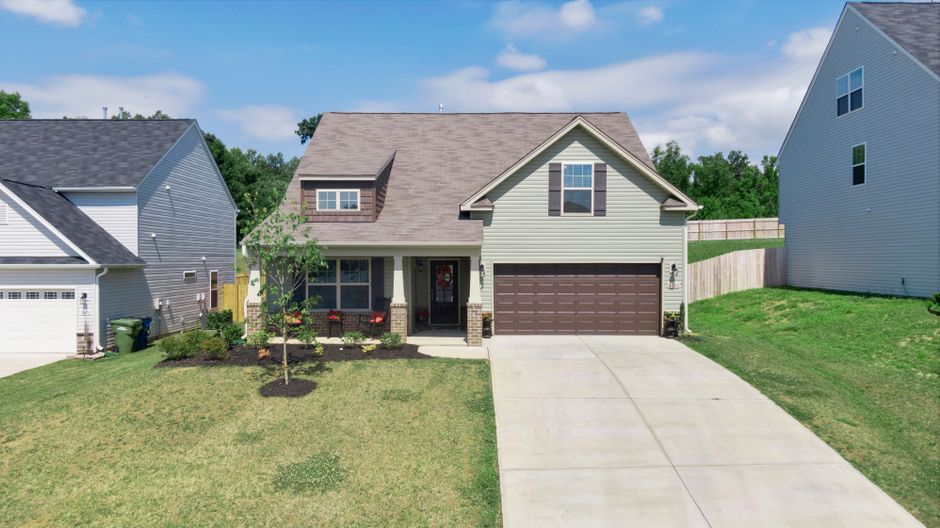
Housing in Charlotte proper has climbed noticeably. A decent two-bedroom in older, walkable neighborhoods now runs $350,000 to $450,000 easy. You're not paying Austin or Charleston prices, but you're not getting a bargain either. The suburbs and smaller towns nearby are cheaper, which is why you'll hear a lot of retirees talking about South Carolina suburbs just across the state line—the tax calculus changes when you're talking no state income tax on retirement withdrawals in some cases. Groceries, utilities, dining out—all tracking with national averages, nothing shocking either way. Healthcare costs are where things get interesting, and I'll get to that.
Healthcare Access: A Genuine Strength
Charlotte's medical infrastructure is actually one of the better reasons to retire here. Atrium Health and Novant Health are the two major systems with significant presence, and both have major hospitals in or near the city. Levine Cancer Institute, the Carolinas Medical Center, and the VA Medical Center all operate here. If you're someone with ongoing health needs, you're not flying blind. Specialists are available. Waiting times are reasonable. Medicare-adjacent facilities and senior-focused urgent care clinics are distributed throughout the metro area.
That said, medical costs don't stop rising just because you moved to the Southeast. Having access and being able to afford access are different things. Medicare covers a lot, but supplemental insurance, prescriptions, and out-of-pocket costs for procedures not fully covered still add up. Charlotte doesn't get you out of that equation. What it does offer is decent infrastructure so you're not choosing between three doctors or driving an hour for a specialist.
Weather and Seasons: Hot, Humid, But Mild Winters
Let's be honest about summer. It's hot and sticky. August in Charlotte feels like breathing through wet fabric, and that's not hyperbole. If you have arthritis or heat sensitivity, you need to think hard about whether you want to deal with that from June through September. The upside is that winters are genuinely mild by East Coast standards. You're getting occasional ice and maybe a couple snow events a year, but nothing like what you'd deal with in Pennsylvania or upstate New York. That matters for your knees and your heating bill.
Springs and falls are legitimately beautiful here. Seventy degrees, clear skies, everything in bloom or turning colors. If you're planning outdoor activities, hiking, sitting on a porch—these are the seasons to build your rhythm around. The area gets regular rain, which keeps things green and the humidity moderate when it's not August-level brutal. It's not a destination for people who hate heat, but for folks coming from the Upper Midwest or Northeast, the winters alone might justify the trade-off.

Myers Park and South End: Walkability and Urban Amenities
Myers Park is where a lot of retired professionals end up, and I understand why. It's the established neighborhood, tree-lined streets from the early 1900s, older homes with character, and a sense of being somewhere real. You're paying for that. Houses here start north of $600,000 and go up from there. But you get actual neighborhoods where people walk, where there are restaurants and coffee shops within walking distance, where you can spend your morning at the park and lunch nearby. Taxes are higher because the properties are worth more, but you're not getting stuck in a car for every errand.
South End, just southwest of downtown, has transformed in the last decade into something that appeals to younger retirees and people who don't want to feel like they're isolated in a bedroom community. Loft conversions, breweries, restaurants, the light rail connection—it has energy without feeling like a party zone. Housing costs more here than outer neighborhoods, and the vibe is younger on average, but if you're someone who retires at sixty-five and plans to be active and social, it's worth considering. You're trading square footage and yard space for proximity to things.
Lake Norman and Davidson: Quieter and More Affordable
Head north of Charlotte proper and the math changes. Davidson, a college town with actual character and a slower pace, has retirees moving in specifically because it feels like a place rather than a development. Housing is still reasonable—you can find solid homes in the $300,000s—and the downtown has restaurants, a bookstore, walkability. The trade-off is you're driving to Charlotte for specialized medical services and some cultural events. For people who want small-town feel with decent infrastructure nearby, it's worth the commute calculation.
Lake Norman, on the north side, attracts retirees interested in water activities and a sprawling but less dense environment. Houses run the full spectrum depending on how close to the water you want to be, and while it's become more developed, it still has a recreational draw—people actually use the lake. You're in a community organized around an activity, which appeals to some retirees and not at all to others. Weather-wise, the northern suburbs get slightly less brutal summer heat than downtown proper.
The Broader Picture: Who It Works For
Charlotte works well for retirees who want to stay engaged, who need solid healthcare without being in a major metro where everything costs 40% more, and who can handle humidity. It doesn't work if you're looking for rock-bottom cost of living—you can find that in smaller towns throughout the Southeast. It works if you value having options. Healthcare options, dining options, cultural programming at places like UNCG or the Charlotte Chamber Orchestra. It works if you want to feel like you're still part of something growing, rather than moved to a place designed exclusively around retirees.
Tax incentives matter, but they're usually oversold. North Carolina's income tax isn't going to make or break your retirement decision compared to a state with no income tax, assuming you're making similar withdrawals. The math is more granular than any article can cover. The bigger factors—can you afford a home you want to live in, can you access good medical care, is the pace of life acceptable—those are the real gates.
Final Thought
I talked to a woman named Patricia who moved to Charlotte from Connecticut five years ago at sixty-seven. She said the thing nobody tells you is how much retirement is about finding the right social ecosystem, and that's a gamble anywhere. Charlotte has enough going on that if you're willing to engage, you can build a life. It's not cheap, but it's cheaper than the coasts. It's not perfect weather, but it's manageable. It's not tiny and charming, but it's not a soulless sprawl either. That's probably the honest answer: it's a reasonable choice for the right person. Whether that person is you depends on what you're optimizing for.