
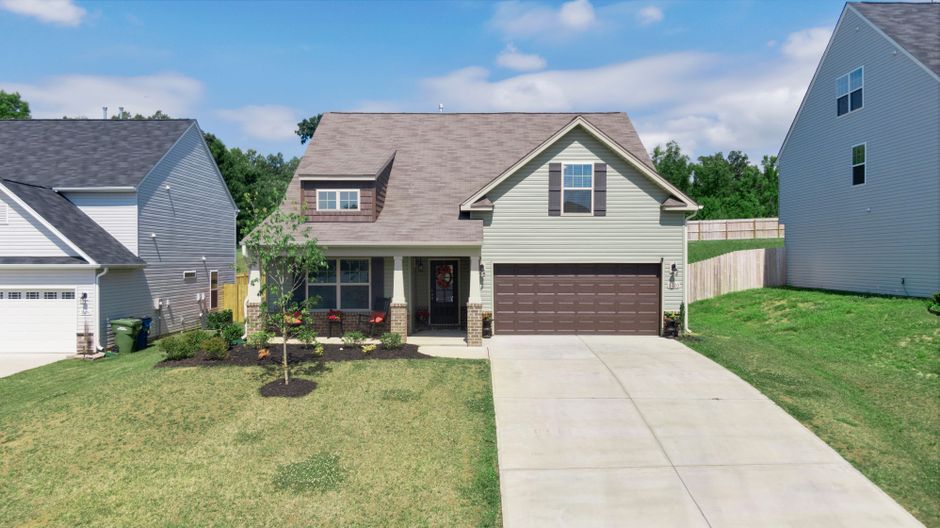
I rolled into Charlotte on a humid September afternoon expecting a typical mid-Atlantic sprawl, but found something more interesting. The city's grown enormously in the last decade—cranes everywhere, new development eating into the pine forests—yet the neighborhoods where retirees actually settle have held onto a certain walkability and character that many Sunbelt cities lose to overdevelopment.
My week there was partly about wandering, partly about asking practical questions of locals who'd moved here after 60. What kept coming up wasn't hype about golf courses or New South charm. It was cost of living comparisons to where they'd come from, the reality of traffic, and whether you can actually see a cardiologist without waiting three months. Those matter more than charm when you're planning the next 30 years.
Cost of Living: Better Than You'd Think, But Not a Bargain Anymore
Charlotte's no longer the undiscovered pocket it was ten years ago. Housing prices have climbed steadily. A modest single-family home in a decent retiree-friendly neighborhood runs anywhere from the mid-$300,000s to $500,000+, depending on proximity to downtown and the quality of schools (which, frankly, matters less when your kids are grown, but still affects resale value). Compared to Raleigh or Atlanta, it's not outlandish. Compared to the Northeast or West Coast, it's genuinely reasonable. Compared to rural South Carolina or eastern North Carolina, it's pricey.
Rent is cheaper than buying, which matters if you want to test the waters. A one-bedroom apartment outside the downtown corridor typically runs $1,200 to $1,600 a month. Utilities are moderate—air conditioning in summer is real, but not catastrophic. Groceries and dining are in line with national averages. The wild card is healthcare costs, which I'll get to separately. Property taxes in Mecklenburg County hover around 0.85% of home value, which is reasonable by national standards but not rock-bottom. The sales tax is 7.25%, fairly standard for North Carolina.
Healthcare: Solid System, but Competition for Specialists
Atrium Health dominates the medical landscape here—it's the massive local system, and that's both good and complicated. You'll have access to decent facilities, emergency care, and a wide network. Novant Health is the other major player and covers parts of the region. Both have teaching relationships with UNC and Duke, which attracts decent talent, at least in major specialties.
The catch: Charlotte's attracting a lot of retirees, so demand for geriatric care, cardiologists, and orthopedic surgeons is heavy. Finding a new primary care doctor accepting Medicare can take months. Several people I spoke with had moved from smaller North Carolina towns and mentioned they actually had an easier time getting appointments there. If you're on Medicare, coverage is what you'd expect—the usual Part B deductibles and out-of-pocket maximums apply. I didn't sense any particular advantage to retiring here on the healthcare angle; it's available and competent, but not exceptional compared to larger medical centers like Baltimore or Durham.
Climate: Hot Summers, Mild Winters, Humid Year-Round
This matters for joints, for mood, for how much you'll actually leave your house. Charlotte summers are legitimately hot and humid—routinely into the low 90s from July through September, with the kind of moisture that makes you damp just standing still. If you hate air conditioning, don't move here. If you came from Minnesota or upstate New York, it's an adjustment that takes a solid year.
Winters are mild, rarely dropping below freezing for extended periods, but when they do—usually one or two nasty weeks in January—the city genuinely doesn't know how to handle ice and snow. Schools close, roads get sketchy. After southern snow events, I'd talk to locals who seemed half-proud of the chaos. Spring and fall are genuinely beautiful, though fall is short. The pollen count is real March through May. If you have sinus or respiratory issues, spring is rough.

Tax Considerations: State Level Is Moderate, Understand the Details
North Carolina's income tax rate is a flat 4.99%, which is reasonable but not the lowest in the Southeast (Florida and Texas have zero). Social Security is fully taxable here if your combined income exceeds certain thresholds—that's worth running through a tax calculator before you commit. Retirement income like 401(k) distributions and IRAs are taxed as ordinary income.
On the flip side, there's no estate tax in North Carolina, and the property tax rate I mentioned is fairly reasonable. Military pensions get a partial exemption, which matters if you're military-retired. Medicare premiums and some healthcare costs have standard federal treatment. I'm avoiding specific tax advice here because it genuinely depends on your individual situation—a CPA familiar with both your current state and North Carolina would be worth a conversation before you buy.
Myers Park and Dilworth: Established, Walkable, Expensive
These neighborhoods sit roughly south and southwest of downtown and have long attracted older money and retirees who want urban amenities without sprawl. Myers Park is the pricier of the two—tree-lined streets, established gardens, proximity to good restaurants on Providence Road. Homes routinely exceed $600,000. It's walkable enough for errands if you're able-bodied. Sidewalks exist. There's a golf club and a country club if that matters to you.
Dilworth is slightly more bohemian and less expensive, though 'less expensive' here means $400,000 to $550,000 for a decent home. More character, more quirk, younger demographic mixed in. Both neighborhoods are served by the same Atrium Health facilities and have decent access to Highway 77 if you need to get around town. Traffic getting downtown is real during rush hours, which is annoying if you have morning doctor's appointments. The walking is pleasant on quiet days, but you're not escaping Charlotte's car culture.
Cornelius and Davidson: Quieter, More Car-Dependent, Worth Considering
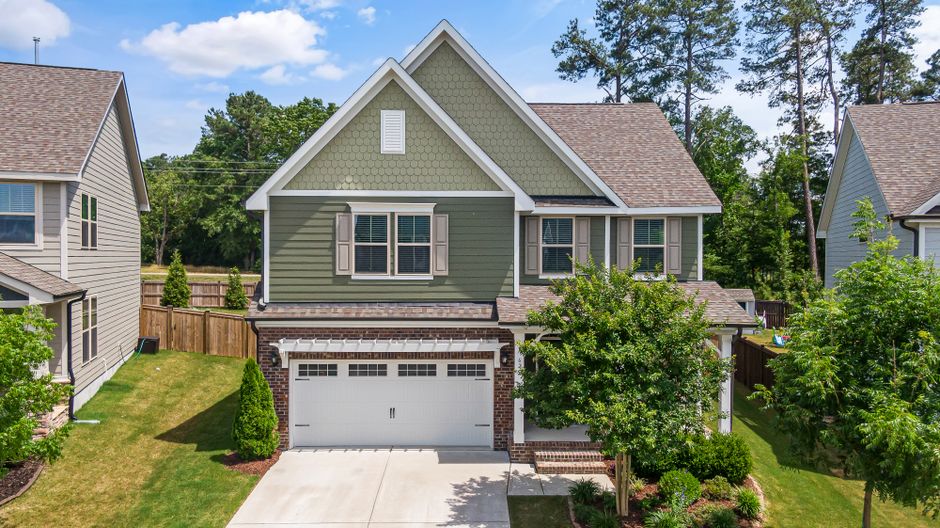
About twenty minutes north of downtown, these towns attract retirees who want out of the city but not quite rural. Cornelius has a small downtown, some lakefront appeal around Lake Norman, and a slower pace. Davidson is wealthier and more pristine—it's home to Davidson College and has that buttoned-up, planned-town feeling. Both are growing and both have that North Carolina Piedmont character that doesn't feel forced.
Homes are cheaper than in-city neighborhoods—you can find decent places in the $350,000 to $450,000 range. Trade-offs: you're driving everywhere. These aren't walkable for daily needs. The medical infrastructure is still Atrium-anchored, but you're further from the main hospitals. Davidson especially draws affluent retirees, and there's a certain amount of sameness to the demographic. If solitude matters more than walkability, either town works. If you want the energy of a city, you'll be disappointing yourself.
The Honest Questions to Ask Yourself
Charlotte's not a secret anymore, and it's not a bargain destination like it was ten years back. It's a real mid-size city with real growth pains, real traffic, and real summer heat. The question isn't whether Charlotte is objectively good for retirement—it's whether it matches what you actually want.
Do you want walkability and urban food scenes? You can find some of that, but you'll pay for it and you'll drive a lot regardless. Do you want low cost of living? Charlotte's below many major metros, but it's not a retiree's discount town. Do you want mild winters? Yes. Do you want world-class healthcare? It's competent; don't expect Johns Hopkins. Do you want to be around other retirees? The infrastructure exists, but this isn't Boca Raton or Asheville—you won't stumble into retirement communities on every corner.
The best versions of Charlotte retirement I saw were people who'd either lived in the Southeast before and wanted continuity, or people flexible enough to settle for 'pretty good' across several categories rather than 'exceptional' in one. Spend a month there before you buy. Talk to locals over coffee, not just at neighborhoods' marketing offices. See how the summer humidity actually feels to you, not how it sounds in theory. Charlotte's sensible and it works—it's just not magical, and understanding that difference matters.



