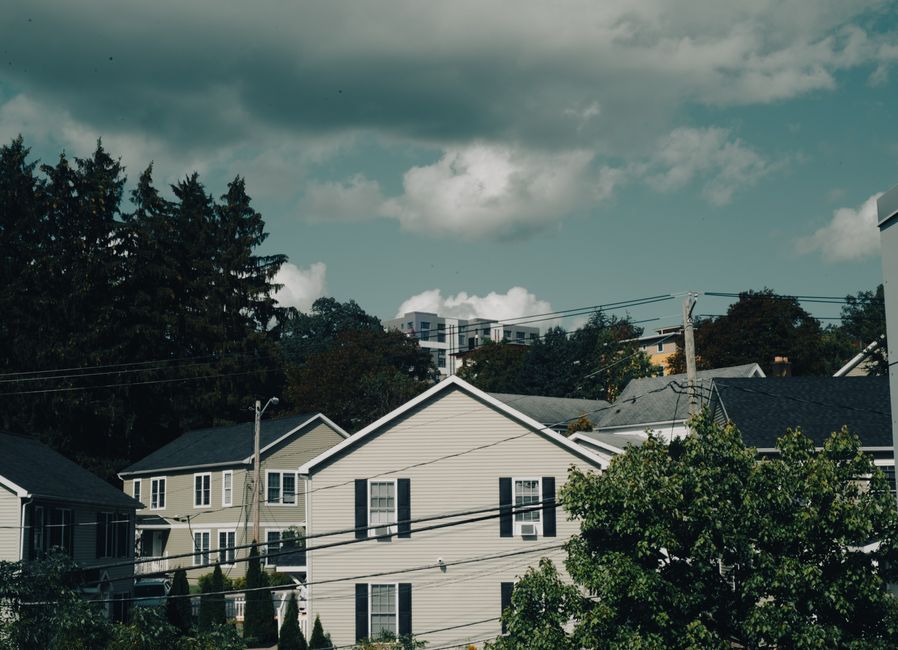
I arrived in Providence on a gray November afternoon, the kind of day that makes you think twice about New England winters. But something about the city pulled at me—the walkable downtown, the dense cultural life, the fact that people actually seemed to know their neighbors. For anyone considering retirement here, that feeling matters as much as the spreadsheets.
Providence isn't a retirement destination that gets marketed to snowbirds or people fleeing taxes. But it's worth a serious look if you want to stay engaged, have good healthcare nearby, and don't mind seasons changing hard. The question isn't whether it's perfect—nowhere is—but whether it fits what you actually want from your retirement.
Cost of Living: Not Cheap, But Reasonable for New England
Housing is the conversation that stops most people cold. A modest single-family home in Providence proper—say, 1,500 square feet, decent bones—runs you $350,000 to $450,000 depending on neighborhood and condition. That's not Charleston or Asheville money. But it's cheaper than Boston, New York, or coastal Massachusetts.
Rental prices are more moderate. A one-bedroom apartment downtown runs $1,200 to $1,500 a month; two-bedroom, $1,600 to $2,000. Utilities run higher than the national average—expect $150 to $250 monthly for a modest place, thanks to heating costs. Groceries and dining out are in line with regional norms, maybe slightly cheaper than Boston proper.
The real advantage is that you don't need a car in central Providence. That saves money on gas, insurance, and maintenance. Public transit works for getting around the city; if you need to travel to Boston or Newport, amtrak and buses are viable options. The walkability factor alone can trim thousands from an annual budget.

Healthcare: Excellent Systems, Not Always Convenient
Rhode Island punches above its weight on healthcare. Brown University's medical school is here, and the teaching hospitals are genuinely strong. Rhode Island Hospital is a major trauma center and research hub. Miriam Hospital serves the south side. Both are well-regarded and reasonably close to most parts of the city.
The catch: getting a first appointment with a primary care doctor can take weeks or months, particularly if you're joining new to the area. The medical establishment here is dense but also stretched. Once you have a doctor, though, continuity of care tends to be good. Specialist access is solid, especially through the academic medical centers.
For chronic disease management and aging-related care, Providence has solid resources. Physical therapy, cardiology, orthopedics—all well-represented. Nursing homes and assisted living facilities dot the region, with varying reputations. You'll want to do your own legwork there rather than rely on word of mouth.
Winters and Weather: Real Seasons, Real Cold
This is not hypothetical. Winters in Providence are legitimately brutal. December through March sees temperatures in the 30s and 40s, frequent freezing rain, and 40 inches of snow on average per year. If you've never dealt with nor'easters, or if you spent the last thirty years in Arizona, this will be a shock.
But fall and spring are sublime—mild, colorful, perfect for walking. Summer is warm and humid, sometimes oppressive. If you already live in the Northeast and know what you're signing up for, it's fine. If you're coming from elsewhere and thinking "how bad can it be," you might be underestimating. The emotional weight of six weeks of gray February is real.
That said, retired people have more flexibility to travel during the worst months. If you can afford to spend January in the Caribbean or visit family in warmer places, the calculus changes entirely.
Taxes: A Complicated Picture
Rhode Island has a state income tax that runs roughly 3.75% to 6.5% depending on income brackets—not the highest in the nation, but not low either. If you're receiving retirement income, pension, or distributions, you'll owe state income tax. Social Security is taxed at the federal level if your combined income exceeds certain thresholds, but Rhode Island specifically does not tax Social Security benefits, which is a minor win.
Property taxes vary by municipality but average around 1.1% of assessed property value statewide. Some towns run higher; some lower. That means a $400,000 home typically costs $4,400 to $5,000 annually in property tax, though check your specific town.
Rhode Island does not tax retirement account withdrawals before age 59.5 the way some states do. But the overall tax burden is middle-of-the-road for the Northeast. It's not a tax haven, and you shouldn't move here primarily for tax reasons. This is a state-level summary only—specific situations vary wildly, and anyone serious about retirement should talk to an accountant who knows Rhode Island before committing.
College Hill and the East Side: Walkable, Urban, College-Inflected
The East Side of Providence—anchored by College Hill, where Brown University sits—is probably the most popular neighborhood with affluent retirees. Tree-lined streets, restored Victorian homes, lots of foot traffic, excellent walkability. The neighborhood bookstore, cafes, and restaurants cater to an educated, culturally engaged crowd. You'll run into people who read books and care about art. There's a reason: this is where professors, retired professionals, and longtime residents cluster.
It's not cheap. Houses here run $450,000 to $750,000 and up; rentals are at the higher end of the city's range. But the walkability and cultural density are genuine. You can get groceries, see a film, grab dinner, and hear live music without getting in a car. The neighborhood has the feeling of a small college town, if you like that sort of thing.
The downside: parking is competitive, the college presence means student noise during the academic year, and the density that makes it walkable also means less quiet solitude.
Fox Point and the South Side: Cheaper, More Diverse, Less Polished
South Providence neighborhoods like Fox Point offer significantly lower housing costs—you can find decent homes in the $250,000 to $350,000 range—and genuine demographic diversity. It's a working neighborhood with real immigrant communities, local restaurants and markets, and a fundamentally different character from the East Side.
There's more street life, less manicured aesthetics, and less assumption that everyone has a college degree. That appeals to some retirees; it horrifies others. The reality is that parts of South Providence have struggled with disinvestment, though certain blocks have seen gradual revival. Schools are not why you're moving there; cultural and economic vitality, and lower costs, are the draw.
Walking around Fox Point at night requires more situational awareness than College Hill. Healthcare access is fine—Roger Williams Medical Center is nearby—but you lose some of the walkable restaurant and cultural density. It's a genuine neighborhood with real people rather than a curated district. Some retirees love that authenticity; others find it too gritty.
Nearby Towns: Barrington, Wayland, East Greenwich
If Providence proper feels too urban, three nearby towns attract retirees at slightly higher costs but with suburban quietness.
Barrington, just across the Providence border to the north, is a wealthy suburb with good schools, quiet streets, and easy access to Providence and Boston via Route 95. It's also expensive—homes run $600,000 to $1 million-plus—but you get excellent municipal services, low crime, and that insulated suburban feeling.
East Greenwich, south of Providence, straddles the line between suburb and small town. It has a pleasant village center, lower density than Providence, and more moderate prices than Barrington—typically $400,000 to $600,000 for a home. It feels genuinely quiet, which some retirees prefer.
Warren, just south, is smaller and quieter still, with lower price tags and less urban infrastructure. Each trade-off comes down to personal preference: proximity to culture and urban walking vs. peace and quiet. None of these towns are far enough to isolate you from Providence's hospital system or cultural offerings.
The Real Question: What Kind of Retirement Do You Actually Want?
I kept returning to this throughout my time in Providence: the city works best for retirees who want engagement, not escape. If you're looking to leave the rat race but stay intellectually active, walk to dinner, take a class at Brown, attend concerts and galleries, and live in a real city—Providence delivers. The cost is reasonable for New England. Healthcare is solid. Public transit works. You can actually know your neighbors.
If you want year-round warmth, a car-free lifestyle that doesn't require constant vigilance, or a place where your money stretches far, you should look elsewhere. There are better options in the upper South or Southwest. Providence is a four-season city with real winters, real snow, and real heating bills. It requires you to own or accept winter.
Talk to people who've actually retired here. Spend a full winter if you possibly can before committing. The numbers on paper matter, but the feeling of waking up in February—whether that feels like a burden or an adventure—matters more.