I rolled into Louisville on a humid Thursday expecting the usual bourbon distillery circuit and riverfront crowds. What I found instead was a city that rewards wandering—the kind of place where you turn down a side street in the Highlands and suddenly you're in someone's actual neighborhood, not a tourist zone. The visitors I saw at all the famous spots seemed to be moving through a checklist. That's not really Louisville.
I spent a week here skipping the obvious stuff and poking around. Some days I got lost on purpose. This isn't a "top 5" listicle dressed up as discovery. It's where I actually spent my time when I wasn't thinking about what I was supposed to see.
Iroquois Park and the Water Tower
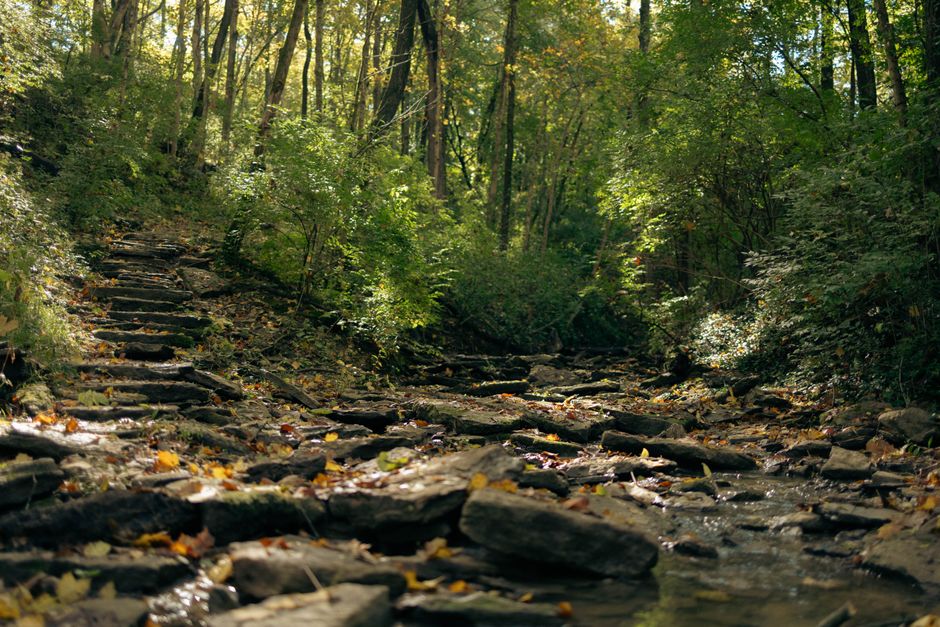
Most people hit Waterfront Park and call it good. Iroquois Park is on the south side, less visited, and weird in the best way. You've got actual wooded trails, a proper hill that makes you work for the view, and this Romanesque water tower from 1891 that sits at the top like something out of a forgotten storybook. It's not Instagram-famous, which means you'll actually be able to think while you're there.
I went up at dusk. The city spreads out below in a way that feels less manicured than the river views downtown. There's a small rose garden that's easy to miss, and the paths branch out enough that you can spend an afternoon here without feeling herded. The playground area is legitimately good if you're traveling with kids, but you won't be fighting off crowds. On a weekday the whole place is basically yours.
The Filson Historical Society
This museum is tucked into a mansion in Old Louisville and it does something museums usually don't—it assumes you actually want to understand a place rather than just check a box. The collection focuses on Kentucky history and river culture, and they're not afraid to cover the complicated stuff alongside the interesting stuff.
I spent longer here than I expected. The staff actually engages with visitors instead of treating you like you're clogging up their space. They have rotating exhibits that aren't just the standard "here's our old artifacts" setup. I ran into a researcher working on steamboat records, which shouldn't have been interesting but somehow was. It's small enough that you can do it in two hours, which means it fits into a real day instead of consuming one.
Bellarmine University's Thomas Merton Center
This one's weird and specific, but if you're interested in anything related to writing, spirituality, or twentieth-century intellectual history, the Thomas Merton Center is worth the detour to the Bellarmine campus. Merton was a monk and writer who lived at Gethsemani Abbey outside Louisville, and the center holds his papers, correspondence, and personal items.
You need to call ahead to see the collection—it's not a drop-in museum. But that's part of why it exists in this quiet space outside the regular tourist flow. I talked with someone there for an hour about Merton's journals, and it was the kind of unrushed conversation you get when a place isn't overrun. Even if Merton means nothing to you, the campus itself is peaceful in a way Louisville's busier neighborhoods aren't, and the archives building is worth seeing architecturally.
Mellwood Art Center and the Butchertown Neighborhood
Mellwood is a working artist community in a repurposed slaughterhouse, which sounds more dramatic than it is. It's a big converted industrial space where maybe 100 artists have studios, and they do open studios and shows but it's not performing for tourists—people are actually working. You can walk through and look into studios, buy directly from artists sometimes, or just see what people are making.
The neighborhood around it, Butchertown, has turned into this scrappy creative area with decent restaurants and smaller galleries. I ate at a taco place there that was legitimately good and staffed by people who seemed to actually like working there. There's a record store, a coffee spot that's not trying too hard, and an old meat-packing factory aesthetic that hasn't been fully gentrified into oblivion. It's close enough to downtown that you can walk or bike over, but far enough that tourists haven't colonized it completely yet. The art here ranges from genuinely interesting to "my cousin made this," which is pretty normal for artist spaces and keeps it honest.
The Speed Art Museum and Its Neighborhood
Most mid-size cities have an art museum that's actually worth your time. Louisville has the Speed, and because it's not as famous as like, LACMA or the Met, you move through it at human speed instead of shuffling in a crowd. The collection is solid without being exhausting. They have contemporary work, historical pieces, a good photography section.
What gets me is that the neighborhood around it, the Old Louisville/Highlands boundary, is full of Victorian houses and tree-lined streets. The Speed sits at this intersection and draws people who actually care about art rather than people doing tourist duty. I went on a Wednesday and saw maybe forty other people the whole time. The museum's not tiny, but it's sized right—you can do it in a couple hours and feel like you've actually seen something instead of having your attention split across a hundred galleries.

Cave Hill Cemetery and Baxter Avenue
This sounds morbid but it's genuinely worth doing. Cave Hill is a Victorian cemetery designed as a garden space, the way old cemeteries actually were before we made them into sad parking lots. You can walk the grounds, see how the landscape works, and it's peaceful in a way that doesn't feel depressing. Graves of various Louisville notables are marked, but you don't need to do a scavenger hunt thing—just walk and enjoy the quiet.
Afterward, head down Baxter Avenue, which runs near the cemetery and turns into this slightly off-kilter strip of old Louisville. There's a vinyl shop, some vintage stores that aren't boutique-level expensive, a weirdly good Mexican restaurant that's been there forever, and enough character that you remember why people actually live in places instead of just visiting them. I grabbed a coffee and sat outside a bookstore and watched the neighborhood actually function. No tour groups. Just people.
Portland Museum and the West End
The Portland Museum is small and somewhat rough around the edges, located in a historic house in the West End. It's a neighborhood museum that focuses on local African American history and community. It's not glossy. But it's real, and if you want to understand Louisville beyond the distillery-and-bourbon narrative, spending time here is essential.
The West End is the part of Louisville that tourism mostly ignores, which is its own kind of problem. But if you walk around—carefully, like you're visiting someone's neighborhood, because you are—you get a different sense of the city. There are good restaurants, real community centers, churches with actual architectural interest. It's not a destination you visit for entertainment. It's a place where people live. That's the point.
Leaving Louisville
By my last day I'd stopped thinking about what I was "supposed" to do and just followed the places I'd heard about from people who lived here. That's when I actually saw Louisville instead of visiting it. The bourbon trail is fine if that's your thing. But the real Louisville is quieter—the parks without railings, the artists who aren't marketing themselves, the museums that aren't fighting for attention. You find it by wandering and by talking to people who've been here long enough to stop thinking of it as a destination.