I rolled into Richmond on a gray Tuesday morning with a half-full laptop battery and the vague idea that I'd find a cafe somewhere near the river. What I didn't expect was how seriously this city takes its coffee culture—not in a pretentious way, but in the way a place gets when enough people actually live here and care. I spent the next week bouncing between neighborhoods, testing WiFi speeds, eavesdropping on conversations, and learning that Richmond's cafe scene is split pretty evenly between places where you can legitimately work for six hours and places where you'd be kicked out for nursing a single espresso.
The city's coffee map isn't complicated, but it rewards paying attention. You've got the polished spots near Capitol Square and Fan District where young professionals camp out on Zoom calls. You've got the noisier, younger joints in Carytown and Church Hill where the pastries are better than the WiFi. And then you've got the weird neighborhood places where the owner remembers your order and the only other customer is someone reading a 800-page fantasy novel. I found all three, and I'm going to tell you where they are.
Sub Rosa Bakery & Cafe (Downtown)
Sub Rosa sits a few blocks from Capitol Square on a corner of West Broad Street that used to feel sketchy but now feels intentional. It's half bakery, half cafe, and the balance tips heavily toward bread. They do the kind of sourdough that actually tastes like something—a little funky, good crust, not the Instagram-bait version you see everywhere. The pastries rotate, but I had a croissant that was almost embarrassingly good, all butter and flake and done the way someone who went to France and paid attention would make it.
For working, it's adequate but not ideal. There are tables by the window with decent natural light, and the WiFi is solid enough. It's loud though—conversations echo off high ceilings, and there's usually a small crowd at the counter. Come here if you want to work for 90 minutes, not five hours. The coffee is respectable (they rotate local roasters), and the vibe is exactly what you'd want from a neighborhood bakery in a city trying not to lose itself. The crowd skews professional but not stuffy. You'll see people in blazers sitting next to someone in paint-stained pants.

Black Hand Coffee (Fan District)
Black Hand is the kind of place that makes sense once you're there but isn't obvious if you're just wandering. It's tucked on a quiet stretch of Grove Avenue with enough window seating that you can watch Fan District drift by—which is more entertaining than you'd think, given how much foot traffic this neighborhood actually has. The cafe is narrow and compact, the kind of space that feels cozy in winter and slightly cramped in summer.
They roast their own coffee, and unlike a lot of places that say that, they actually seem to care about it. The espresso is sharp and clean, not over-extracted or bitter. The pour-overs are consistent. They also have good pastries from What's for Brunch, a local baker, and I never had a bad one.
WiFi is reliable. Seating is limited but there's usually a spot if you come off-peak (mornings between 7-8:30, afternoons after 3). Laptops are welcome, people work here regularly, and no one bothers you about loitering. The real win is the neighborhood—this part of Fan feels lived-in without being touristy, and Black Hand is the kind of anchor that makes a corner feel like it matters.
Lamplighter Coffee Roasters (Carytown)
Carytown is Richmond's version of a neighborhood shopping district, the kind of place where you can get a coffee, then browse used books, then eat lunch, all without crossing a major street. Lamplighter sits right in the thick of it, and it's deliberately small—maybe eight seats inside, a couple more on the sidewalk depending on season. They're serious about coffee but not pretentious about it. The owner will talk to you about beans if you want to listen, or leave you alone if you don't.
The actual work situation is sketchy. This is a grab-coffee-and-go spot first, a cafe second. But if you're the type who can write productively at a small table for an hour, with people flowing in and out and the sound of Carytown commerce happening outside the window, it's fine. The pastries rotate through local vendors and they're usually solid. The espresso drinks are genuinely good—they taste like someone cared about the ratio and the timing.
Really, you come to Lamplighter to be around people and move on. It's not a place to settle. But for an hour of work, a really good cappuccino, and a glimpse into how Carytown operates, it's worth the trip.

Mama J's (Jackson Ward)
I almost didn't include Mama J's because calling it a "cafe" feels too formal. It's a counter, a few tables, strong coffee, and breakfast food that suggests someone's grandmother designed the menu. The space is tight and unapologetic—worn wood, old-school menu boards, a cash register that might be from the 1980s. Jackson Ward itself is in the middle of a complicated transition (gentrification mixed with longtime residents and real community identity), and Mama J's feels like an anchor point.
For working, it's imperfect. The WiFi is functional but not premium-grade. The seating is communal-style, which means you might end up sitting next to a stranger, and the noise level depends entirely on how many people decide to stop in. But that's partly the appeal. This isn't a place optimized for laptops. It's a place for actual breakfast—biscuits and gravy that taste like someone made them that morning, which they did—and conversation.
Come here if you want to eat something real and get a sense of who actually lives in this neighborhood, not who the neighborhood is being marketed to. The coffee is strong and straightforward. The people are real. You'll probably feel like you've discovered something, but you should also feel like you're a visitor, which is appropriate.
White House of Coffee (Northside)
This one's easy to miss. It's on Main Street in what used to be the rough side of town and is currently in that phase where rough and revival are happening simultaneously. White House of Coffee is not trendy. It doesn't have that careful aesthetic you see in other places. But the owner knows coffee, has been running this spot for years, and treats regulars like they matter. There's a small cluster of mismatched seating—a couple of tables, some chairs, a couch that's definitely been there since 2010.
WiFi exists and usually works. The coffee is solid—nothing flashy, just dependable espresso and drip coffee that tastes like someone wasn't rushing. The pastries are from local sources and rotate, but they're always decent. What you're really here for is the experience of sitting in a space that's part of a real neighborhood, not a themed neighborhood or a neighborhood that's been packaged for consumption.
Worth knowing: this area has the energy of a place in transition, which means it's interesting to watch but also means the surrounding blocks are still a bit raw. Come in daylight, stay for an hour, pay attention to the people working here—they're the actual backbone of the place.
Mongrel Coffee (Scott's Addition)
Scott's Addition is Richmond's arts district—old industrial buildings converted into studios, galleries, and restaurants, the whole song and dance. Mongrel fits right in, though it's casual enough that it doesn't feel like you need a particular reason to be there.
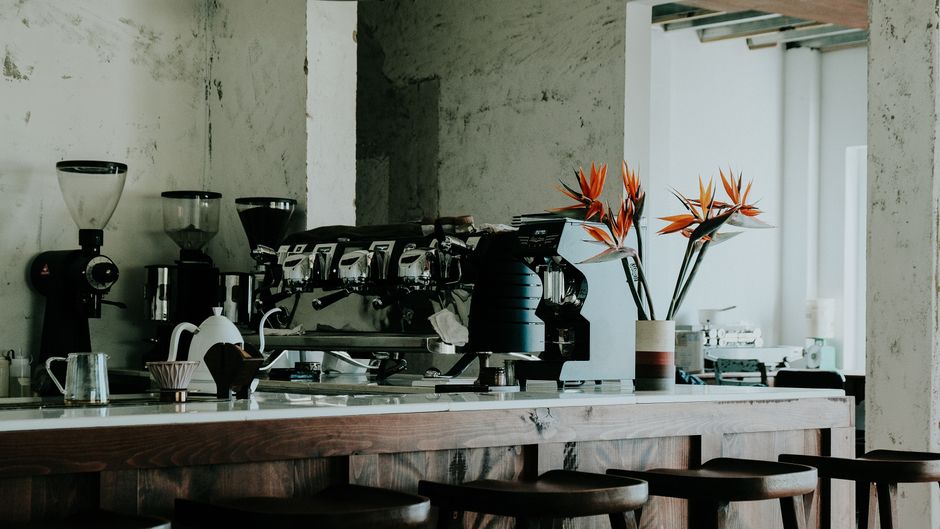
The cafe itself is bright, minimal, and actually hospitable for long work sessions. There's real table space, outlets aren't hidden, and the WiFi is strong. The coffee is good without being obsessive—smooth espresso, careful pour-overs, the kind of place where the baristas are actually trained. The pastries are rotating stock from local sources.
Seating can be tight during peak hours (weekday mornings, weekend afternoons), but there's usually a spot. The crowd is the Scott's Addition mix—artists, people with jobs, people with side hustles, people who just like to work in cafes. It's not quiet, but it's not aggressively social either. You can be alone in a room full of people, which is exactly what you want when you're trying to write or focus.
The neighborhood itself is worth the visit. The surrounding blocks have galleries, vintage shops, a weird mix of gentrification and actual creativity. If you've got a full work day, this is your spot.
A Practical Note About Richmond Cafes
The thing about Richmond's cafe scene is that it's still small enough that you can hit most of these places in a week, but diverse enough that they feel genuinely different. The city isn't trying to be Brooklyn or Portland—it's just working out what a cafe community looks like in a mid-size Southern city with a complicated history and a lot of new people moving in.
WiFi is generally reliable across all these spots, but if you're doing something that absolutely requires bulletproof connectivity, test it before you camp out. Summer can get loud and chaotic in all of them. Early mornings (7-9 AM) and mid-afternoons (2-4 PM) are your best bets for actual quiet. Most of these places are cash-friendly but not cash-only, and all of them have decent coffee. Don't expect third-wave preciousness at most of them. That's the actual appeal.