I landed in Savannah on a Friday afternoon expecting Spanish moss and Spanish architecture—and I wasn't wrong, but I also wasn't prepared for how many other people had the same Instagram idea. Within two hours, I'd hit the wall of what makes this city tick: some attractions live up to the hype, and some are just well-marketed. After a week of walking the same routes locals avoid and sitting where tourists rarely think to look, I've got a working theory about what actually deserves your time here.
Savannah works best when you stop following the guidebook order. The city's 22 historic squares aren't all created equal, and the ones that show up in every travel blog often feel like theme parks by 11 a.m. That doesn't mean they're not beautiful—it means you're seeing them at the wrong hour, or you're missing the point entirely. I spent some time relearning the rhythm of this place, and I want to save you the backtracking.
Forsyth Park Fountain Is Beautiful and Absolutely Suffocating
The fountain itself is undeniably photogenic. Wrought iron, cascading water, that bronze lady on top—I get it. The problem is that Forsyth Park has become the default Savannah image, and it shows. Weekend mornings, you'll find thirty people in the immediate radius of the fountain itself, all waiting for the same angle. The park is 30 acres, so there's plenty of actual park to enjoy, but the fountain zone—the part everyone came for—turns into a photo booth by 9 a.m.
The other issue: Forsyth Park is genuinely nice, but it's not uniquely Savannah in any way that matters. It's a well-maintained urban park you could find in half a dozen cities. The Spanish moss is here, the oaks are massive, sure. But if your whole Savannah experience hinges on this one fountain, you've missed what makes the city different from everywhere else.
Bonaventure Cemetery Feels Like a Secret That Shouldn't Be
Drive ten minutes east from downtown and you hit Bonaventure Cemetery, and the difference in atmosphere is staggering. Spanish moss actually drapes here—not as a tourist novelty, but as part of the landscape. Trails wind through, and you'll pass family crypts dating to the 1800s, massive oak alleys, and water that catches the light in a way that makes Forsyth Park's fountain look like a drinking fountain at a mall.
I walked here on a Saturday and saw maybe six other people. Most were locals. There's a pavilion, a small museum, and the kind of quiet that actually lets you think about the place you're in. Bonaventure shows Savannah's relationship with death and memory in a way that's both respectful and genuinely haunting. The city's history isn't in the fountain—it's in the ground, and this cemetery proves it.
River Street Is Crowded, Touristy, and You Already Know That
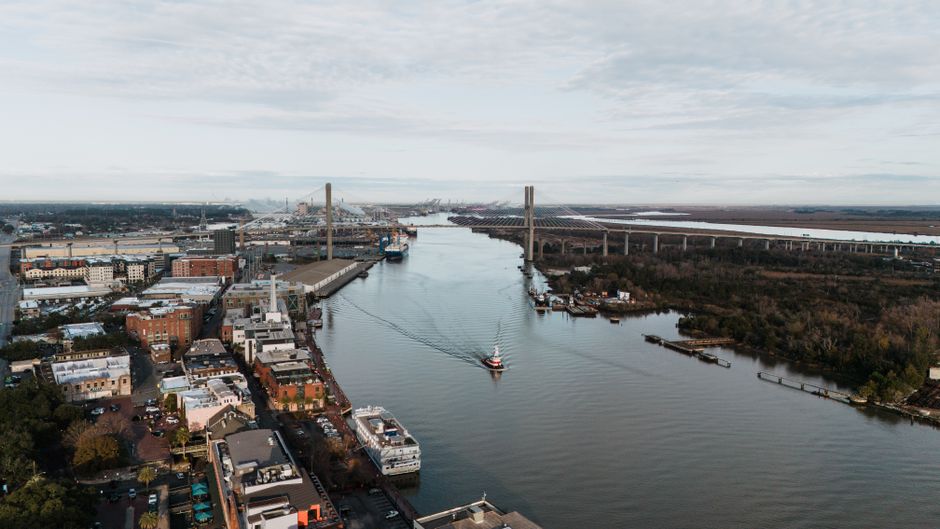
River Street exists. It has cobblestones. There are restaurants, bars, and gift shops selling the same river-view merchandise you've seen in a hundred other waterfront districts. On any given weekend, you could shoot a crowd scene here. The Savannah River views are nice enough, but you're paying a premium to have them while someone bumps into you from behind.
The real problem with River Street is that it's designed for people who want to experience Savannah without actually leaving the path most traveled. It's efficient tourism: shop, drink, take a photo, leave. And I'm not saying there's anything wrong with that, exactly. But if you've got 48 hours here, River Street will take up disproportionate time for what it actually offers.
Monterey Square and the Mercer Williams House Tell a Better Story
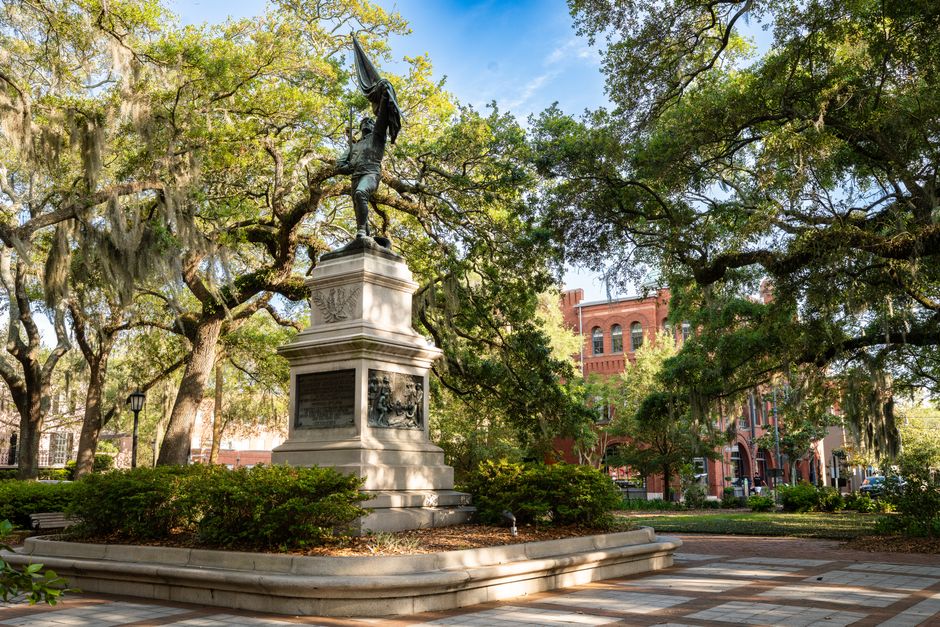
Monterey Square is one of the 22, but it gets treated like a side quest in the tourist guidebook hierarchy. That's a mistake. The square is smaller, quieter, and surrounded by mansions that actually feel lived-in—which, some of them are. The Mercer Williams House, if you've read about Savannah's obsession with 'Midnight in the Garden of Good and Evil,' sits on this square. It's the house from that book. Unlike some historic sites that trade on their literary connection and nothing else, this house has real architectural details: a brick exterior, serious proportions, windows that suggest actual rooms with actual histories.
You can tour it if you want the full context, but honestly, standing in the square and just looking at the building tells you most of what you need. The oaks here are older-looking, the moss hangs thicker, and the square itself stays relatively calm even on peak weekends. This is Savannah at a human scale.
The Historic District Walking Tours Blur Together Fast
There are dozens of walking tours operating in Savannah's historic district. Haunted tours, architectural tours, food tours, SCAD tours, Revolutionary War tours—the market is saturated. They're not bad, exactly. The guides are often knowledgeable. But if you take one, you've probably taken them all in spirit: you'll hear about the same squares, the same historical figures, the same stories about Spanish moss and pirate ships and General Sherman.
The real problem is that a guided tour in Savannah often becomes a bottleneck. You're moving in a group, you're on someone else's timeline, and you're seeing the city at the pace of the slowest person in your group. For a city that's specifically designed for wandering—these squares are meant to be discovered, not narrated—it feels counterintuitive to stick yourself on a tour with 20 other people.

Mickve Israel Temple and the Square Around It Is Where Real History Lives
Mickve Israel Temple is the third-oldest Jewish congregation in North America. It sits on Madison Square, one of the central squares, and it's remarkable. The temple itself is open for tours, and inside is an actual museum of Jewish-American artifacts—a Torah that arrived in the 1700s, letters, historical documents. This is specific, intentional history. The kind that doesn't get flattened into a generic 'historic Savannah' narrative.
Madison Square itself is also peaceful, tree-covered, and surrounds the temple with actual residential feel. Nearby is the Green-Meldrim House, another historic landmark, but it doesn't overwhelm the square with its presence. You can sit here and read a book, or stand at the temple and think about what it meant that Savannah had a Jewish community flourishing while other American cities didn't. That's not just tourism—that's actual engagement with place.
SCAD Museums Are Everywhere and That's Part of the Problem
The Savannah College of Art and Design owns so much of the city that it's easy to forget you're not touring a campus when you're just walking downtown. They've converted historic buildings into galleries, museums, and academic spaces. The museums themselves—Gutstein, Pinnacle, SCADPOP—are free and often well-curated. But there's something strange about a single institution being such a visible part of the tourist experience. You end up learning about Savannah through an institutional filter rather than a cultural one.
The bigger issue: because SCAD museums are so accessible and well-promoted, they can overshadow smaller galleries and independent art spaces that reflect what actual local artists are doing right now. If you want to see Savannah's contemporary art scene, you'll end up at a SCAD space, which is fine. But it's not the same as seeing what the city's artists actually want to make and show.
The Massie Heritage Center Shows You What You're Actually Walking Through
The Massie Heritage Center is a small museum on Mulberry Street that most tourists completely skip. It's not shiny, it's not attached to a big brand name, and it doesn't have an Instagram-ready architectural moment. What it does have is context. The museum explains Savannah's street grid, shows maps of how the city evolved square by square, displays artifacts from daily life—not just high-society objects. You learn how the city was actually planned, how neighborhoods developed, why certain squares matter.
After spending an hour at Massie, walking the same streets afterward feels different. You're not just seeing historic buildings; you're seeing the decisions that shaped the place. The museum also has a good overview of Savannah's full history—the Guale Indians, the colonial period, slavery, the Civil War, Reconstruction—without sanitizing anything. It's less polished than a SCAD museum, but it's more honest about what you're standing in.
Frequently Asked Questions
Is Forsyth Park fountain worth visiting in Savannah
Yes, but go early morning or late afternoon to avoid crowds, and don't make it your entire park visit. The fountain itself is photogenic but often swamped with tourists. The park's 30 acres offer quiet trails and oak alleys that are more atmospheric if you skip the immediate fountain area and explore further in.
What is the best square to visit in Savannah Georgia
Monterey Square and Madison Square are quieter alternatives to the most-visited squares. Monterey Square offers genuine residential feel with the Mercer Williams House as a centerpiece, while Madison Square hosts Mickve Israel Temple, giving you actual historical depth rather than just scenic views.
Should I take a walking tour in Savannah historic district
Walking tours can feel repetitive since most cover the same squares and stories. If you go, choose a specialized tour (specific historical period, local artist focus) rather than a general historic district tour. Self-guided walking is often more rewarding and lets you set your own pace through the grid.
What are the most underrated things to do in Savannah
Bonaventure Cemetery, Massie Heritage Center, and Mickve Israel Temple Museum offer genuine historical and atmospheric experiences without heavy tourist traffic. These reveal Savannah's actual layers rather than its postcard image, and they're worth prioritizing over the heavily marketed attractions.
Which one would you visit?