
I landed in Salt Lake City on a Wednesday in March, rental car parked, and immediately felt the altitude pinch in my chest. Before heading to the mountains or Temple Square, I needed to figure out where to actually live for a week—and that's when the neighborhood question hits different. Salt Lake's not huge, but where you plant yourself matters. Staying in a quiet residential pocket north of the airport means you're commuting into everything; planting yourself downtown means street noise at 2 a.m. I spent three trips testing different areas, talking to hosts, walking the streets at night with a coffee, and basically living like a local for a few days at a time.
The city's arranged in a grid that makes it easy to understand once you're here. The Wasatch Mountains rise sharp to the east; the valley spreads west. Temple Square anchors the center. What surprised me most was how much Salt Lake's changed in the past five years—neighborhoods that were sleepy are getting life, old districts are staying genuine. You won't find the same exhausted Airbnb monoculture you see in Denver or Portland. Not yet, anyway.
Downtown Salt Lake City: The Center of Gravity
Downtown is the obvious play if you want walkability and immediate access to food, bars, and cultural stuff. The blocks south and east of Temple Square—roughly from 400 South up to North Temple, and from West Temple to State Street—hold most of the good rental stock. You're close to The Gateway mall, the Salt Lake Public Library (a genuinely beautiful building worth your time), restaurants on South Temple, and a bunch of breweries. The City Weekly offices are here too, which tells you something about the neighborhood's vibrancy.
The reality is mixed. Walkability is legit at ground level; you can grab coffee, walk to a gallery, eat dinner, get a drink all without a car. But downtown empties out after business hours more than you'd expect. Weekends are lively, especially around 300 South where younger crowds cluster. Nights feel safe if you stick to lit, populated blocks—I walked around at 10 and 11 p.m. without incident—but it's not thick with foot traffic the way a larger city might be. If your plan is to explore Salt Lake proper and need a home base that's central, this works. Nightly rates run $120 to $200 for a one-bedroom, higher if you want a nicer place or it's a holiday weekend.
The Avenues: Quiet, Tree-Lined, Slightly Insular
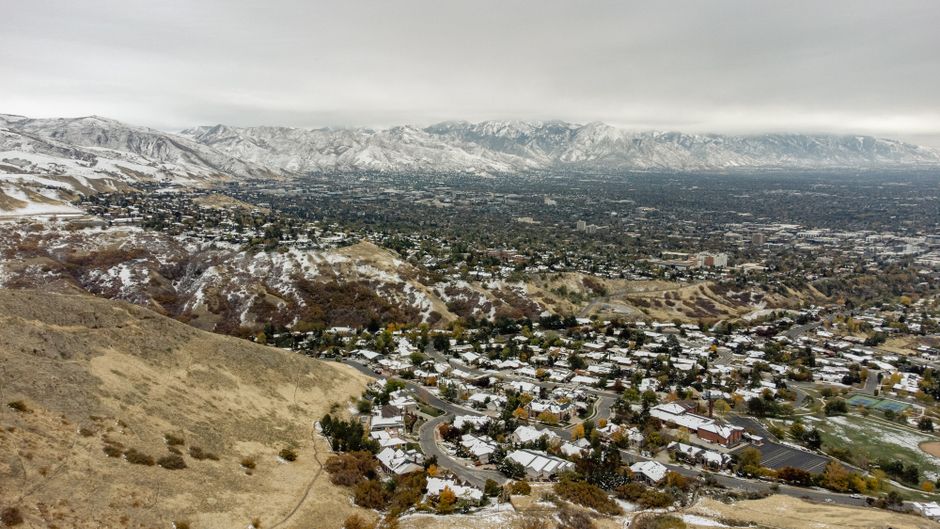
Head northeast from downtown up South Temple into The Avenues, and you cross into what feels like an entirely different city. Tree-lined streets, old brick homes, a neighborhood where people actually seem to live rather than just pass through. This is where established Salt Lakers have homes; it's residential, safe, and you'll walk more slowly here because the streets encourage it.
Walkability is decent but depends on which avenue you're on. First, Second, and Third Avenues closest to downtown have better pedestrian life. Fourth and Fifth push further into quiet pockets where you're relying more on your feet or a car for errands. There's a small coffee shop or two, a couple of restaurants, but The Avenues is not a destination neighborhood for nightlife—that's not its vibe and it doesn't pretend to be. It's where you'd stay if you want sleep, want to take the trails up the canyon in the morning, and aren't interested in Salt Lake's bar scene. Safety is excellent; I never felt anything but calm here, even wandering around past dark. The tradeoff is that after 8 p.m. the streets are genuinely quiet. Nightly rates tend toward $100 to $160 for a decent rental, partly because hosts know you're here for peace, not novelty.
Sugar House: Young, Walkable, Actual Neighborhood Life
Sugar House sits southeast of downtown around 1100 South and 1100 East, and it's the neighborhood that feels most like a real place with a real community. Younger families, grad students, young professionals all mixed together. 1100 South has the main commercial corridor—coffee shops, vintage stores, a bookstore, decent Mexican and Thai restaurants, a few bars. It has character without feeling precious or aggressively cultivated for Instagram.
Walkability is genuinely strong here. You can walk to groceries, restaurants, bars, and coffee from most rentals in this area. The University of Utah is close by, which brings a certain energy. Nightlife is active without being overwhelming—bars here are actual bars where people from the neighborhood drink, not tourist traps. Salt Lake Roasting Company and some decent watering holes keep things lively on weekend nights without creating noise problems all week. Safety is solid; I walked around on a Friday and Saturday night and saw groups, good lighting, people out. It reads as safe. Nightly rates for a one-bedroom run roughly $110 to $180, depending on how close you are to the main strip and how nice the unit is.
Capitol Hill: Artsy, Eclectic, Slight Edge of Unpredictability
Capitol Hill is the city's artistic neighborhood, roughly bounded by 200 South, 400 South, West Temple, and Main Street. It's where the galleries are, where the murals are, where you'll find the most interesting independent restaurants and bars. There's a genuine creative vibe here—not manufactured, not yet anyway. Walk around and you'll see people who've chosen to be here, who care about the neighborhood's character.
Walkability is excellent; you're close to galleries, restaurants, a couple of good coffee spots, and bars with actual personality. The Garage on 300 South has events and local bands. This is the neighborhood most likely to have things happening on a random Thursday night. Nightlife is real and active, especially Friday and Saturday. The tradeoff is that it's edgier—you'll see more homeless presence, more street activity, more general chaos. It's not dangerous, but it's noticeably grittier than The Avenues or even Capitol Hill-adjacent Sugar House. Streets are well-lit and populated, but nights here have more unpredictability. If you're energy-hungry, this is the place. If you want calm, it's not. Nightly rates land around $100 to $170, sometimes cheaper than Sugar House because some travelers are uncomfortable with the neighborhood's rougher edges.
Holladay: Suburban Quiet, Close Enough to the Action
Holladay is a few miles south of downtown, past Sugar House, and it's where you go if you want actual quiet but don't want to be completely isolated. It's more residential, more car-dependent than the other neighborhoods I've mentioned, but it's affordable, safe, and close enough to downtown that you can get anywhere in the city in ten to fifteen minutes. If you rent a car, this isn't a problem. If you're relying on walking everywhere, this doesn't work.
There are enough local coffee shops and restaurants that you won't feel stranded, but you're not walking to dinner the way you would in Sugar House. Nightlife is basically nonexistent here—it's genuinely a bedroom community. That's also its virtue; if you're here to explore Salt Lake's mountains, museums, and restaurants but want a calm home base, this works. Safety is excellent; it's the kind of neighborhood where people walk dogs in the evening. Nightly rates are the lowest of the bunch, typically $85 to $140. You get what you're paying for: a quiet, suburban place to sleep and recharge.

Practical Tips for Booking Your Stay
Book at least two weeks out if possible—Salt Lake's rental market is tighter than it was a few years ago, especially in the better neighborhoods. Weekends and ski season (November to March) push prices up noticeably; if you're flexible, visiting April through October saves money.
Walk the neighborhood at night before you finalize your booking if you can. Every listing has photos, but Salt Lake neighborhoods can change dramatically from one block to the next. If you're booking online without the chance to visit first, read recent reviews carefully and pay attention to what people say about foot traffic, noise levels, and safety. Hosts who've been around a while and have many reviews are usually reliable. Check the parking situation too—some downtown and Avenues rentals have street parking only, which is fine until it's not. Temperature matters here; even in spring, nights dip cold, so make sure your rental actually heats well. I've stayed in some beautiful old Avenues homes that were drafty in ways that looked charming in photos but felt miserable at 6 a.m.



