I rolled into Tucson on a Thursday evening expecting a sleepy college town and a string of forgettable chain dinners. That's not what happened. Within three days I'd eaten some of the best Mexican food of my life, had a conversation with a chef who actually cared about his sourcing, and realized that Tucson's food scene—while quieter than Phoenix's—punches way above its weight. The city sits at a crossroads of culture and agricultural bounty. That matters on the plate.
What follows are seven restaurants I'd actually go back to. Not tourist traps dressed up in local color. Not places I'm recommending because they fit a demographic or an Instagram aesthetic. These are spots where I either ate something that surprised me, or sat at a counter and watched someone do their job well. I'll tell you what I ordered, what it costs, and what the real trade-off is when you walk in the door.
Elote Cafe: Sonoran Mexican, Done Right
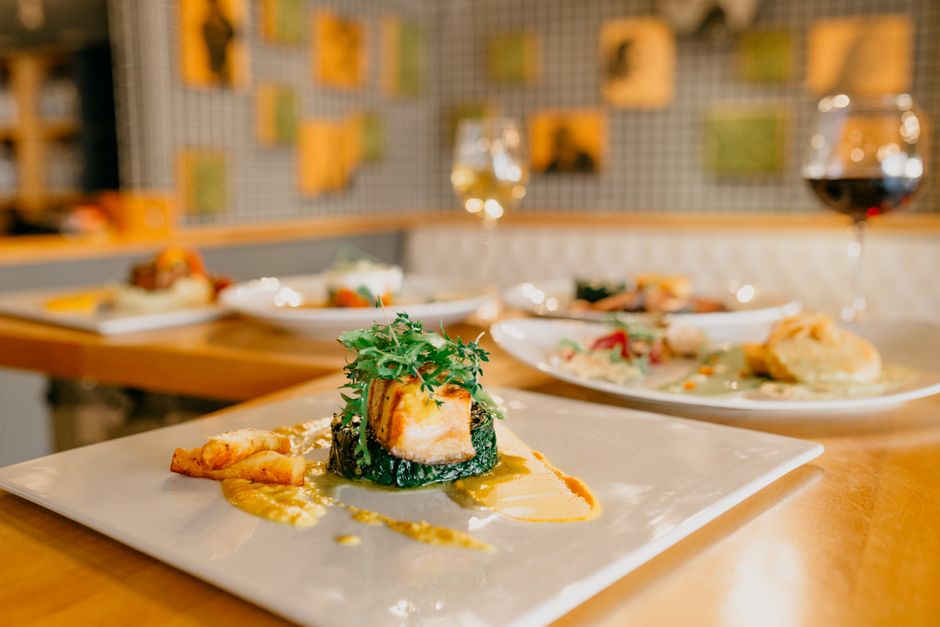
Elote sits in a quiet corner of downtown, in a converted historic building with exposed brick and enough natural light to actually see your food. The menu is short and seasonal—which usually means the kitchen isn't drowning, and the owner knows what she's doing. I ordered the chile relleno with queso Oaxaca and mole negro. The relleno was not the heavy, breaded thing you get at Americanized spots. It was delicate. The mole had depth, the kind that suggests someone spent hours on it, maybe days.
Price range runs $14–$28 for mains. Dinner for one with a drink and tax comes to roughly $30–$40. The vibe is conversational without being loud—solo diners fit in naturally here, and the bartender doesn't treat you like you're waiting for someone. The one real constraint: parking is street-only on weekends, and the area can fill up. Arrive before 6:30 p.m. or around 8:30 p.m. if you want to avoid the gap-filling crowd.
The Coronet: Italian, Unpretentious
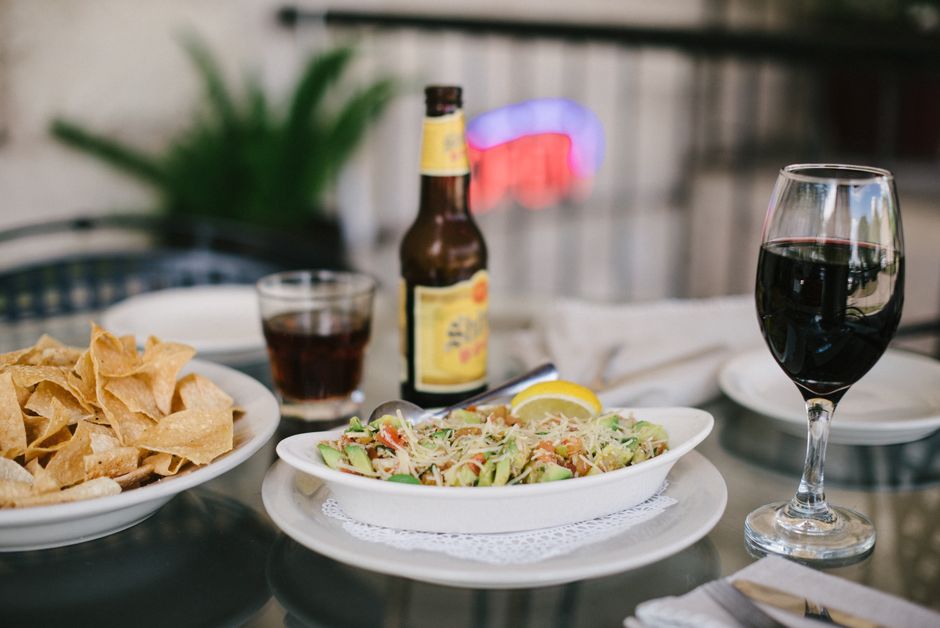
This place has been around long enough that it doesn't need to prove anything. Dark wood, red sauce, checkered tablecloths—if you're sensitive to that aesthetic, you'll know immediately whether you belong here. I'm not. I sat at the bar (which is where solo travelers should sit in Tucson restaurants; the bartenders are consistently more interesting than the dining room) and ordered the pappardelle Bolognese and a simple salad with house dressing.
The pasta was thick-cut, the sauce was meat-forward and properly reduced, and nothing tried to get fancy. It's the kind of meal that works because nobody's overthinking it. Figure $16–$32 for entrees, $25–$35 all-in for a solo dinner with a drink. The downside is real: it gets loud, especially on weekends. The room's acoustic footprint is small, and a full house bounces sound off every wall. If you need quiet, eat early or call ahead and ask about timing. But if you like to be surrounded by people having a good time, this is your spot.
Cafe Poca Cosa: Oaxacan & Contemporary Mexican
Cafe Poca Cosa operates almost like a gallery meets restaurant—the walls rotate through local artists, and the menu, written on a whiteboard each day, changes based on what the chef wants to cook. This is the kind of place that can go sideways if the kitchen's having an off night, or transcendent if you hit it right. I had the chiles en nogada and a seasonal mole that I'm still thinking about three weeks later.
Mains run $15–$26. All-in you're looking at $30–$40 for one. The space is tight, the tables are close, and the crowd skews local and educated—people who know food and aren't interested in performing for Instagram. The real friction point: service is genuine but sometimes slow because the kitchen isn't running a production line. On a busy night, plan for a two-hour meal. But if you're traveling solo and actually like being a little patient, and you want to watch how a small kitchen moves, it's worth the time.
Janos: Upscale Southwestern, Actual Ambition
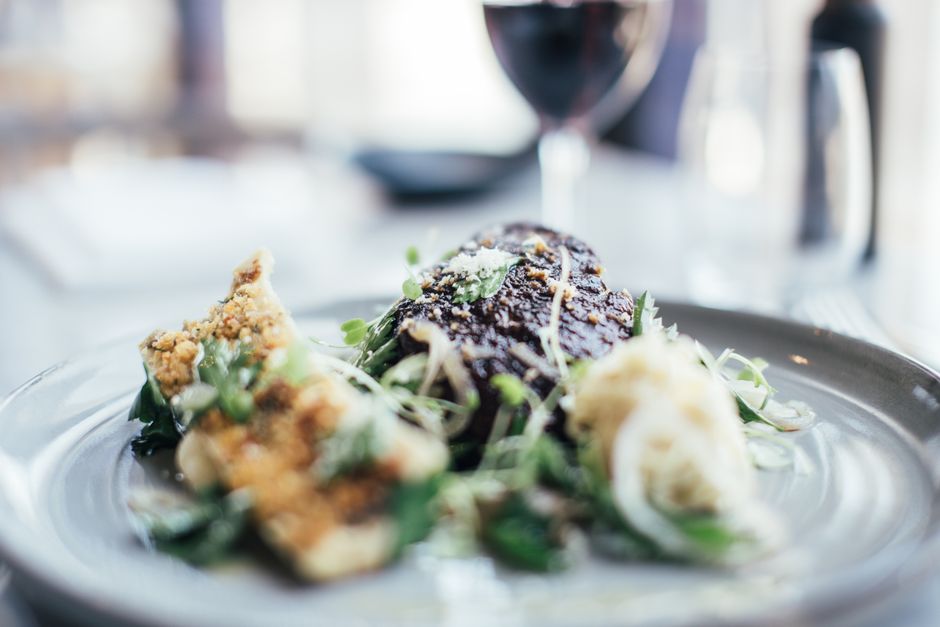
Janos sits inside the Arizona State Museum on the university campus. The room is elegant without being stuffy—wood and stone, a working kitchen you can almost see, and a wine list that suggests someone knows Arizona wines and isn't just importing California. I ordered duck confit with roasted root vegetables and a corn bisque to start. Everything was precise and flavorful, the kind of cooking that respects its ingredients without burying them.
Entrees run $28–$45. A full meal with drinks and tax will cost you $55–$75. This is the meal where you're paying for technique and sourcing and the sommelier's attention. The trade-off is expectation—you're in a formal dining space, and the room has a particular energy. It's not casual. That said, solo travelers are totally welcome, and if you're alone, sit at the bar where you can watch the kitchen and the bartender will pay attention to you. Parking is in the museum lot, which is straightforward. Reservations are necessary, especially on weekends.
Tumamoc: Casual, Seasonal, Breakfast Through Dinner
Tumamoc is what happens when someone opens a restaurant because they actually want to cook good food, not because they want to run a business. The space is minimal—concrete floors, communal tables, a real wood-fired oven that dominates one wall. The menu changes based on season and what showed up at farmers markets that morning. I ate there at breakfast (scrambled eggs with greens and sourdough toast, $14) and came back for dinner (wood-fired fish, seasonal vegetable, flatbread, $22).
Most mains run $16–$26. You can eat here for $20–$35 and be genuinely full and satisfied. The vibe is collaborative and quiet—this is where Tucson's actual food people eat. Solo travelers fit perfectly; the open layout and communal table option means you're not staged in some sad corner. The only real note: it's small and popular, so expect a wait on weekends. Arrive right at opening time or call an hour ahead. Also, they take reservations for groups of six-plus, so solo diners and small parties are walk-in only.
Maynards Market & Kitchen: Farm-to-Table, Downtown
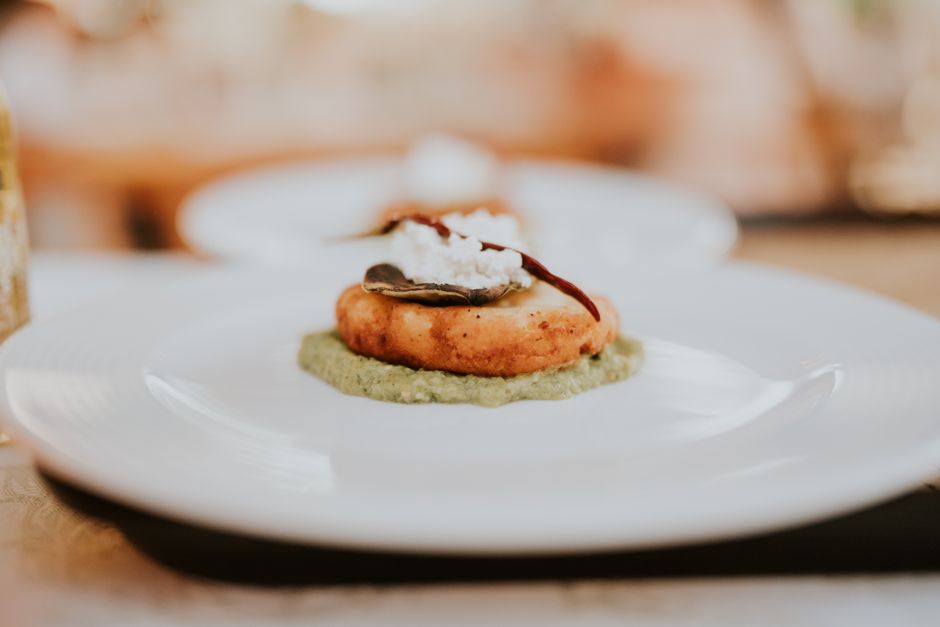
Maynards is a market-and-restaurant hybrid in a restored historic building downtown. You can grab takeout from the market side or sit in the dining room. The menu is straightforward—roasted vegetables, locally raised meat when available, good bread, clean preparations. I ordered a bowl with grain, roasted beets, goat cheese, and a tahini dressing. It was the kind of meal that feels good to eat and tastes good simultaneously.
Most plates run $12–$18 if you're grabbing from the market, $14–$28 if you're sitting down. Solo all-in is probably $20–$35. The space has energy without chaos—a mix of business lunchers, students, couples, and solo eaters. Service is friendly but not fussy. The parking situation is mixed: some street parking nearby, but the area is dense, so arrive before noon or after 1:30 p.m. to avoid the lunch squeeze. It's a good breakfast or early-dinner spot if you want to avoid crowds entirely.
A Few Notes Before You Go
Tucson's food scene isn't built around flash. It's built around ingredients, technique, and the fact that the city sits in serious agricultural country. If you're coming from Los Angeles or Phoenix expecting that energy, you'll be surprised by the quiet. If you're coming from somewhere else looking for genuine cooking, you'll find it.
Reservations are your friend here, even for casual spots during busy seasons. Walk-ins work, but you'll avoid stress by calling ahead. And eat early if you value peace and quiet—most restaurants are noticeably calmer before 7 p.m. Finally: solo diners in Tucson aren't treated like problems. Sit at the bar whenever possible. The bartenders and cooks are more interesting than most of what's happening in the dining room, and you'll have a better meal for it.