I came to Santa Fe expecting to hate it—another overpriced art-world theme park where people in linen discuss their second homes. But I got lost on my second afternoon, missed the Gallery District entirely, and found something real instead.
The thing about Santa Fe is that it rewards wandering. The minute you stop following the tidy walking maps handed out at hotels, you stumble into neighborhoods where actual people live. Where a cafe owner remembers your order. Where you can sit in a park and hear exactly nothing but piñon trees creaking in the wind.
I spent five days here working through what the city actually is when you're not shopping for $4,000 Navajo rugs or waiting an hour for a table at a place that serves blue-corn pancakes as an identity statement.
Bandelier National Monument's Easy Walk (Without the Crowds)
Everyone knows about Bandelier. The problem is everyone goes on the same day, packs the same 2.5-mile main loop, and leaves convinced they've seen it. If you're already making the 40-minute drive north out of the city, spend an extra 20 minutes on the Tsankawi trail instead—or do both early, say 7:30 a.m., when the parking lot still has space and you can actually hear the canyon.
Tsankawi is shorter, less trafficked, and stranger. It's an unexcavated pueblo site strung along a mesa top, and the trail basically takes you through rooms and across a mesa where people lived 600 years ago. You're walking on top of their archaeology, which sounds bad but doesn't feel destructive—just intimate. The views back toward the Rio Grande valley are the kind that make you understand why people wanted to live here in the first place.
Bring water. Bring sun protection. It's desert. But the parking situation alone makes it worth your time over the main loop.
Museum of International Folk Art's Textile Wing
The Folk Art Museum gets foot traffic, sure, but most people are there for the Girard Collection—the big showy rooms with folk art from everywhere. Fair enough. But the textile wing (sometimes called the Textile Arts Center, depending on when you go) is where you can actually sit and look at weaving and fiber arts without shoulder-to-shoulder crowds.
I spent two hours in there on a Wednesday afternoon and saw maybe eight other people total. There's a woman who sometimes demonstrates traditional techniques. The light is actually good. It's air-conditioned. And if you know anything about regional weaving—Hispanic Rio Grande weaving especially—you're looking at a collection that matters. People write dissertations about this stuff. You can just show up and look at it in peace.
Admission gets you into the whole museum complex, so you're not paying extra. But honestly, hit this wing first, before the crowds really get going.
Meow Wolf at Off-Hours (And What to Expect)
Meow Wolf is technically a tourist thing, and yes, it's packed. But go on a weekday afternoon—say Tuesday or Wednesday at 2 p.m.—and you'll actually move through the installations without constant phone-in-the-back-of-your-head pictures happening around you. The place is intentionally disorienting; you need space and quiet to let it actually work.
It's more interesting than it has any right to be. Less about being clever and more about letting you wander through a mansion that's also a spaceship that's also inside someone's imagination. The kind of thing where you have no idea if what you're seeing means something or if you're just supposed to enjoy being lost in it. Some of the smaller rooms in the back—away from the main drag—have a genuine eerie quality that actually justifies the ticket price.
Plan on two hours minimum. Wear comfortable shoes. Avoid evenings and weekends entirely if you can. And don't overthink the story. It's fine if there is one; it's also fine if there isn't.
Nambe Falls, or Why You Should Leave the City Entirely for a Afternoon
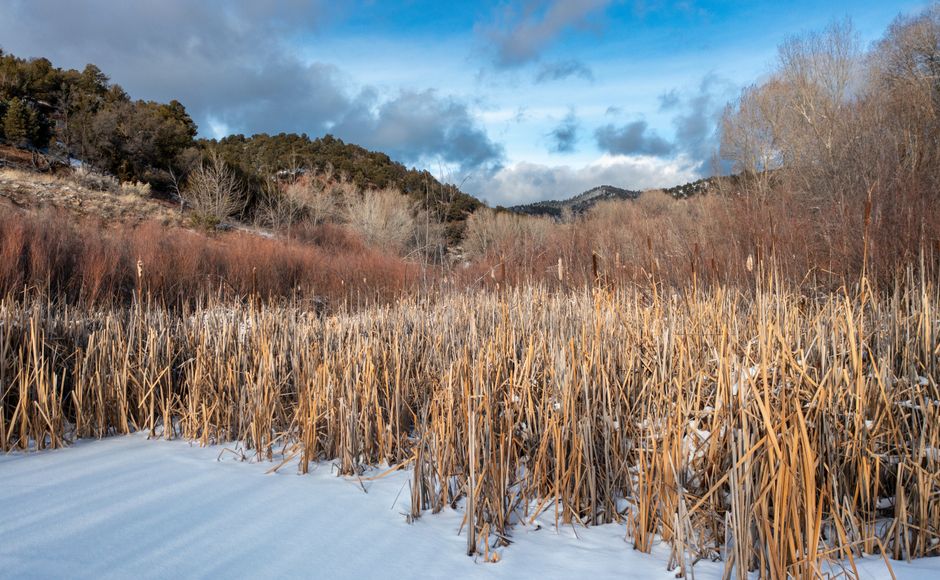
Nambe Falls is about 20 minutes north of Santa Fe proper, in Nambe Pueblo land. You pay a small day-use fee at the gate and drive into a completely different landscape—high desert opening up into aspen groves and water that actually moves.
The waterfall itself isn't dramatic. It's a modest drop in a canyon, the kind of thing that would barely register in places with real precipitation. But the context transforms it: pine smell, actual stream noise, the sound of water that didn't get piped somewhere, and the fact that you're basically alone there. I went mid-afternoon on a Thursday and saw one other group of people in the parking area.
The walk is straightforward, maybe 45 minutes round trip, and the water is cold enough that people actually get in it. Which brings its own problem—you'll want to come back. The spot has a gravity to it that feels earned, not performed. There's no gift shop. There's barely even signage. It's just a place where water falls and the light changes through trees.
The Real Locals' Coffee Spot (And Why It Matters)
I'm not going to name the specific place because once I do it'll be a destination, and the whole point is that it's not. But it's the kind of cafe where the owner knows every regular's name, where the pastries come from someone's sister's kitchen, and where the coffee tastes like someone gave a damn about the coffee. It's on a side street, not anywhere tourists naturally end up, and there's no Instagram moment happening.
This is where you actually see Santa Fe work as a place people live in. Not perform living in. Actually live. You can sit there for three hours on a laptop and nobody bothers you. The wifi works. The chairs are comfortable. It's 60% cheaper than anything near the Plaza. And you're surrounded by writers, local artists who are actually working, people having real conversations in Spanish.
Honestly, every city has one of these spots. Santa Fe's just easier to find if you're willing to stop asking for recommendations and start walking down streets that don't have a lot of gift shops.
Site Santa Fe and the Off-Season Thing
Site Santa Fe is a contemporary art space, and it's genuinely good. But the trick is visiting during an off-season exhibition, or on a slow afternoon, when you can actually talk to the staff. They're not there to sell you anything. They're there because they care about art, and they'll tell you real things about what's on the walls and why it matters.
The space itself is interesting—it's in an old warehouse-ish building south of downtown, nowhere near the gallery cluster. Which means it stays quieter than it deserves to be. The shows rotate; you can check ahead to see if there's something that appeals to you. But even if the current exhibition isn't your thing, wandering through a serious contemporary art space without crowds around you is its own kind of valuable.
Admission is usually free or low-cost. The cafe inside is decent. It's the kind of place that reminds you Santa Fe has an actual art scene, not just a market for expensive things.
Why You Probably Shouldn't Stay in the Downtown Area
This isn't a spot so much as a logistics tip that changed my whole experience. The Plaza and its surroundings are convenient, sure. They're also where every tourist goes, which means every restaurant and every shop is priced for that traffic and staffed with people who'd rather you spend money and leave.
Stay somewhere in the Guadalupe or Barrio de Analco neighborhoods instead—south and east of downtown, maybe a 10-minute walk to the Plaza but a completely different vibe. You'll eat where locals eat. You'll see the actual architecture of the city, not the theme-parked version. Your accommodation costs probably 30% less. And you're still close enough to downtown that you're not dependent on a car.
Walking through a city at different hours, from a different angle, teaches you things that a guidebook never will. Santa Fe's one of those places where the location of your bed matters as much as where you go.