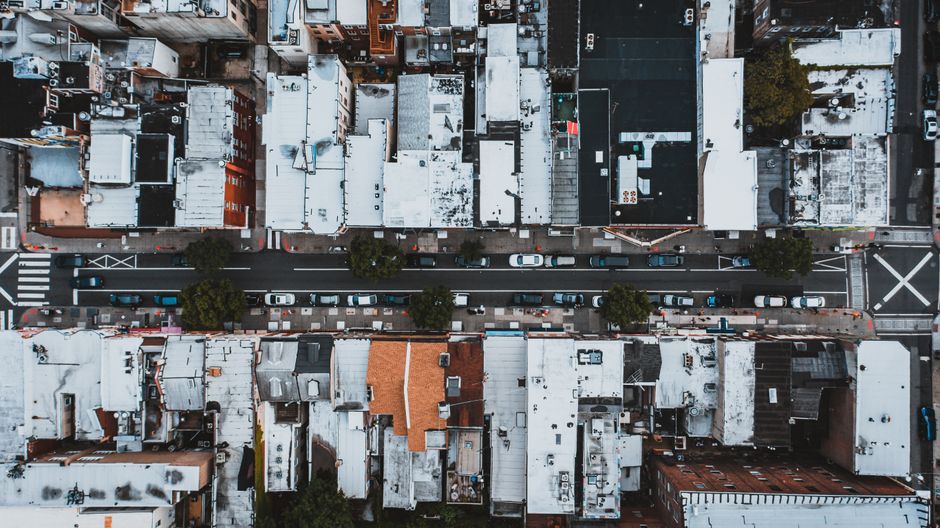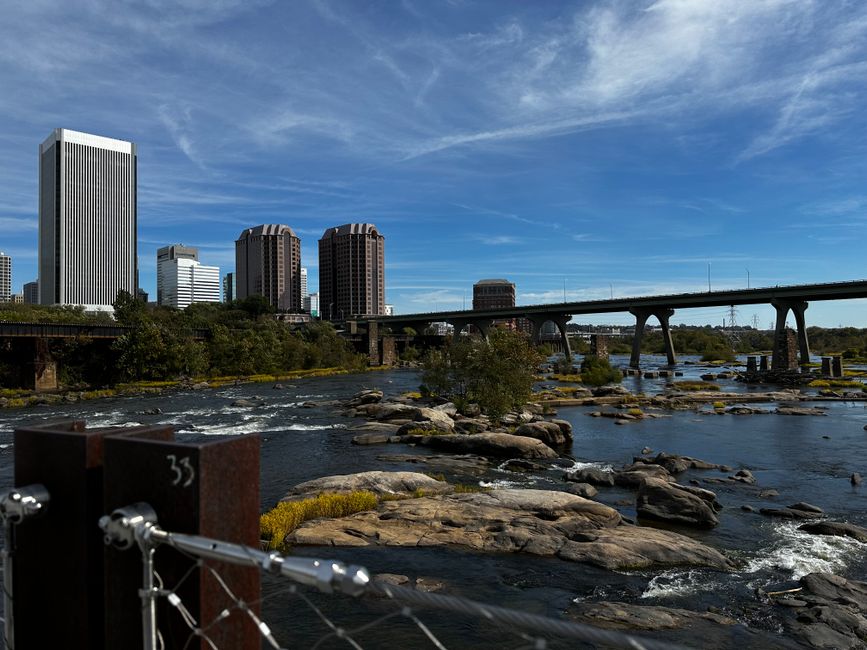
I rolled into Richmond on a humid afternoon in late September, the kind of weather that makes you walk slower and notice more. The James River was right there, shimmering in the haze, and I could already tell the city wasn't going to be one of those places where everything worth seeing is roped off on a single heritage tour.
I spent three days drifting through neighborhoods, stopping for coffee where I heard actual conversation instead of background music, sitting in parks where I was the only person taking photos. This isn't one of those "undiscovered gem" articles—Richmond's been having a moment for years now. But there are still corners of this city where you can spend an hour and feel like you've stumbled onto something real.
Belle Isle and the Ruins That Actually Feel Forgotten
Everyone knows Belle Isle exists. It's a city park on the James, heavily trafficked on weekends. But most people hit the main loop, snap a photo of the floodwall arch, and leave. The actual interesting stuff is deeper in.
I wandered toward the old hydroelectric plant ruins—concrete foundations and abandoned machinery scattered through overgrown pathland. There's no rope barrier, no interpretive sign. You just find it if you walk far enough. The structure dates to the turn of the last century, part of Richmond's industrial spine before the city reinvented itself. Standing there with the river moving past, hearing nothing but water and occasional birds, I understood why locals keep coming back to this place. It's not manicured. It still feels like a discovery even though you're technically still within city limits.
The island's also thick with trails that branch off from the main path. One takes you to a small overlook where the river narrows. Another loops past old stone buildings that are slowly being reclaimed. None of this requires a guide or an admission fee.
Institute for Contemporary Art: Free and Actually Worth Your Time
The ICA on the VCU campus is contemporary art, which can mean anything from transcendent to bewildering, often both at once. What matters: it's free, the building itself is architecture worth seeing, and it doesn't feel like a tourist destination because nobody promotes it that way.
I went in late on a weekday afternoon. Maybe a dozen people in the whole place. The current show—whatever it was when you're reading this—occupied me for an hour. The permanent collection rotates, but the space itself is what gets me: clean lines, natural light, a courtyard that feels like it shouldn't exist in the middle of a college campus but does anyway. Locals know this as a quiet place to reset. There's a cafe that serves decent coffee. No crowds. No photo-staging areas.
It's the kind of museum that doesn't make top-ten lists because it's not spectacular in the postcard sense. It's just genuinely good and open to everyone.
Maymont Estate: Beyond the Mansion Crowds
Yes, Maymont gets tourists. Everyone tours the gilded-age mansion or walks the immediate grounds. But the estate spans 100 acres, and most of it stays quiet.
I parked on the valley side rather than fighting for the mansion entrance lot, and just started walking. The gardens are laid out in sections—Japanese, Italian, rose gardens—but they're not the kind of landscaping where you feel watched by other visitors. You can actually sit on a bench for five minutes without someone else's group chat happening behind you. There's a carriage museum in one of the stable buildings that I wandered through for twenty minutes. Very few people know it's there.
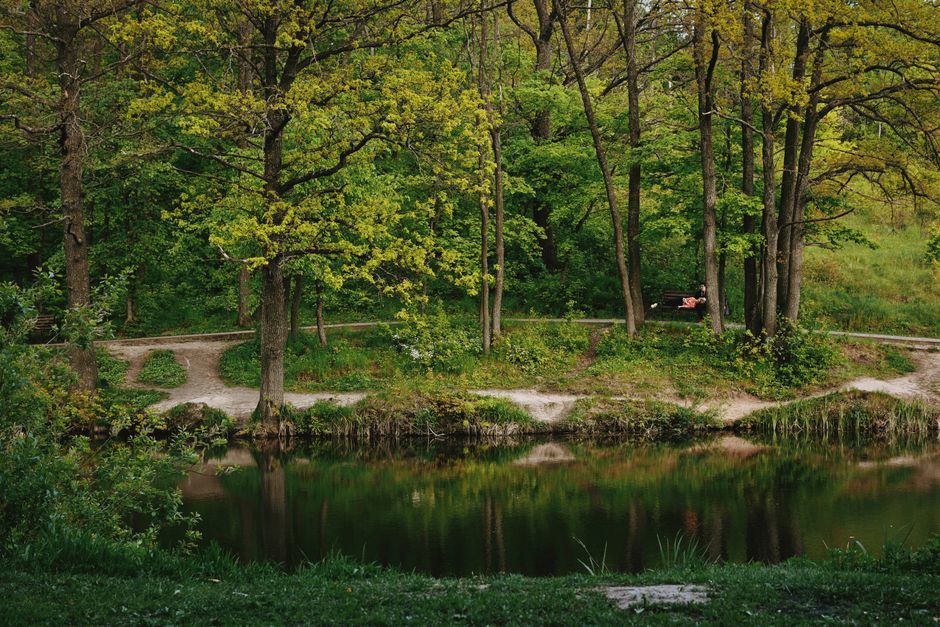
The real find is Swan Lake. It's deeper in the property, smaller than you'd expect, with cypress trees and a walking path. The water reflects the surrounding trees and sky. It's the kind of quiet that accumulates—the longer you stand there, the more you notice. Birds, insects, the light changing through the canopy. Nothing happens. Everything happens.
Stone Brewing's View of the River Gorge
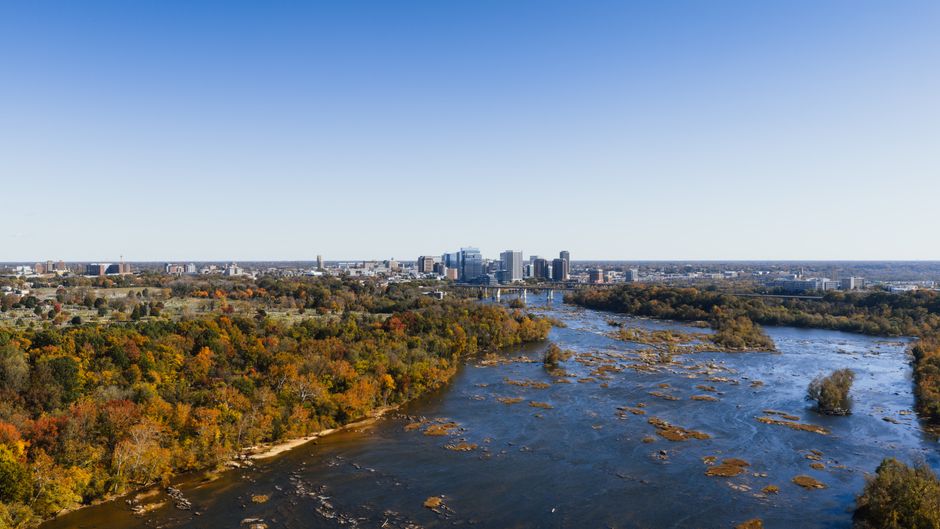
Stone Brewing occupies an industrial space in Manchester, just south of downtown, and it has a deck overlooking a section of the James River gorge that takes your breath. The brewery itself serves solid beer in high-volume fashion—it's busy, especially weekends. But the view holds whether there's a crowd or not.
I showed up on a Thursday at four in the afternoon. Maybe thirty people spread across the deck. The light was hitting the gorge at the angle that made the water look like hammered metal. The stone cliffs across the river had started catching afternoon shadow. I ordered a beer I won't remember the name of and sat for an hour.
Breweries have become their own kind of tourist destination, which is fair—good beer is good beer. But this particular spot works because the location itself does the heavy lifting. The gorge is beautiful and raw. You're sitting on the edge of actual topography, not a themed facsimile. The river's powerful here, darker than it is upstream.
Artspace and the Manchester Neighborhood Shift
Artspace is a converted warehouse full of artist studios and small galleries. It's been here for years but still doesn't feel like a mandatory tourist stop, maybe because there's no single grand statement inside. Just a lot of working artists in small rooms.
You can walk through on a weekend afternoon—some studios are open, some aren't—and actually see people painting, making jewelry, doing whatever brought them there that day. It's low-pressure. Nobody's working a pitch. It's the opposite of a curated experience. One artist had her door open and was clearly in the middle of something. She looked up, I nodded, I kept walking. That was the whole transaction.
The Manchester neighborhood surrounding Artspace is actively gentrifying, which means there's a weird moment happening. You'll find old dive bars next to new coffee places. Vacant storefronts next to carefully restored loft buildings. It's the kind of in-between zone that's actually more interesting than a neighborhood that's finished transforming. You're seeing how things change in real time. Artspace is at the center of that. Not a theme park version of arts and culture. An actual place where people are working.
Three Notch'd Brewing: Local Knowledge Without the Posture
This is the second brewery recommendation, and that's not an accident—Richmond's got good breweries, and they're genuinely community spaces rather than tourist trap drinking spots. Three Notch'd in Scott's Addition has cornhole boards and a casual backyard energy that feels earned rather than designed.
I watched a pickup soccer game happen in the grass next to the seating area. People were there to hang out with friends, not to document the experience. The beer's solid. The space doesn't pretend to be anything other than what it is. You can hear conversations. Music's at volume where you can still hear the person next to you. All of this seems basic, but it's rarer than you'd think.
The neighborhood itself—Scott's Addition—is worth a walk. Murals, small galleries, vintage shops that actually have inventory instead of three carefully styled items. Less polished than some areas of the city, which is exactly why it matters.
The Boulevard Bridge at Sunrise
This is the simplest recommendation and probably the best. There's a pedestrian bridge—the Boulevard Bridge, spanning the James—where locals walk in the early morning before the day heats up. I went at six-thirty one morning and had the bridge almost entirely to myself.
The river moves below. The light was changing minute by minute. The city skyline was silhouetted. It's free. It's accessible. It requires nothing of you except showing up early. No admission fee, no tour, no interpretation. Just you and the river and the bridge and the sky doing what it does every day that most people sleep through.
I think that's the whole thing about Richmond. The best stuff here isn't hidden in the way that implies you need a secret map. It's just overlooked because it's quiet. Because it doesn't demand to be noticed. Because it exists for residents first, tourists second. You have to be the kind of person who's willing to walk an extra ten minutes down a path without knowing what's at the end. If you are, this city will reward you.