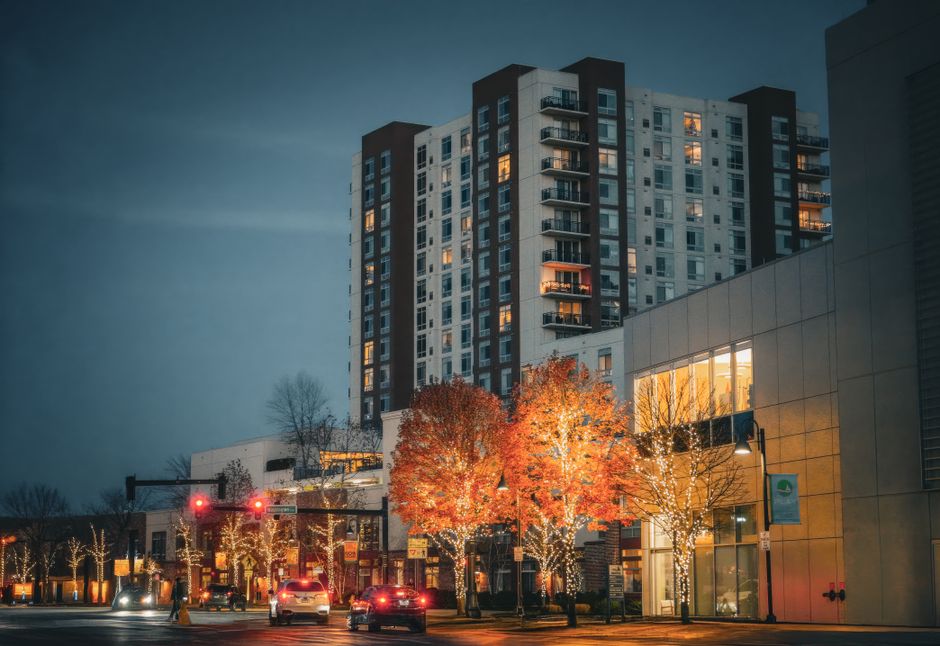
I landed in Charlotte on a Thursday afternoon with no real plan except to avoid another hotel chain. The city sprawls in a way that catches a lot of people off guard—it's not small, but it doesn't feel like a major metropolis either. That in-between quality is actually useful when you're trying to find a neighborhood Airbnb that doesn't feel generic. I spent two weeks moving between different quarters of the city, figuring out which ones made sense for solo travelers or small groups who wanted walkability without constant noise.
The mistake most people make is booking downtown and assuming everything revolves around that central corridor. It doesn't. Charlotte's neighborhoods each have their own rhythm, their own crowd, their own reasons to exist. Some are great if you want to be in the middle of everything; others work better if you want to park the car and forget about it for a few days.
South End: Walkable, Expensive, the Safe Bet
South End is where you go if you want the most obvious choice—which isn't an insult. The neighborhood has actual sidewalks, actual restaurants open past 9 p.m., and a genuine sense that other humans chose to be there on purpose. The streets around South Tryon have been rebuilt in the last decade with the explicit goal of making them pedestrian-friendly, and it shows. You can walk to breweries, gastropubs, galleries, and enough coffee shops to sustain a caffeine habit.
Nightly rates typically run $120 to $200+ depending on season and how nice the place is. It's the premium option. The neighborhood stays relatively safe at night; I saw groups of people walking around at 11 p.m. without the creeping tension you get in genuinely dicey areas. That said, it's also where you'll run into Charlotte's version of a party scene on weekends—nothing wild by big-city standards, but the block around the breweries gets loud on Friday and Saturday. If you want quiet evenings, this isn't it.
The real limitation is that South End can feel a bit thin—like it was designed rather than developed. And the walkability, while genuinely good by Charlotte standards, still has limits. You're not going to walk to a grocery store without thinking about it. But if you're visiting for 3-5 days and want the easiest possible neighborhood experience, South End handles it.

Plaza Midwood: Younger, Grittier, More Interesting
Plaza Midwood sits northeast of downtown and has that quality of being the neighborhood where people actually live, rather than the one built for tourism. The commercial strip along Central Avenue has character—vintage shops, dive bars that have been there forever, restaurants that took real risks. The crowd skews younger and more artistic than South End, which means you're either going to love it or find it exhausting depending on your temperament.
Walkability here is solid but uneven. The main drag is great. Three blocks in any direction and you're back to residential streets where walking feels less intentional. Prices sit in the $80-$150 range typically, which is noticeably lower than South End. Nightlife is genuinely available—there are bars, live music venues, late-night food options. Safety feels fine, though the neighborhood does have an edge to it that South End doesn't. That edge is part of the appeal for some people. It means the place isn't sanitized.
The downside: if you're coming to Charlotte to unplug and relax, Plaza Midwood might feel like work. It's trying hard to be interesting, and that effort can be exhausting after a long day. It's better if you're coming to actually engage with the city.
Dilworth: Quieter, Tree-Filled, Residential
Dilworth is for people who want neighborhood charm without the restaurant-scene obligations. It's one of Charlotte's older neighborhoods—tree-lined blocks with actual architectural variety, tree-filled parks, the sense that someone's lived here for decades, not months. The commercial core is small and low-key: a few coffee shops, a couple of restaurants, a hardware store that looks like it's been there since 1987.
Walkability is moderate. You can walk to coffee, you can walk to dinner, you can walk a decent loop and feel like you've done something. But it's not a neighborhood designed around walking; it's a neighborhood where walking happens. Prices typically range from $85-$140, making it accessible for longer stays. The neighborhood is quiet at night, which is either a feature or a problem depending on what you came for.
Safety is strong here. It's residential, it's established, it's the kind of neighborhood where people park their cars and use them to go places rather than wandering drunk between bars. There's nightlife available if you drive to South End or Plaza Midwood, but Dilworth itself shuts down pretty early. This works great if you're using Charlotte as a base to explore outside the city, or if you actually want to sit in a rented space and work or rest.

NoDa: Art District Energy, Bohemian Vibes
North Davidson—NoDa to locals—has that street-art-murals-and-indie-music-venues thing that a lot of cities are trying to recreate. Unlike some manufactured arts districts, this one feels like it actually happened organically, which makes the hype around it slightly more justified. There's genuine creative presence here, not just the aesthetic of creativity.
The walkability of NoDa is weird. The main drag along Davidson Street is totally walkable and has actual things on it. But the neighborhood extends into residential areas quickly, and the sense of where "downtown" ends and residential begins is blurry. You can definitely walk around, but it's less grid-like than South End and more exploratory. That's fine if you like discovering things; annoying if you want predictability.
Nightly rates run roughly $90-$160. The neighborhood draws a young, creative crowd without being as aggressively party-oriented as parts of Plaza Midwood. Nightlife exists but isn't mandatory. Safety at night is generally fine, though the neighborhood has a grittier texture than Dilworth. This is a good middle ground if you want some energy without the full South End experience, and you want to feel like you're in an actual neighborhood rather than a tourism product.
Myers Park: Money, Quiet, and Isolation
I stayed here for four days and barely left the immediate surrounding few blocks. Myers Park is Charlotte's wealthiest neighborhood, and it shows in the architecture, the landscaping, and the complete absence of street-level commercial activity. It's beautiful in a manicured, understated way. Big trees, older homes, the sense that this is where people came to escape the city while technically being in it.
Walkability is basically a moot concept. You can walk, and the sidewalks are pleasant, but there's nowhere to walk to. You drive to restaurants, you drive to groceries, you drive to coffee. This isn't a neighborhood; it's a residential sanctuary. Prices run about $100-$150, which is reasonable given the space and quality of Airbnbs here.
The tradeoff is that you need a car. Without one, you're confined to whatever the rental property provides—a kitchen, a reading chair, isolation. Safety is excellent. Nightlife is nonexistent in the neighborhood itself. This is only a good choice if you're visiting Charlotte to see specific things elsewhere in the city or you genuinely want a retreat from any kind of scene.

A Practical Note on Booking
Charlotte's neighborhoods don't always have clean boundaries, and Airbnb listings often hedge on which neighborhood they're actually in. Read the listing description carefully and look at the map. A place listed in South End might technically be in the borderland between South End and somewhere else. That's not necessarily bad—it can actually give you lower prices and more space—but it changes the reality of what you'll have access to without a car.
Also, Charlotte has real traffic. If you're thinking walkability is your main mode of transportation, make sure the neighborhood actually supports that before you book. A place that's technically close to restaurants might require a ten-minute drive that would be a 30-minute walk, and not a pleasant one.