
I showed up in Columbus on a Friday afternoon with no real plan beyond "let's see what this city's about." I'd booked an Airbnb in what turned out to be a perfectly fine neighborhood, then spent the weekend wandering around trying to figure out which blocks actually felt alive and which ones required a car to get anywhere. After a few trips back, I've got a clearer sense of where visiting types should actually plant themselves. Columbus isn't a city where one neighborhood does everything—you've got to pick your lane a bit.
The good news is the short-term rental market here is reasonable. You're not paying San Francisco prices, and you can find real apartments, not just studio conversions designed by someone who's never actually lived anywhere. The bad news is that "walkable" is relative in Ohio, and a neighborhood that feels safe and quiet at 7 p.m. might require some consideration before wandering around at midnight. I've put together what I've actually found works.
German Village: The Instagram-Friendly Choice
German Village gets written about a lot, usually in breathless terms that make it sound like some undiscovered treasure. It's not undiscovered. But it's worth the attention, at least if you understand what you're getting.
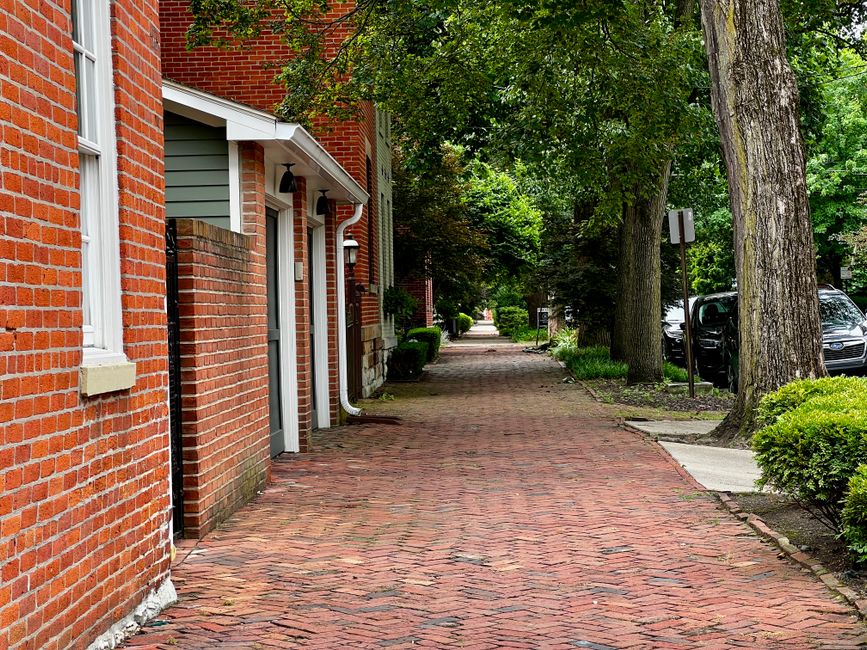
This is the neighborhood for people who want brick sidewalks, gas lamps, and restaurants within actual walking distance of wherever they're staying. The architecture is genuinely nice—19th-century brick townhouses, tree-lined streets, actual urban texture. High Street is the main commercial drag, and it's got decent bars, decent restaurants, and enough foot traffic that you'll never feel stranded. Schiller Park is in the middle of it all, and on a nice weekend the whole neighborhood feels like it's outdoors.
The walkability is legitimately good. Most of what people want to do in German Village—eating, drinking, a few shops—you can actually reach on foot. Safety feels fine in the evenings and nights, though like anywhere you use basic judgment about 2 a.m. wandering. The trade-off is noise. This isn't a quiet neighborhood. People are out, particularly Thursday through Saturday. If you want nightlife footsteps, great. If you want silence, look elsewhere.
Nightly rates typically run $120–$200 for a decent one-bedroom or small two-bedroom. You'll find cheaper rooms and more expensive options, but that's the realistic middle.
Short North: If You Want the Vibe Without the Crowds
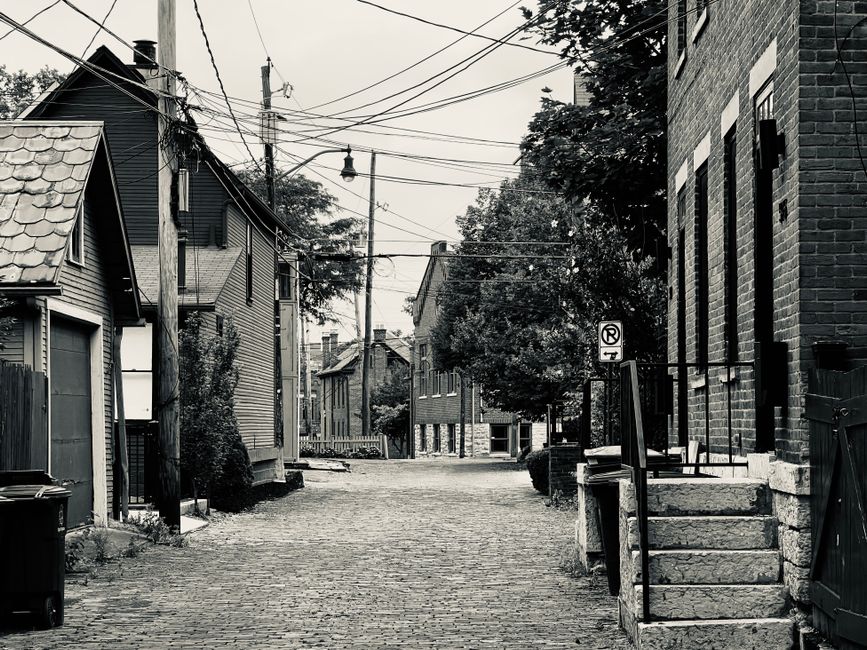
Short North sits just north of downtown and has gone through the predictable "formerly industrial, now it's where young people go" transformation. Unlike German Village, it hasn't completely ossified into a tourist neighborhood. It still feels like a place where people actually live.
High Street runs straight through it, and yes, there are galleries and cafes and bars—the usual arts-district infrastructure. But the neighborhood is also genuinely mixed. You'll see residential buildings next to commercial spaces, long-term residents mixed with newer arrivals. The Gallery Hop on the first Saturday of the month brings crowds, but most nights it's just people doing normal neighborhood things. There's a real grocery store, actual laundromats, the infrastructure of real life, not just consumption.
Walkability is solid along High Street and one block over either direction. You'll probably want a car or ride for anything further out, but the core of what you need is walkable. It's quieter than German Village but more active than residential neighborhoods. Safety at night is fine along the main strips; use your head about wandering into dark side streets at 1 a.m. like you would anywhere.
Expect $110–$180 per night for a decent one-bedroom. You can find rooms for less if you're flexible, but that range is realistic for something you'll actually want to spend time in.
Victorian Village: Quiet and Actually Residential
Victorian Village is east of downtown, and it's the neighborhood for people who realize halfway through their trip that German Village was too much. This isn't a nightlife destination. That's not a slight—it's a feature.
It's blocks of restored Victorian-era houses, tree-covered streets, and genuinely limited commercial development. There's a small collection of cafes and restaurants along North Fourth Street, but if you're thinking about eating out five nights, you might get bored. If you're thinking about spending long days working from a coffee shop with your laptop and then a quiet evening walking around, this is exactly right.
Walkability within the neighborhood is fine—it's residential, so you're mostly walking to other residential things. Getting to restaurants or bars requires either a car or walking 15–20 minutes to the edges where the real commercial stuff starts. The tradeoff is that it's genuinely quiet. You might hear neighbors, traffic, normal city stuff, but you won't hear bar noise at midnight. Safety is solid. The neighborhood is well-lit and relatively busy with other residents, particularly in nice weather.
Nightly rates run $90–$140, which is notably lower than the hipper neighborhoods. You're not paying the Instagram tax here. It's a real neighborhood with real people living real lives, and the short-term rental prices reflect that.
Grandview Heights: North Side Walkability
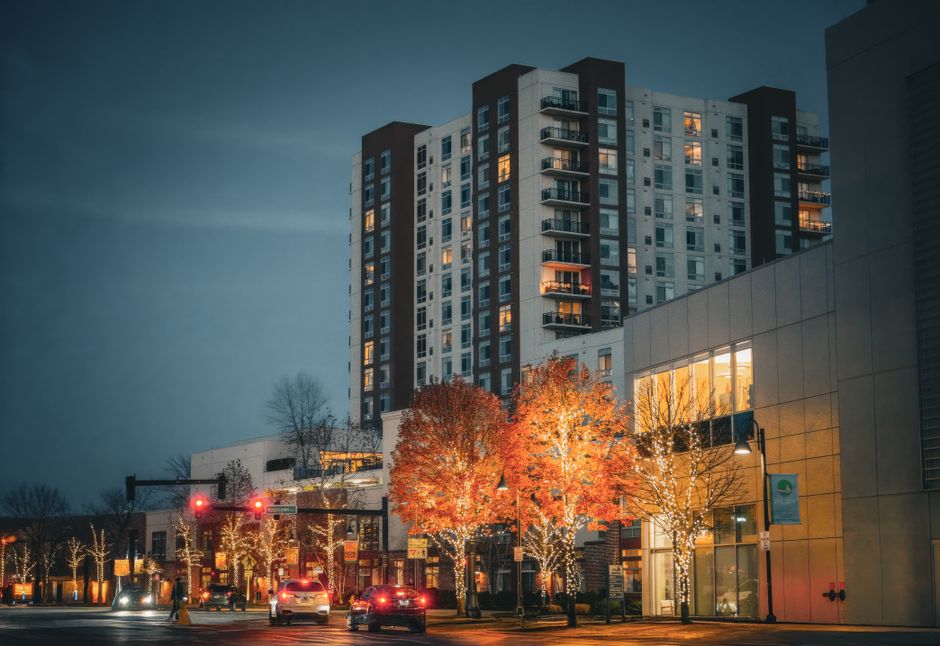
Grandview Heights sits north of the downtown core, and it's the emerging neighborhood that people from Columbus actually move to right now. This matters. It means real infrastructure, real businesses opening, but also that it hasn't been completely packaged for visitors yet.
Walton Avenue is the main drag, and it's got that working-through-growth phase energy—some excellent restaurants, some bars, some shops that opened recently because someone thought the neighborhood was worth betting on. There's a Whole Foods, which sounds boring until you realize it means there's also real grocery infrastructure and foot traffic. The neighborhood is popular with young professionals and families, and you feel it.
Walkability is good along Walton and okay in a two-block radius around it. Beyond that you're in residential blocks. Getting across the neighborhood requires some effort, but the commercial center is genuinely walkable. It's got decent nightlife—bars, late-night restaurants—but it's not intentionally set up as a party zone the way some neighborhoods are. Safety is fine, similar to Short North. It's a place where people are actively building a life, not just passing through.
Nightly rates are $100–$170, reflecting that it's up-and-coming without being fully established. You're not overpaying for hype, but you're also not getting a discount.
Worthington: The Suburb That Functions Like a Town
I'm hesitant to recommend suburbs to city travelers, but Worthington is different enough to mention. It's far enough north that it's technically its own city, but close enough to downtown (20 minutes by car) that it doesn't feel like you're exiled. And it's got a genuinely functional main street that actually works.
High Street runs through it, and there are restaurants, bars, coffee shops, and enough local character that it doesn't feel like suburban nowhere. The town square has events, the neighborhood has what passes for nightlife in suburban Ohio. It's quieter than anything downtown, and it requires a car to get anywhere beyond the few blocks of High Street, but if you're renting a car anyway or planning to spend more time driving around Ohio, it's worth considering.
Safety is excellent. It's suburban quiet and well-maintained. You won't hear much of anything after 10 p.m. unless you're on High Street. Walkability is limited to the downtown core, but that core is pleasant.
Nightly rates are significantly lower—typically $70–$120—because you're outside the city proper. If your priority is a comfortable base with space, quiet, and lower costs over walkable urban energy, it works. Just go in knowing what you're getting.
A Few Practical Notes
Columbus's weather matters. Winter can be gray and genuinely cold. If you're visiting November through March, understand that "walkable" becomes less appealing when it's 30 degrees and windy. Spring and fall are the sweet spot—mild, the neighborhoods feel best, prices are usually a bit higher.
Parking varies wildly. German Village and Short North have street parking that's either free or metered; it's manageable. Victorian Village and Worthington have free parking practically everywhere. Grandview Heights is in between. If you're not renting a car, this doesn't matter. If you are, it's worth asking about before booking.
The Airbnb market here is solid without being overpacked. You'll find real apartments managed by actual people, not faceless corporations. Read the reviews carefully. Pay attention to what people say about noise and neighborhood vibe—those reviews tend to be honest.


