
I arrived in Columbus on a gray afternoon in March, the kind of weather that makes a city feel honest. I'd done the usual—walked around the Arena District, poked my head into the Hilton hotel lobbies—and found myself underwhelmed in the way you do when you follow tourist signage. So I rented a bike and started moving sideways through neighborhoods, the way you actually discover places. What struck me over the next few days wasn't that Columbus has hidden gems scattered around waiting to be uncovered. It's that the city's real character is in the accumulation of small, ordinary decisions people have made about how to spend their time here.
I'm not talking about the Ohio Statehouse or COSI, though both are solid. I mean the places you find when you get a little lost, when you follow a street because it has tree cover, when you stop into a coffee shop because someone's sitting outside reading. These are the spots that won't make it into the big travel guides, and that's kind of the point.
Schiller Park and Its Peculiar Midwestern Charm
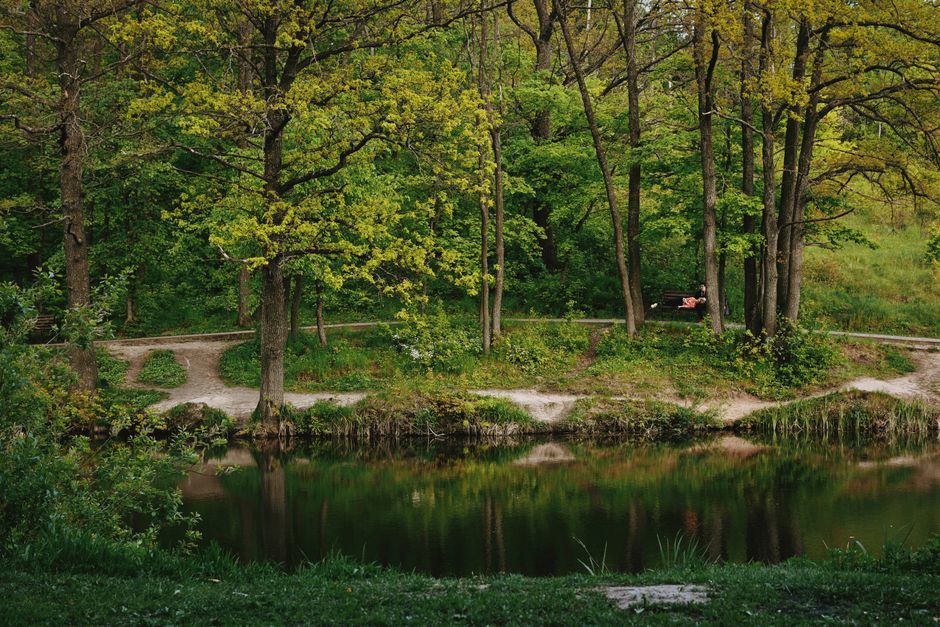
Schiller Park sits on the German Village side of Columbus, about twenty minutes south of downtown if you're walking with purpose. I didn't come here for any reason other than I saw it on a map and the name stuck with me. What I found was a pocket-sized park that feels less like a major attraction and more like a neighborhood living room—which is exactly why I kept coming back.
There's a pond, some walking paths, a gazebo that could use paint but looks right in its unfussiness. On a weekday, you'll run into older folks doing tai chi, parents with toddlers, the occasional person just sitting on a bench with a sandwich. The Schiller Park house sits at the edge—a limestone mansion from 1811 that occasionally opens for tours, though hours are sparse and irregular. I didn't make it inside, but the exterior alone, modest by mansion standards, tells you something about what wealth looked like to early Columbus settlers. The park's real gift is that it asks nothing of you. You can sit, walk, bring a book. No entrance fee, no gift shop, no sense that you're supposed to perform tourism here.
Topiary Park: A Block of Weirdness in the Old Brewery District
Topiary Park occupies half a city block near the Old Brewery District, and it's the kind of place that makes you stop and stare without quite understanding why. There's no signage explaining what you're looking at. You just round a corner and find yourself surrounded by sheared shrubs in vague animal and geometric shapes, most of them green and some of them, depending on season and maintenance, a bit uncertain about their own purpose.
The park was created in the 1990s as part of a community art project, and it's evolved into something that looks semi-intentional and semi-accidental all at once. Some of the topiary figures are recognizable—you'll spot what might be a giraffe, might be an abstract quadruped. Others are pure geometry. There's a small central area where locals cut through to the brewery district proper. On a nice day, you'll see people taking photos, kids chasing each other around the paths. It's not precious or polished. It's just there, a little strange, a little wonderful, the kind of thing that stays with you because it doesn't seem designed to.
The Wexner Center for the Arts—Museum Hours, Gallery Costs
The Wexner Center sits on the Ohio State campus, a building that looks like it was designed by someone who wanted architecture to ask questions rather than answer them. It's a contemporary art museum in a city that doesn't feel oversaturated with contemporary art museums, which makes the visit feel less like an obligation and more like an actual choice.
Unlike COSI or the Columbus Museum of Art, the Wexner doesn't position itself as essential Columbus tourism. It's angular, the programming is conceptual and occasionally challenging, and the crowd tends to be smaller and younger. I spent an afternoon there looking at photography and video installations that I'd completely forget by week's end, but the act of looking—of being in a space designed to make you think sideways—felt valuable. Free gallery hours exist on certain evenings if you're budget-conscious. The building itself, the Powell Aquatic Center-adjacent neighborhood, the bookstore—it all feels like you've stumbled into what students and artists actually do in Columbus when they're not performing for visitors.
Worthington: A Village Pretending Not to Be Wealthy
Worthington is a suburb about fifteen minutes north of downtown, and it reads at first as a collection of overpriced coffee shops and boutiques where people with money go to feel understated. But spend a morning there without dismissing it, and it opens up differently.
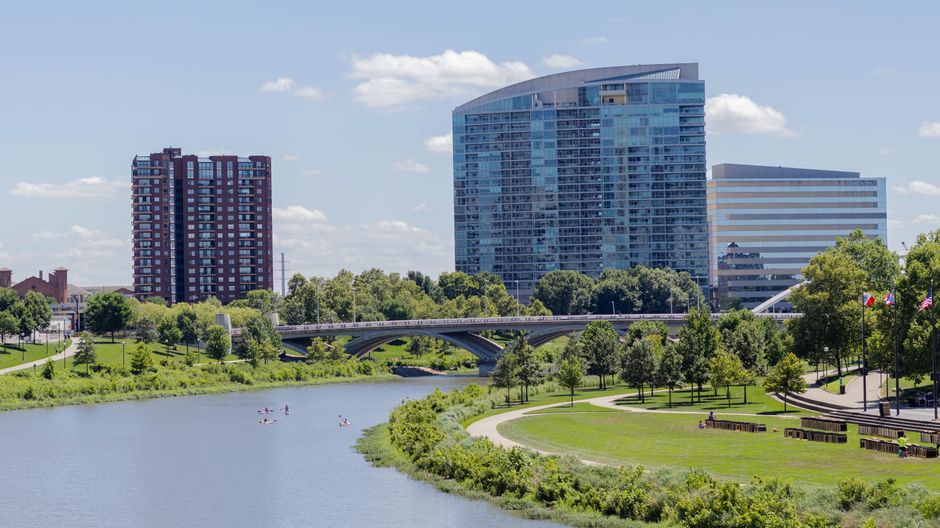
The downtown grid is actually walkable, genuinely pleasant. The Olentangy River runs nearby with parks and paths. There's a farmer's market on Sundays (seasonal) that feels less like a performance piece and more like actual food procurement. Thomas Library sits at the center of the village—a public library that looks like someone's idea of what a really good library could be, all brick and wood and windows that make you want to sit for hours. I grabbed coffee at one of the cafes and watched people run errands, meet friends, live their lives in a way that felt almost aggressively normal. The village museum opens sporadically but contains genuine local history if you're interested in what Columbus's northern suburbs looked like in earlier eras. It's not a hidden gem in the way most travel articles use the phrase. It's just a place where if you slow down, you'll see how some people have chosen to build their lives here.
The Book Loft and Its Impossible Inventory
The Book Loft occupies an entire city block in German Village, a used bookstore so large that you can spend three hours inside and still not find half of what you were looking for. This sounds like hyperbole until you're inside it.
There are thirty-two rooms. The inventory is something like 500,000 books. The prices are reasonable enough that you'll buy more than you intended. I came in looking for a specific travel essay collection, didn't find it, and instead found four other books I didn't know I wanted and had decided, by the time I left, that I couldn't live without. The store has been here for decades in various configurations, and it has that feel—reliable, slightly disorganized, run by people who genuinely care about books rather than the aesthetics of book-selling. The aisles are tight, the lighting is practical rather than moody, the other customers are reading, searching, quietly competing for the same obscure titles. It's a place that rewards wandering, that punishes efficiency. Spend time in here and you'll understand something about how bookstores used to function before they had to become Instagram locations.
Goodale Park: Dog-Eared and Real
Goodale Park is closer to downtown than Schiller—you can walk to it from the Short North—but most guidebooks punt you toward the Zoo or Cemeteries or the more manicured parks. Goodale feels lived-in. It's got the Victorian-era bones you'd expect from a big-city park, but the overlays are contemporary: dog walkers, pickup soccer games, people picnicking alone with a book.
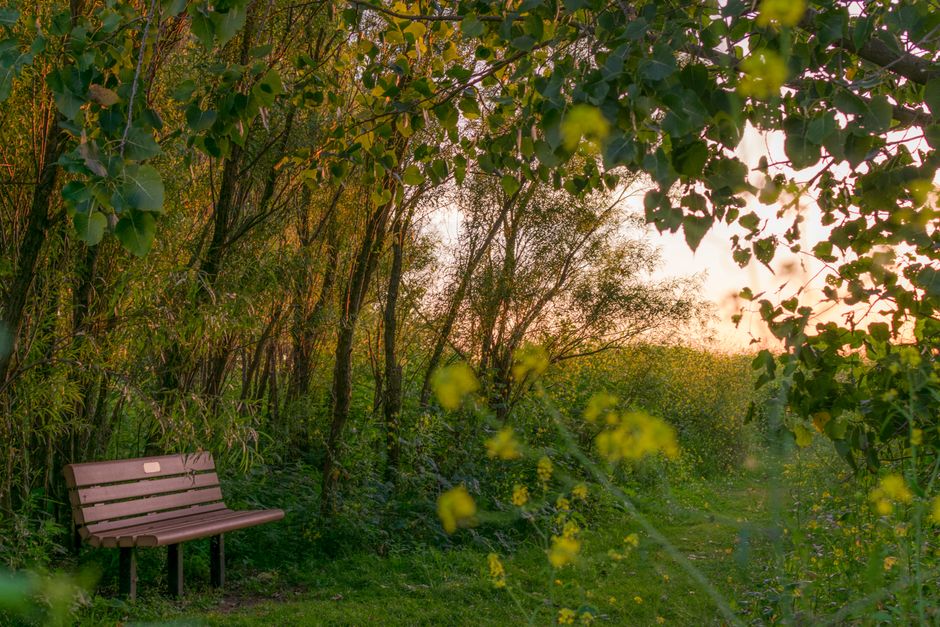
There's a small pond, paths that loop, trees that have been here for generations. On weekends the park fills up with local energy—people actually using the space rather than photographing it. The playground is busy and loud in the best way. I sat for an hour on a bench one morning watching the park wake up, and it felt like seeing Columbus's casual self, the version that doesn't think about tourism at all. If you're looking for a place to recover from downtown walking or to understand how locals spend an afternoon, Goodale does that work quietly, without trying.
Small Decisions, Actual Discoveries
The pattern I noticed moving through Columbus, away from the main attractions, was that good travel isn't about finding dramatically secret places. It's about being willing to spend time in ordinary ones. A park where nobody's performing for cameras. A museum where the crowd is small because nobody's been told they have to go. A neighborhood where money exists but doesn't announce itself.
Columbus doesn't need protection from tourism. It's too large, too confident for that. But it does seem happier when you approach it like a place to live in for a few days rather than a place to collect experiences from. The side streets, the small parks, the local bookstore—they're not hidden so much as they're available to anyone willing to slow down long enough to notice them. That's all I did here. I slowed down. And the city opened up in small, genuine ways that I won't forget.


