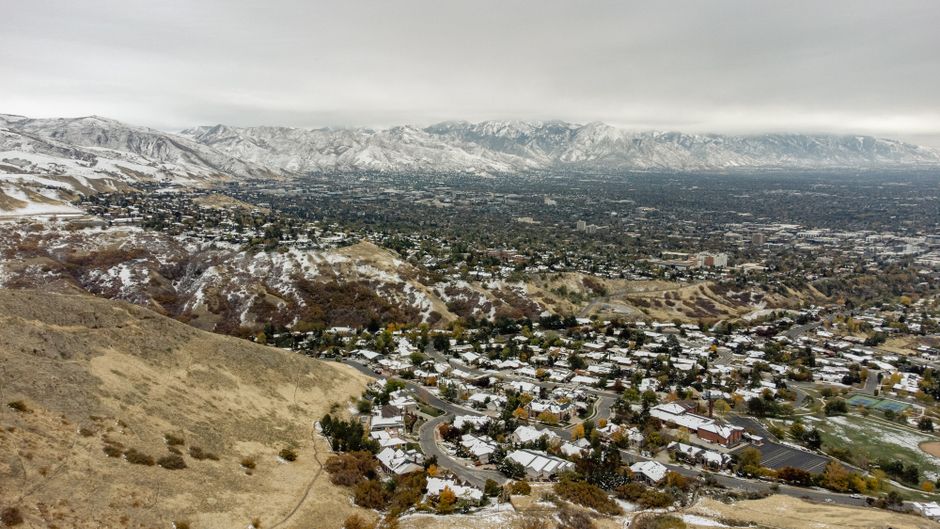
I landed at Salt Lake City International in October, the kind of brittle-blue day where you can see the Wasatch Mountains like they're printed on glass. I'd booked an Airbnb sight unseen—rookie move—and spent my first hour on local Reddit threads trying to figure out if I'd ended up somewhere walkable or stuck in a subdivision. The city's smaller than people expect, and neighborhoods matter here. Between the sprawl heading south and the narrow valleys hemming everything in, where you stay determines whether you're walking to dinner or calling a car. I spent two weeks moving between three different neighborhoods, which gave me a clearer picture than most travel guides bother to paint.
The Avenues: Money Moves and Morning Runs
The Avenues sits directly east of downtown, climbing the foothills on a grid of tree-lined streets named after numbers and compass directions. It's where people with actual disposable income live, and it shows—there's a gentleness to the neighborhood that feels almost New England in a Utah sort of way. The sidewalks are genuinely walkable, especially if you're grabbing coffee or picking up groceries, though you'll want to walk downhill toward downtown for nightlife. The streets themselves are quiet at night, the kind of quiet where you hear someone's sprinkler system working three houses down. Safety isn't really a conversation here; I never once felt unsettled.
The tradeoff is obvious. Avenues Airbnbs run $180 to $280 per night depending on size and season, and they're booked months ahead because locals use the neighborhood as a model for what Salt Lake City could be everywhere. If you're someone who prefers morning runs and your own space to loud bars, this works. If you're hoping to stumble between venues at 11 p.m., pick somewhere else. The neighborhood doesn't have a true restaurant core—there's a scattering of good places, but it's not the kind of area where every block has a destination. Most people who stay here are either very familiar with Salt Lake City already or they're after quiet and safety above all else.
Downtown and South Temple: The Predictable Choice
Downtown Salt Lake City is what downtown looks like when a city was planned by Mormons with space to burn—wide streets, generous blocks, clean lines. It's not cramped or overstimulating. The pedestrian experience is functional rather than charming, and that's fine. You can absolutely walk to restaurants, bars, and the Main Street cultural venues (museums, theaters, that sort of thing). Temple Square itself is downtown's gravitational center; it's architecturally impressive and pedestrian-friendly, though the vibe can feel more institutional than neighborhood-y.
The real energy is along South Temple, running east-west and lined with restaurants, galleries, and bars that actually draw crowds on weekends. It's the closest thing Salt Lake has to a neighborhood where you can spend an evening without planning three stops ahead. Safety at night is solid—I saw plenty of people out at reasonable hours, and the streets are lit and monitored. Hotels and short-term rentals here run the gamut wildly; you'll find $120-a-night places that are essentially extended-stay units, and $250-plus options with real finishes. The neighborhood itself doesn't sleep early, but it's not a nonstop party either. It's predictable, which is sometimes exactly what a solo traveler wants on night two of a trip.
Sugar House: Where People Actually Live
Sugar House is the neighborhood that makes Salt Lake feel like a place rather than a concept. It's southeast of downtown, centered around a several-block corridor of indie businesses, vintage shops, and restaurants that look like people made them instead of a focus group. The neighborhood has actual character—tree-tunneled residential streets, a community feeling, the kind of place where the same barista remembers your order. Walking here doesn't feel efficient; it feels like you're allowed to be uncertain about where you're going.
Nightlife exists without dominating. There are bars and late-night spots, but the neighborhood's soul is more Saturday afternoon than Saturday midnight. Parents push strollers, people sit on porches, someone's always selling used books out of a garage. Safety is good, especially along the main commercial stretch and on the numbered residential streets heading north. Walking at night is fine. Airbnbs cluster in the $130 to $200 range, which is reasonable for this market. The trade is that you need to be comfortable with walkable-but-not-dense; the vibe is deliberately low-key. If you're after Utah's microbrewing scene and local food culture, this is your neighborhood. If you need cocktails and late-night energy, you're splitting your time with downtown regardless.

Holladay and Cottonwood Heights: The Quiet Border
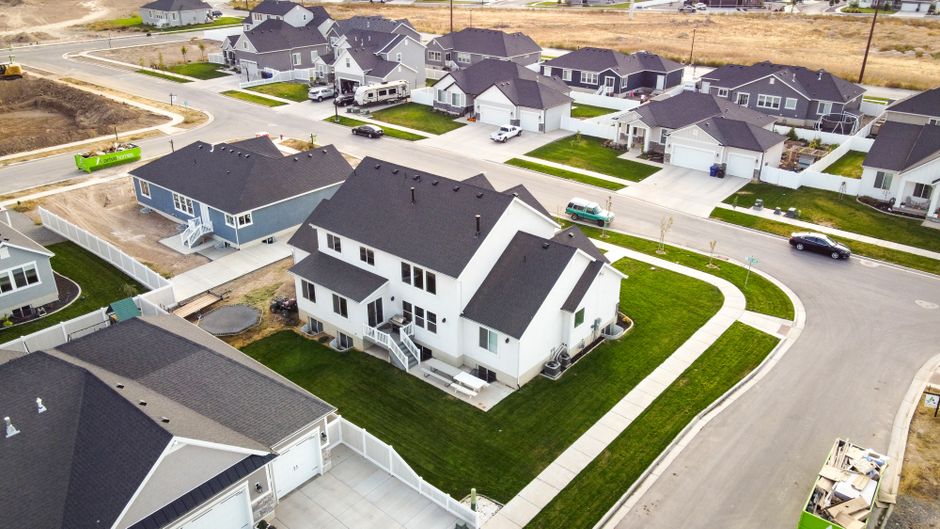
Venture south of downtown into Holladay or east into Cottonwood Heights and you're hitting the foothill suburbs where Salt Lake City's wealthier residential areas sprawl. These neighborhoods are safe, quiet, and extremely car-dependent. You're looking at wide streets, single-family homes with yards, mountains visible from most angles. The appeal is obvious if you want peace and don't mind driving to restaurants or attractions. The problem is equally obvious for a short-term visitor without a rental car.
I'm mentioning these mainly to say: they exist, they're affordable (rentals tend toward $110-$160 per night because they're farther out), and they're perfectly safe. But they're not neighborhoods you should book unless you're either recovering from something or you've genuinely rented a car. The walking infrastructure isn't there. The neighborhood character is "nice suburban stability," which is real, but it's not what most solo travelers are seeking on a week's trip. They're places to live, not places to visit.
The Marmalade District: Emerging and Uneven
Northwest of downtown, the Marmalade District is Salt Lake City's recent renovation project—old row houses and commercial buildings being converted to lofts, boutiques, and restaurants. On paper, it checks all the boxes: walkable, developing nightlife, proximity to downtown, visible investment. In practice, it's still finding its footing. Some blocks feel genuinely vibrant; others feel like construction sites masquerading as neighborhoods.
The strength is variety and lower cost: Airbnbs here often go for $130 to $180 per night, and you get the illusion of discovering something before it's fully polished. The weakness is unevenness. You might book a unit on a block where three new restaurants opened this year, or you might be two blocks from the action wondering why the street feels half-finished. Safety is fine in well-lit areas, though the neighborhood's newness means some stretches aren't yet what they promise to be. It's worth considering if you don't mind a neighborhood in transition and you're comfortable navigating a place that's still figuring out its identity.
The Real Talk on Salt Lake City Short-Term Stays
Salt Lake City's summer books up fast, and winter is genuinely slow—hotel and Airbnb rates can drop 40 percent between July and January. The ski season (December through February) brings a different crowd. Spring and fall are ideal for walking and exploration without temperature extremes.
Walkability in Salt Lake is decent but not like Denver or Portland. The city's geography makes it feel more spread out than it actually is. Neighborhoods are genuinely isolated from each other; you can't really wander from Sugar House to downtown on foot and accidentally discover the city. Cars are normal here, and rentals are cheap. If you're staying more than four days, rent one. If you're here for 2-3 days, pick downtown or Marmalade and accept that you'll be strategic.
Safety is solid overall. This isn't a crime-heavy city. The usual traveling rules apply—don't be stupid late at night in parking structures, watch your belongings—but Salt Lake City ranks well for personal safety compared to most major cities. Night walking is fine in the neighborhoods I've mentioned. The Avenues are safest; downtown has the most activity. The vibe of the city itself is quiet-leaning, which some travelers find peaceful and others find dull. Go in knowing what you want from a city and you'll have a fine time. Go in expecting something else and you'll likely be confused.