I landed at Salt Lake City International on a Thursday morning and did what most visitors do—checked into a hotel downtown, walked toward Temple Square, and immediately felt the pull of the organized tour crowds. By Friday afternoon, I'd ditched that script entirely. The city's real character isn't in the obvious places. It's in the residential canyons east of the valley, in tiny museum spaces tucked behind unmarked doors, and in neighborhood bars where locals actually hang out. Three days of wandering got me somewhere guidebooks don't quite reach.
Salt Lake has this particular geography that works in your favor if you're willing to walk around a little. The mountains are close—closer than you'd expect if you've only seen pictures. The neighborhoods have real texture, not the polished blandness of most downtown tourist zones. And the people, once you're out of the scripted hospitality zones, are genuinely helpful about directing you somewhere better than wherever you just asked about.
City Creek Canyon: A Walk That Doesn't Feel Like Sightseeing
Most visitors know about the creeks in the nearby canyons—Big Cottonwood, Little Cottonwood—and they drive up there expecting alpine scenery. What they miss is City Creek Canyon, which starts practically in the heart of the city and offers a legitimate hike without the forty-minute drive. The trailhead is off North Temple, and the canyon itself feels remarkably undeveloped compared to what you'd expect this close to downtown.
The lower sections are shaded and mellow, following the creek through cottonwoods and along a trail that's been there long enough to feel worn and purposeful. Push higher and the vegetation changes, the canyon walls steepen, and you're not jostling with tour groups anymore. I went on a Friday morning in October and saw maybe five other people, all of them locals doing a quick workout before heading to their offices. The vibe is completely different from the packaged experience of the larger canyons. There's a small parking area near the trailhead, though it fills up on weekends. Go early or go on a weekday.
The Utah Museum of Fine Arts: Quiet and Genuinely Worth Your Time
The UMFA sits on the University of Utah campus, which means it's both easy to find and somehow still missed by people just doing the Salt Lake circuit. It's not the kind of museum that gets breathless reviews on travel sites, which is exactly why you should go. The collection isn't small—they've got American paintings, contemporary work, a solid photography section—but it never feels overwhelming or precious.
I spent a Friday afternoon there in near-solitude. The museum staff seems genuinely glad when someone actually shows up, which makes the whole experience feel less transactional than what you get at major metropolitan museums. There's also a decent café if you need a coffee break, and the campus itself has a quiet, genuinely nice aesthetic without the overwhelming student-body energy you might expect. Admission is reasonable, and they have extended evening hours on Thursdays if you want to combine this with dinner in the nearby Sugarhouse neighborhood.
Gilgal Sculpture Garden: Weird in the Best Way
This one is genuinely strange and deserves more attention than it gets. Thomas Gilgal was a Bishop in the LDS church who, starting in the 1940s, spent decades carving and commissioning sculptures around his property—biblical scenes, sphinx heads, cosmic imagery, all arranged with no apparent organizational logic. When he died, the neighborhood got worried his family would develop the land, so they established it as a public art space.
The garden is compact, maybe thirty minutes to walk the whole thing slowly, but the specific weirdness of the collection is exactly the kind of thing that sticks with you. There are no placards explaining what anything means. The sculptures range from crude to technically accomplished. Some are clearly informed by LDS theology; others are pure mysticism. It's the kind of place where you come back days later and realize you're still thinking about some random stone carving. Location is a bit south of downtown—definitely check current hours before heading over, as it keeps limited open access.
The neighborhood around it, by the way, is one of Salt Lake's more interesting residential areas if you want to wander afterward.

The Rio Grande Depot Area and Gallivan Center: Where Locals Actually Gather
I found this by getting slightly lost trying to avoid downtown crowds, and it ended up being the most genuine experience I had in Salt Lake. The Rio Grande Depot is the old train station, and the area around it—now called the Historic Gateway District—has a completely different energy than the Temple Square zone. There are galleries, used bookstores, coffee shops, and restaurants that seem to actually serve people who live nearby rather than people passing through.
The Gallivan Center is a small performance and events space in the same district with an open plaza that doesn't feel aggressively designed. On the afternoon I wandered through, there wasn't anything scheduled, which somehow made it better—it was just a place where Salt Lake residents might actually choose to spend time. The whole district has this slight grittiness that most downtown renovation projects deliberately erase. It's not polished. It's real.
Red Butte Garden: Legitimately Beautiful, Legitimately Less Crowded
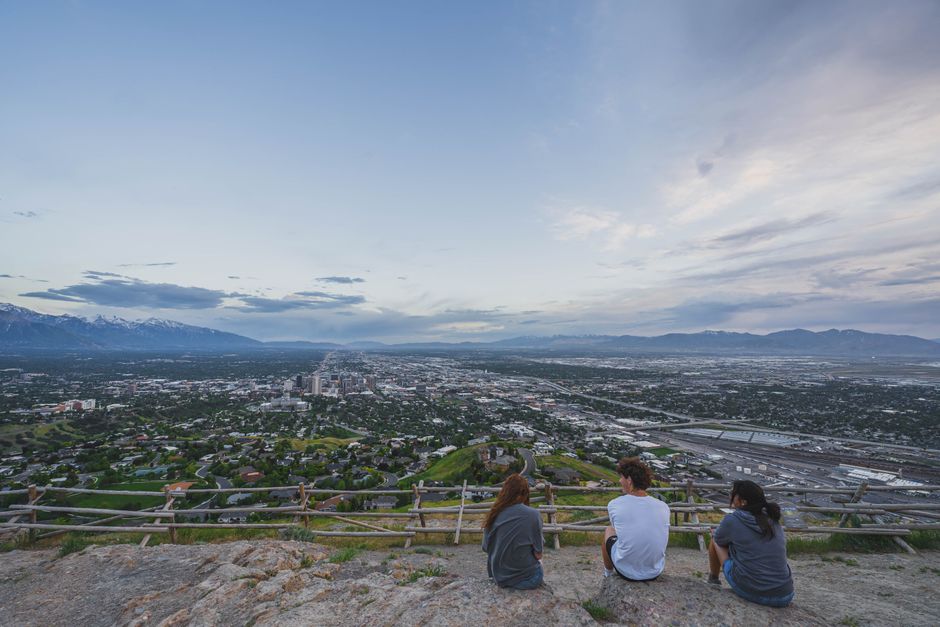
Utah has an obsession with outdoor botanical displays, and most tourists who make it to a garden at all end up at Tracy Aviary or one of the major parks. Red Butte Garden sits on the edge of the University of Utah campus and offers something genuinely different: views back over the valley, native Utah plantings mixed with more exotic specimens, and a sense of actually being in the foothills rather than in a manicured space that happens to be in the mountains.
The garden isn't huge, but it's well-designed enough that it doesn't feel crowded even when there are people there. I visited in late afternoon when the light was starting to get interesting, and the combination of plantings and views made it feel almost meditative. There's a small café area, and the entrance fee is modest. If you're the type of person who enjoys a walk through well-organized natural space without the chaos of the major tourist attractions, this beats most of what Salt Lake offers in the same category.

Sugarhouse Neighborhood: Just Walk It
Most visitors get pointed toward downtown or the ski canyons and miss the fact that Sugarhouse, just southeast of downtown, is where actual Salt Lake residents live and spend their time. South Temple has cafés, used bookstores, vintage shops, and restaurants that don't cater specifically to tourists. The neighborhood has small parks, tree-lined streets, and a rhythm that reflects the city's actual culture rather than its tourism culture.
I spent a morning just walking, stopping for coffee at a place that wasn't aggressively branded, browsing a used bookstore where the owner seemed to actually love his inventory, and eating lunch at a restaurant where I was the only non-local in the space. This is how you understand a city. Not through curated experiences, but through moving through neighborhoods where nobody's performing a script. If you rent a car or have a way to get a few miles outside the central tourist zone, Sugarhouse should be on your list just for the walking and the general sense of what Salt Lake City actually is when tour groups aren't pointing cameras at things.
A Note on Time and Expectations
Salt Lake City works best if you're willing to spend time getting disoriented. The visitor infrastructure is efficient and well-organized, which is fine if you're on a tight schedule, but the actual interesting parts of the city reveal themselves slower. I stayed five days and used the first day and a half to get the obvious stuff out of my system. After that, I was genuinely exploring rather than checking boxes.
The city has a particular character that doesn't quite match what you'd expect from Salt Lake tourism marketing. It's drier, less theatrical, more locally focused. That's not a complaint—it's actually a reason to go. Most American cities of this size have been aggressively brand-polished for tourism. Salt Lake hasn't quite had that done to it yet, which means there's still something real to find if you're willing to wander past the main attractions.