
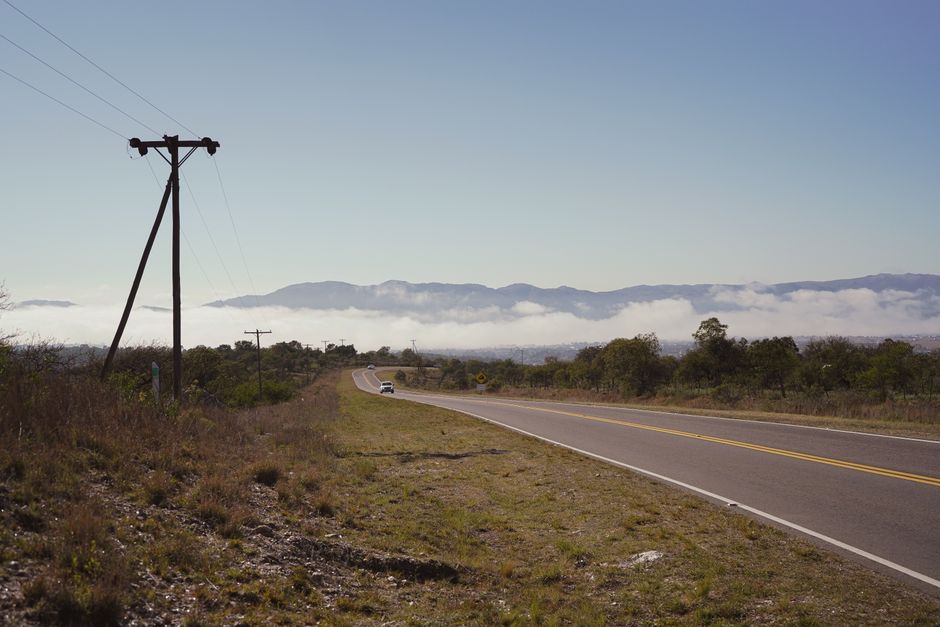
I landed in Albuquerque on a Tuesday morning, rented a car, and realized immediately that the real appeal of this place isn't the city itself—it's what surrounds it. Within an hour's drive, you can be standing at 10,000 feet looking down at the Rio Grande valley, or walking among the strange volcanic cones of Kasha-Katuwe, or exploring pueblo ruins that predate Columbus. The city makes a perfectly fine base, but the day trips are why people actually come here.
The area around Albuquerque is thick with options if you know where to look. Roads radiate outward in every direction toward places that feel genuinely remote, even when they're close. I've spent time in enough places to know the difference between marketing-speak and reality, and these aren't tourist traps dressed up as adventures. They're the real landscape that shapes how New Mexicans actually spend their weekends.
Sandia Peak via the Back Road (30 minutes to the trailhead)
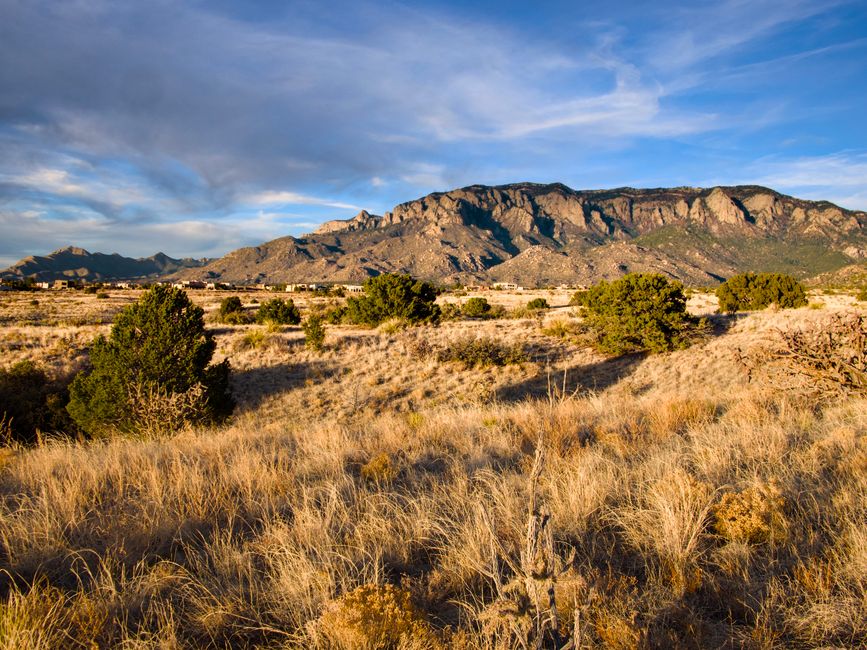
Everyone talks about taking the tram up Sandia Peak. Skip it on a nice day—the views from the observation deck are fine, but you'll be standing shoulder-to-shoulder with every other tourist in New Mexico. Instead, drive east toward the foothills and hike up from the base.
The Domingo Baca Canyon trail and the Main Tram Road both give you legitimate hiking with payoff. Domingo Baca is steeper and quieter; you'll gain real elevation and see the city recede below you. On a clear day—and most days here are clear—you get the full sweep of the valley spreading westward, and on the far side, you can see the extinct volcanoes near Grants. The aspen groves near the top are genuinely beautiful in late September and early October, though the peak is accessible year-round if you don't mind the cold. Summer is hot going up, so start early. Winter can be snowy and icy at altitude, which adds risk to the descent.
Bring water. Lots of it. The elevation gain is steady and relentless, and there's almost no shade on the lower stretches. The round trip from the Domingo Baca trailhead is roughly four miles and takes two to three hours depending on your pace. It's genuinely steep in sections.
Kasha-Katuwe (Tent Rocks), 45 minutes north
This is the one that surprised me. I didn't expect Kasha-Katuwe, about 45 minutes north of the city near the Cochiti Pueblo, to be as visually arresting as it is. The entire park sits on volcanic deposits from eruptions that happened roughly six to seven million years ago. What you see is hundreds of cones of compressed ash and pumice arranged in a landscape that feels almost alien.
The main trail winds through the canyon bottom, past walls of these volcanic deposits that glow in shades of cream and rust. It's maybe four miles round trip and involves some very modest elevation gain. The trail opens up onto a mesa top with views in all directions, and on a clear day you can see the Sangre de Cristo mountains. The rocks feel soft and fragile—you could probably crumble them in your hand—and the overall effect is weirdly otherworldly without requiring a difficult scramble to get there.
Spring (April through May) is ideal because the wildflowers are out and it's not yet brutally hot. Summer afternoons can top out in the high 80s or low 90s. Fall is also good. Winter is passable if you don't mind the cold, and the park is actually less crowded then. There's a small entrance fee, and the visitor center has restrooms and basic information.
Bandelier National Monument (1 hour to 1 hour 15 minutes)
Bandelier sits about 45 minutes north of Albuquerque, nestled in the Jemez Mountains. The centerpiece is Frijoles Canyon, where ancestral Puebloan people—the Ancestral Puebloans, formerly called the Anasazi—built cliff dwellings directly into volcanic tuff sometime around 1150 CE. You can actually walk into these rooms, touch the walls, stand where people lived 800 years ago. It's not a reconstructed experience; it's the real thing.
The main trail is maybe two miles round trip from the visitor center and fairly easy, though there's one ladder section that requires you to climb down into a kiva (a ceremonial chamber). The trail passes ceremonial caves and dwelling sites. If you want more of a hike, the Tsankawi section on the north side of the park has a longer loop with additional sites and better views, though it's rougher terrain. Tsankawi requires a separate entrance and a different drive to a different trailhead.
Bandelier gets crowded, especially on weekends and in peak season (late May through September). The park now requires timed entry reservations during busy months. Go early, before 9 a.m., and consider going on a weekday if you can. Fall is genuinely the sweet spot—fewer people, cooler weather, and the aspens start turning. Winter is possible but muddy.
Coronado Historic Site and San Juan Pueblo (1 hour to 1 hour 30 minutes)
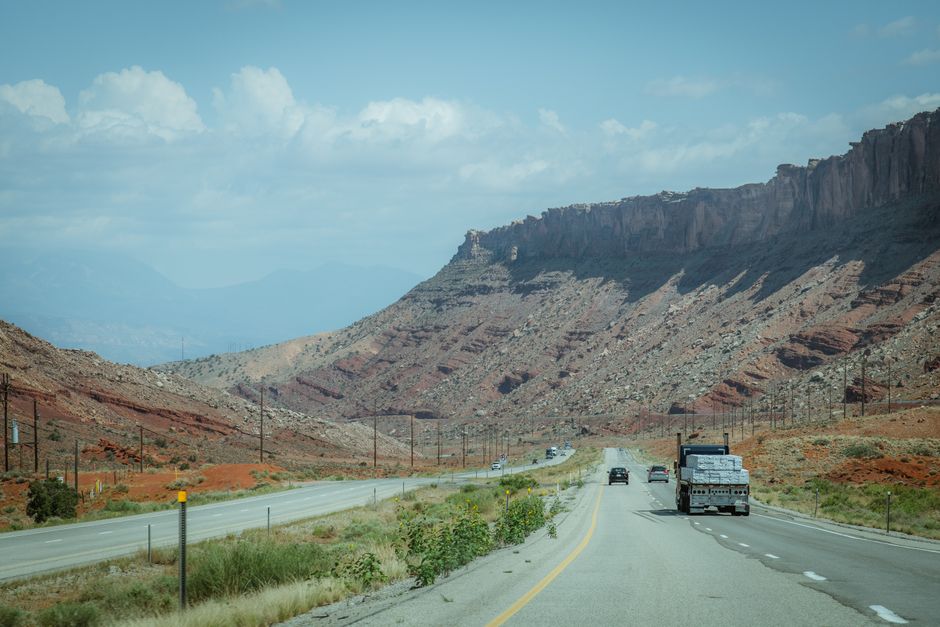
Most people skip the village of Coronado entirely and drive straight through. That's a mistake. The Coronado Historic Site sits on the northern edge of the state monument area, about 60 minutes north of Albuquerque, and preserves the remains of San Juan de los Caballeros, a pueblo established around 1450 CE.
The site isn't crowded. There's a small museum with artifacts and context, and you can walk among the ruins of a Spanish colonial chapel built in 1599. The juxtaposition is striking—the indigenous pueblo predates the chapel by 150 years, and then Spanish colonization arrives and builds directly on top. It's quieter and less touristy than Bandelier, which means you actually get space to think about what you're looking at. The grounds are pleasant and accessible for most fitness levels.
Nearby, San Juan Pueblo itself (a living pueblo, not a ruin) sits just north of the historic site. The pueblo welcomes visitors and has a small craft cooperative where you can buy actual artisan work—not the inflated tourist goods you find in Santa Fe. Call ahead if you want to visit; pueblos maintain their own visiting protocols and hours. Spring and fall are best; summer gets hot, and winters can be cold and occasionally snowy.
Bisti/De-Na-Zin Wilderness (1 hour 45 minutes to 2 hours)
If you want something genuinely far from the normal tourist rotation, the Bisti/De-Na-Zin Wilderness west of Farmington is worth the drive. It's roughly 90 minutes northwest, which pushes the definition of "day trip" but is totally doable as a full-day outing. The landscape looks like Mars—badlands sculpted from shale and clay, with hoodoos and fins and colors that seem impossible. Gray, tan, rust, pale green from mineral deposits. There are no marked trails; you just walk out into the wilderness and pick your own way around the formations.
I drove out on an overcast October afternoon and had the place almost entirely to myself for two hours. You can spend anywhere from 45 minutes to three or four hours depending on how far you want to wander. There's a small parking area and absolutely no facilities, so bring water and be prepared for a genuinely remote experience. The ground is uneven and sometimes fragile; move carefully. The light in late afternoon is extraordinary if you time it right. Morning can be good too, depending on cloud cover.
Fall is ideal—temperatures are moderate and the light is clean. Summer gets very hot. Spring can be windy. There's no entrance fee, but it requires genuine independence and navigation skill. If you prefer marked trails and visitor centers, this isn't the trip for you.
Santa Fe (1 hour 15 minutes north)
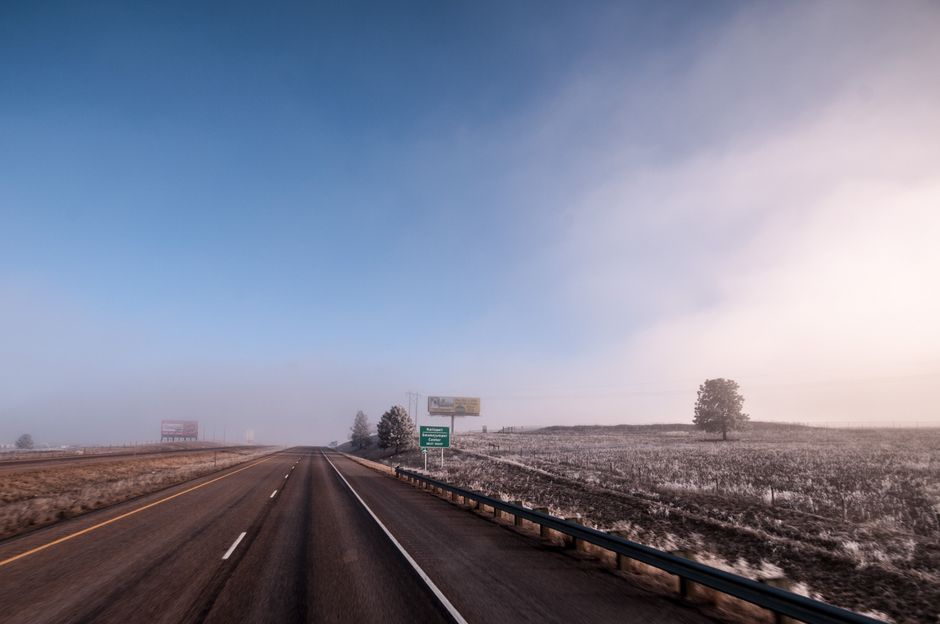
I'm hesitant to include this one because Santa Fe isn't really a secret and it's technically been developed as a destination for decades. But it's close enough and distinct enough from Albuquerque that it legitimately qualifies as a day trip if you want to spend a few hours in a place that actually has aesthetic intention.
The plaza is what it is—touristy, crowded, full of galleries hawking similar objects. The real value is walking the side streets, ducking into the New Mexico History Museum (which is genuinely good), and eating somewhere decent. The San Miguel Mission is quiet and genuinely old. The light is different up there at 7,000 feet—crisper, sharper. If you have any interest in pueblo and Spanish colonial architecture, it's worth the drive.
Go on a weekday if possible. Weekends are brutal. The town is worth maybe three to four hours, not a full day, unless you're really into browsing galleries. Fall and spring are obviously best; summer is crowded, winter can be icy. The drive back to Albuquerque at night is straightforward and safe.
Practical Notes on Driving and Timing
New Mexico is big, dry, and distances are real. Gas stations exist but aren't always convenient once you leave the main highways. Fill up before you head out to Bisti or the more remote areas. Most of these trips are best done starting early—7 or 8 a.m.—so you get the good light and aren't driving back in full dark.
The roads are generally well-maintained, but some stretches toward Bisti get rough and aren't great after heavy rain. Check weather if it looks questionable. Elevation here ranges from 5,000 to 10,000 feet; if you're coming from sea level, take it easy on your first day and drink more water than you think you need. The sun is intense and the air is dry.
Bring a physical map or download offline maps on your phone. Cell coverage is spotty in canyons and remote areas. And whatever your itinerary, leave the city early enough that you're back before dark. These roads are empty at night, and there's no reason to risk it.


