
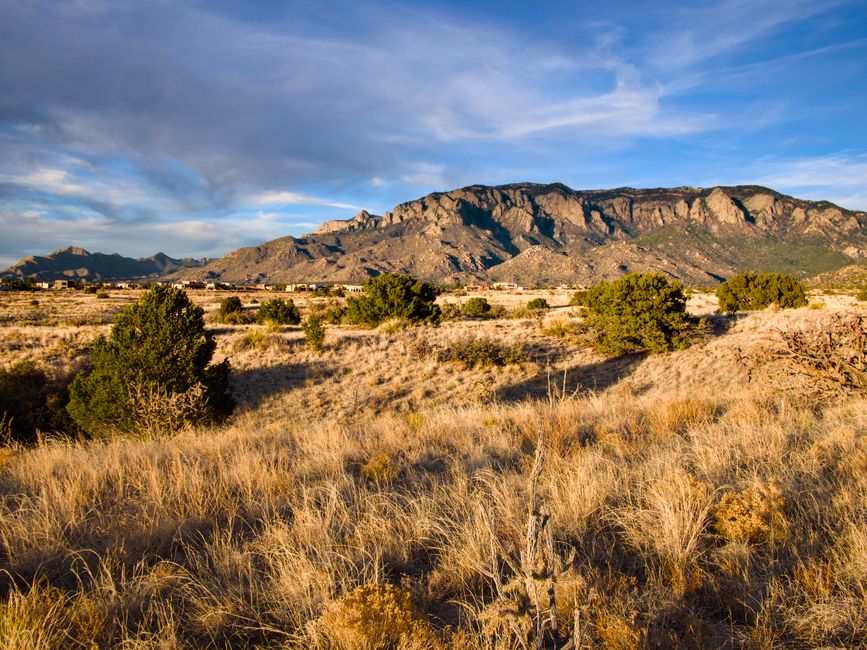
I came to Albuquerque expecting adobe and turquoise jewelry stalls, which is exactly what Old Town delivers. But after two days of that circuit, I realized I was barely scratching the surface. The city spreads out in all directions, and most of the interesting stuff happens where cruise-bus tours don't go.
Albuquerque rewards wandering. Not the Instagram-approved wandering—the kind where you get slightly lost, stumble into a neighborhood park, notice a storefront you hadn't heard about, and stay for an extra hour because something feels right about it. I spent a week picking through the city's quieter corners, and I came away with a completely different picture than the one tourists usually get.
Petroglyph National Monument: Easier Than You'd Think
Everyone wants to hike in the Jemez or up Kasha-Katuwe, which means Petroglyph National Monument on the west side stays surprisingly low-key. The monument protects nearly 25,000 petroglyphs scattered across volcanic rock, and you don't need to be hardcore about hiking to see them.
I walked the Boca Negra Canyon Trail on a random Wednesday afternoon and saw maybe a dozen other people all day. The rock art itself—thousands of years old, carved by Ancestral Puebloan and Keres peoples—hits differently when you're standing in front of it without a crowd. The trail is under three miles round-trip and mostly flat, following an arroyo between basalt cliffs. You walk under cottonwoods, see lizards scatter off rocks, and every few hundred yards you notice another cluster of petroglyphs: animals, geometric patterns, handprints, things nobody can fully explain.
Getting there requires a car, but it's worth the short drive west from the city center. Bring water. The sun here is relentless, and shade is mostly a memory once you're on the trail.
Tingley Beach and the Middle Rio Grande
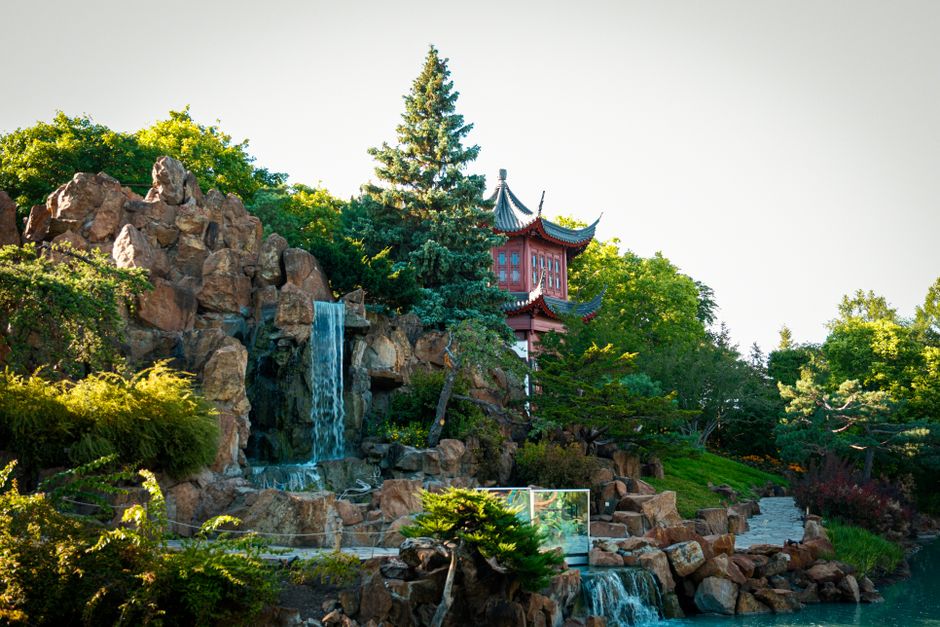
Tingley Beach exists in this weird pocket where Old Town tourists don't quite reach it, and the hiking crowd is busy elsewhere. It's a series of three ponds created in the 1930s as a flood-control project, and somehow it became a genuine ecosystem—cottonwoods, willows, ducks, herons, the occasional muskrat if you're patient.
The walking path loops around all three ponds and takes maybe forty-five minutes at a normal pace. It's mostly shaded, mostly flat, and quiet enough that you can actually hear the water and birds. I went in late afternoon and watched the light change on the water, old guys fishing from the banks, a jogger or two. The water itself is still part of the Rio Grande system, and the whole thing feels removed from the city even though you're maybe five minutes from downtown.
There's a small visitor area with a parking lot and a café that serves basic food. It's not fancy or secret, but it's genuinely peaceful, and I've talked to plenty of Albuquerque visitors who never even knew it was there.
The Unser Racing Museum and Speedway Boulevard
Most people skip this one because it sounds niche, and yeah, if you're not interested in cars and racing history, you'll be out in twenty minutes. But if you are, the Unser family museum is thorough and weirdly compelling.
The museum is dedicated to the Unser family, who produced multiple Indianapolis 500 winners and basically defined American racing in the latter half of the twentieth century. The collection includes actual race cars from different eras, enough memorabilia and photographs to actually trace how the sport changed, and displays that go beyond just "look at the shiny car." Al Unser Sr. and Al Unser Jr. are both from Albuquerque, which gives the whole thing a local anchor that a lot of sports museums lack.
It's housed in a low building on the east side, and the whole thing is manageable in a couple of hours. If nothing else, it's one of those places that feels genuine—not built for tourists, built for people who actually care about the subject matter. The staff is knowledgeable without being pretentious. You'll share the space with actual enthusiasts and family groups, not tour crowds.
San Pedro House of Photography
This is a working artist studio and gallery in an older neighborhood north of downtown, and it's the kind of place you find by accident or by someone's recommendation. San Pedro produces photographs and runs workshops, and the gallery displays work that's mostly regional in focus—New Mexico landscapes, portraits, architectural studies.
What makes it different from other galleries is that it's actually functional. People work there. Sometimes the owner or artists are in the studio, and you can talk to them about what they're doing. The work is genuinely good, not tourist-art good, and prices are reasonable because it's a studio first and a retail space second.
It's in a quiet street, and the neighborhood around it has character—older houses, local restaurants, the kind of place where neighbors actually know each other. Spend thirty minutes there, walk around the block, grab food at one of the nearby spots. You'll get a much better sense of how Albuquerque actually lives.
Casa Salazar and the South Valley Communities
South Valley isn't a tourist destination, which is partly the point. Casa Salazar is a nonprofit arts space and community hub in a converted historic home, and it's genuinely invested in local culture and art that isn't packaged for visitors.
The building itself is worth seeing—traditional New Mexican architecture, updated and cared for—but the real draw is the programming. They host exhibitions, performances, classes, and community events focused on Hispanic and local culture. I dropped in during an open studio period and got to talk with artists who were actually working. There's no velvet rope, no entrance fee, no sense that you're being tolerated as a tourist.
The South Valley neighborhoods themselves are worth exploring if you have a car and some time. They're working-class areas with real history, good local food, and almost zero tourist infrastructure. You won't find souvenir shops. You'll find people living actual lives. It's not quaint or engineered for visitors, and that's exactly why it matters.

Roosevelt Park and the Neighborhood Along with It
Roosevelt Park is a neighborhood park in the northeast Heights, maybe fifteen minutes from downtown, and it's been renovated in the last few years into something that actually draws people. There's a good trail system, a splash pad in summer, a dog park, and actual amenities without feeling commercialized.
I walked there in the late afternoon and it was busy but not crowded—families, dog owners, joggers, people just sitting. The trails are mostly shaded, mostly quiet even when the park is full. There's a pavilion area where people grill, and the whole thing has this low-key community feeling that doesn't really depend on tourists.
The neighborhood around it is worth exploring too. Menaul Boulevard and the surrounding streets have solid local restaurants, coffee shops, and bookstores. Nothing fancy, nothing trying too hard. Just actual neighborhood infrastructure. Spend a couple of hours there and you'll understand how Albuquerque functions when it's not in performance mode.
Moving Off the Strip
Albuquerque's real identity isn't in Old Town or on Central Avenue's tourist corridor. It's in these neighborhoods and parks and small institutions where people actually spend time. The city has been around for over three hundred years, and most of that history isn't packaged as an attraction.
Spending time in the places locals go doesn't require special knowledge or connections. It just requires walking away from the marked trail. Park the car, look at a map that doesn't come from a visitor center, pick a street that looks interesting, and move through it on foot. You'll find food that's better, conversations that are more genuine, and a much clearer picture of what Albuquerque actually is rather than what it's supposed to be for visitors.
That's always been the deal with travel. The moment you stop looking for the experience you expected to find, the actual experience becomes visible.


