I've driven out of Charleston enough times on a Saturday morning to know the feeling—you want out of the city heat and crowds, but not so far that you're gone all day. The stretch from here to Savannah and down the coastal plain is thick with stuff worth stopping for: old downtowns, state parks, weird natural areas that show up in nobody's Instagram feed. Most of these spots are close enough that you can be back for dinner, or stay overnight and take your time.
The trick is knowing which season actually works. Winter can be damp and gray out on the water. Summer is swampy. Spring and early fall are the sweet spot—you get decent weather and it's not insane with tourists. Let me walk you through the best pulls from here.
Beaufort: The Waterfront Drive, 45 Minutes to an Hour
Beaufort is a real Southern town that hasn't completely sold itself to boutique hotels and gallery crawls, though it's getting there. The waterfront is the thing—River Street runs along the Broad River, and in late afternoon you can sit at one of the cafes or restaurants and actually see fishing boats and kayakers instead of just Instagram backgrounds.
Walk the historic district. The streets are lined with moss-draped live oaks and antebellum houses, and unlike some of the more precious old towns in the region, this one still feels lived-in. Tabernacle Baptist Church is worth seeing from the outside. The Beaufort History Museum, in the white Verdier House on Craven Street, is small but gives you the real story of the place without too much gilding.
The waterfront restaurants are decent—Plums, on Bay Street, is reliable for lunch, and Saltus River Grill leans toward the nicer end but doesn't feel snooty. If you want to take an actual break from walking, rent a kayak through one of the outfitters near the public landing and paddle out into the marsh. It's quiet, it's easy, and you see the coast the way it actually looks.
Best season: April through May or September through October. August is hot and humid; winter can be gray.
Edisto Island: Beach Time Without the Strip, 45 Minutes to an Hour
Edisto is not a party island. That's the selling point. You get an actual beach, marsh views, a few local restaurants, and not much else. The drive out is scenic—you cross a long causeway with water on both sides, and by the time you hit the island proper, you've already left most of the South Carolina lowcountry tourists behind.
The beach itself is wide and relatively quiet. Edisto Beach State Park has the pier and a good stretch of sand, and you can park there for a few bucks. The town, such as it is, is concentrated around Palmetto Boulevard—a few restaurants, a general store, some rental cabins. The Edisto Island Serpentarium is exactly what it sounds like: an old-school reptile museum in a concrete building. It's genuinely weird and weirdly fun if you're into that.
For food, SeaCow Eatery does fresh seafood in a casual spot. Waccamaw River Oyster Company serves raw oysters and lowcountry staples without pretense. Neither is fancy, and that's fine. Stay for dinner and the sunset, or go back to Charleston—it's close enough that either works.
Best season: May through June for warm water and fewer crowds, or September through October. Summer weekends can pack the parking lot.
Cypress Gardens: 20 Minutes North, More Weird Than Pretty
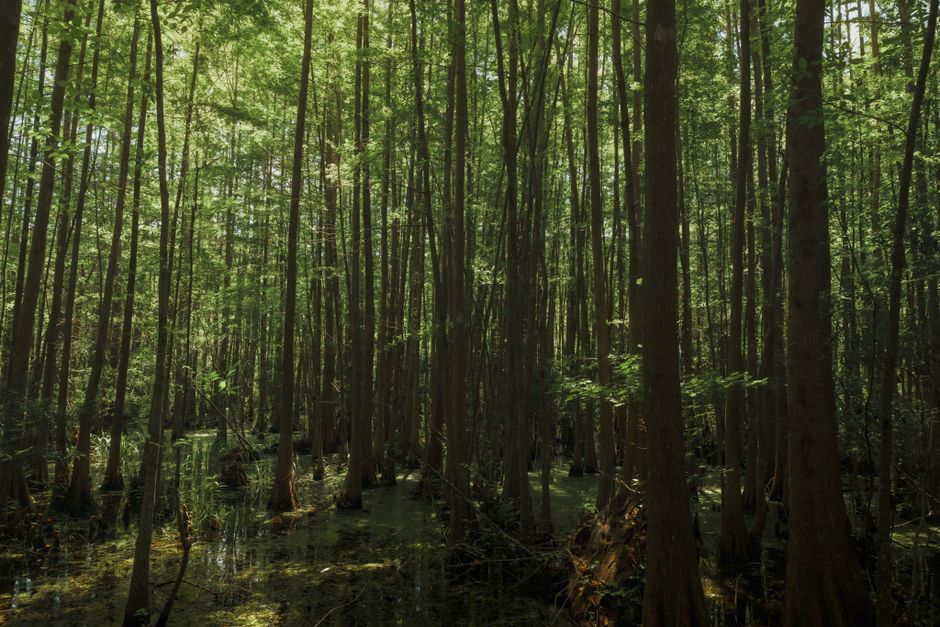
Cypress Gardens is a nature preserve that used to be a rice plantation swamp. They've cleared out walking paths through it, and you can paddle a canoe through the black water under massive cypress trees that have been here since before the Revolution. It's atmospheric in a way that actual planned gardens aren't—there's something unsettling about how dark the water is, how quiet it gets.
You can walk or canoe, and the canoe is worth doing if you're even remotely comfortable with a paddle. The water is still and dark and reflects the cypress branches so you can't really tell where the water ends and the sky begins. Birds call out. It's the opposite of Charleston's manicured Historic District.
The site also has walking trails on a boardwalk that loop through the swamp if you don't want to get in a boat. Either way, bring bug spray even in the off-season. The gardens aren't a full-day destination on their own, but they're close enough to pair with lunch in nearby Goose Creek or Moncks Corner.
Best season: October through April, when the water is cooler and bugs are less aggressive. Summer is possible but brutal.

Hunting Island State Park: The Long Beach, 1 Hour to 1 Hour 15 Minutes
Hunting Island is about as far as you want to drive for a day trip, but it's worth it. The beach is long, wide, and actually wild—not developed, no boardwalk, no pier, just sand and water. The parking area is small and fills up on nice weekends, so you're going early or you're going midweek.
The Hunting Island Lighthouse sits at the northern end of the beach and you can climb it if you want the view. It's not beautiful or famous, but it's a real working lighthouse and the climb is fine. Most people just park, walk the beach, maybe wade in, and leave. It's exactly as simple as it sounds.
There's a restaurant on-site that's open seasonally—nothing fancy, mostly hot dogs and ice cream. Bring your own food. The beach itself is where you spend the time. The water is cold even in summer, and there's an actual current, so don't go in if you're not a solid swimmer. But just walking and sitting on the sand, watching the Atlantic, is the whole point.
Best season: April through May or September through October. The water is cold year-round, but at least the air temperature makes sense in spring and fall. Summer gets crowded; winter can be windy and gray.
Walterboro and Colleton County: 1 Hour West for History Nerds
Walterboro is inland and doesn't have the beach-town appeal of the island trips, but if you're into actual old architecture and don't need a narrative wrapped around it, the town is worth an hour or two. The Colleton County Courthouse is a genuine antebellum Greek Revival building that shows up in a lot of reference books about Southern architecture. The downtown has the usual empty storefronts and revival efforts, but also real, unrestored buildings that show you what the place actually looked like before it became a historical district.
The Walterboro Arts Center is housed in a converted bank building and does rotating exhibits. It's the kind of place where you might see a show about local pottery or a photography collection of the Lowcountry. Nothing massive or famous, but actual art by people who live here.
Stop at one of the local cafes on Washington Street for lunch. There's no chain food culture to speak of, so you're eating at places that have been there for years and are designed for people who actually live in Walterboro, not tourists passing through. That's a small thing but it changes the whole vibe. It's not a destination in itself, but combined with a drive and a walk, it's a legitimate way to spend a few hours.
Best season: October through April. Summer is quiet and a little sleepy even by small-town standards.

Logistics and Honest Timing
You need a car for all of these. Charleston's transit system doesn't reach beyond the city, and these spots are strung along roads that aren't walkable from the main roads. Plan on 20 to 30 minutes for parking and getting yourself oriented once you arrive anywhere.
Gas prices matter when you're driving an hour out and back. A full tank will get you to any of these places and back to Charleston multiple times. If you're staying overnight, book lodging a few weeks ahead in spring and early fall; it fills up. Beaufort has the most hotel options if you want a sure thing.
Weather can change fast on the water. Check the forecast before you head to Hunting Island or Edisto, especially if you're planning to be on the beach. The wind can make it unpleasant even when the forecast says 'sunny.' Bring a light jacket even in summer if you're going near the water.
Try to go on a weekday if you can. The drive is easier, the parking is better, and you're not jockeying for table space at lunch. A lot of people treat these as Saturday obligations; you'll have a better time on a Thursday.
Frequently Asked Questions
What is the best day trip from Charleston SC
It depends on what you want. Beaufort is best for a small-town waterfront walk (45 minutes away). Edisto Island offers a quiet beach with marsh views (45 minutes to an hour). Hunting Island State Park gives you a long, wide, undeveloped beach (1 hour to 1 hour 15 minutes). Cypress Gardens is best if you want something atmospheric and unusual with dark water and old cypress trees (20 minutes). Spring and early fall are the best seasons for all of them.
How far is Beaufort SC from Charleston
Beaufort is 45 minutes to an hour from downtown Charleston, depending on traffic and which part of Beaufort you're heading to. It's an easy drive on US-21 south. The waterfront and historic district are the main reasons to go, and both are within walking distance once you park.
Is Edisto Island worth visiting
Yes, if you want a quiet beach without commercial development or party crowds. The island has a wide, undeveloped beach at Edisto Beach State Park, a few low-key restaurants, and a lot of marsh and quiet. It's 45 minutes to an hour from Charleston and works as a day trip or overnight. It's not flashy, but that's the point.
What is there to do near Charleston SC
Within an hour or two: Beaufort for a historic waterfront walk, Edisto Island for beaches and marsh, Hunting Island State Park for a long undeveloped beach, Cypress Gardens for canoe paddling through a swamp, and Walterboro for old architecture and small-town eating. Most are best visited April through May or September through October, when the weather is pleasant and bugs are manageable.
Which day trip would you take first?