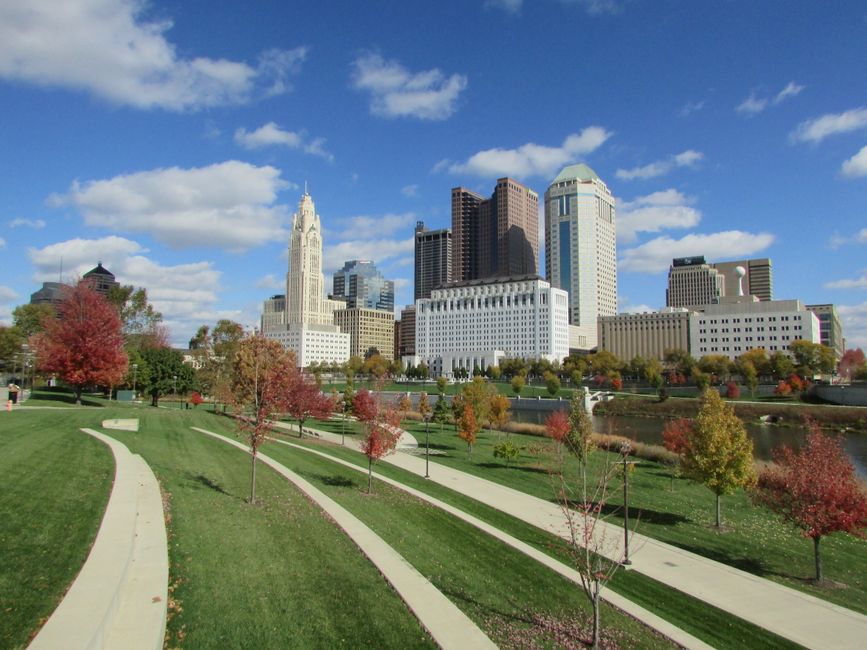
I've spent enough time in Columbus to know the difference between a city that feels trapped in its own metro area and one that uses it as a jumping-off point. Columbus does the latter well. Within an hour and a half, you can actually leave the sprawl behind and hit places that feel like somewhere else entirely—not themed or curated for weekend visitors, but genuinely different. Most of these destinations don't require much planning. A tank of gas, decent shoes, and a willingness to wander will get you through a full day.
Hocking Hills: Waterfalls and Hiking, 90 Minutes Southeast
This is the obvious one, and I say that without judgment. Hocking Hills draws every outdoor person within 150 miles, and it deserves to. The drive down US-33 takes roughly ninety minutes from downtown Columbus, and by the time you hit Logan or Laurelville, the landscape shifts noticeably—you're genuinely in Appalachia now, not just a suburb pretending.
Old Man's Cave is the anchor. The trail runs about four miles round-trip, follows the gorge, passes two waterfalls, and doesn't require technical rock scrambling. I've done it on a Saturday and in a light rain on a Tuesday afternoon, and the difference in crowd density is enormous. Autumn draws families, which is fine, but spring (April through early May) and late summer (September) give you the same hiking with fewer people waiting for photos at Ash Cave.
If waterfalls are your main draw, plan for three hours of hiking and bring actual shoes. The rocks get slick. Beyond the main caves, Lake Logan offers a quieter alternative—renting a kayak and paddling around for an hour costs maybe twenty dollars and feels substantially less crowded than the footpaths.
Chillicothe and the Adena Mound: Pre-Columbian History, 45 Minutes South
Chillicothe sits dead south of Columbus, forty-five minutes down US-23, and it's a smaller city that doesn't try to disguise what it is. The real reason to go is Adena, the 1807 mansion and grounds built by Thomas Worthington, an early governor. The house itself is interesting but secondary—the property overlooks the Scioto River valley, and you can actually feel the physical defensibility of the location, the way early political figures chose their land.
The Adena Mansion tour takes about forty minutes. They're straightforward about the history, including slavery, without turning it into a civics presentation. The grounds are walkable, peaceful, and worth an hour if you're not rushed. The town proper has a few decent diners—nothing fancy, but places locals actually eat—and you could spend an afternoon poking through the downtown antique shops without feeling like you're performing a tourist activity.
Best seasons: late spring through early fall. Winter makes the grounds grim, and summer heat hits hard here without much shade. A Thursday or Friday visit keeps crowds minimal.
Delaware: Small-Town Americana and Stratford Hall, 25 Minutes North
I'm hesitant to call Delaware a day trip since it's technically only twenty-five minutes north, but it deserves to be here anyway. It's a genuine small town that hasn't been entirely overwhelmed by suburban overflow from Columbus, which is remarkable given the proximity. The downtown has actual local businesses—not chains, actual people running storefronts.
Stratford Hall is the anchor attraction, a 1821 restored home with period grounds and gardens. Tours are available but not mandatory; the grounds alone justify a visit, and you can walk the property for free. The house feels lived-in because it kind of was, and the tour guides tend to be locals who know the building's history beyond the official narrative. If you're not interested in house tours, the walking paths through town are pleasant and low-key. There's a decent Italian restaurant on the town square and a few breweries within a ten-minute drive.
This works best as a three-to-four hour excursion, perfect for a late morning start and an early dinner somewhere in or near town.
Geneva State Park and Ashtabula: Lake Erie Wine Country, 1 Hour 45 Minutes Northeast
This one surprised me. Ashtabula sits on Lake Erie, nearly two hours northeast, and it's developed a reputation for wine and wineries that I initially dismissed as hype. It's not—the region genuinely produces decent wine because the lake moderates temperature, and the wineries themselves often occupy converted barns and farmhouses rather than looking like themed restaurants.
Geneva State Park offers the most accessible entry point. The beach is modest but clean, the walking paths along the bluff are genuinely scenic, and the park has the kind of underused feeling that Ohio parks sometimes get when they're not in the first tier of destination spots. From there, the Ashtabula wine trail is close—most wineries are family-run operations, and many don't feel pressurized to upsell you on expensive bottles. I've spent afternoons hitting three or four wineries and spending maybe thirty dollars total, including snacks.
Fall is obvious here (September through October), but early summer is actually better for solitude. The region gets busy during harvest season and the leaf-peeping months. A few recommendations: spend two hours at Geneva State Park, grab lunch in downtown Ashtabula (which has some solid casual spots), and hit two wineries in the afternoon. You'll be home by 8 p.m.
Yellow Springs: Arts and Quirk, 45 Minutes West
Yellow Springs has a reputation for being quirky and artsy, which is true, but it's also the kind of place where the quirk isn't an act. It's a college town (Antioch College) that actually feels like people think and make things there. Forty-five minutes west on US-70, it's easy to reach and easy to spend half a day in.
Glen Helen Nature Preserve offers hiking trails through actual forest, and the gorge walk is substantial but manageable—couple of hours, some small rock scrambling, nothing extreme. The visitor center has maps. Beyond that, the downtown is walkable and genuinely interesting. There are actual galleries (not touristy approximations), decent bookstores, and restaurants that reflect the town's population rather than tourists. The whole place has a low-pressure vibe—you can walk into a coffee shop and not feel like you're supposed to spend money on Instagram-worthy food.
One caution: parking downtown can be tight on weekend afternoons, especially during college semesters. Arrive before noon or go midweek. Spring through fall works, though summer can feel cramped with visitors. April and May are genuinely nice—warmer than early spring but not yet crowded.
Structuring Your Day Trip
The drive matters less than starting early. Most of these places are best experienced without rushing, which means leaving Columbus between 7 and 8 a.m. if you want to be home for dinner. Hocking Hills is the exception—you'll need to start by 7 a.m. if you want a real hike and a meal before dark.
Weather changes things dramatically. Spring rain turns Hocking Hills into a mudslide problem. Summer heat makes Chillicothe's downtown unbearable without air conditioning. Winter makes small-town dining rooms feel depressing. Autumn is the safe choice, but April, May, September, and early October are genuinely better if you can time it. Bring water, decent shoes, and phone service is spotty in some areas—download maps if you're planning to hike.
None of these places require reservations or advance planning, which is part of their appeal. You can decide Tuesday to drive somewhere Wednesday. That flexibility—being able to leave a mid-sized city and land somewhere that feels genuinely different within ninety minutes—is worth remembering when Columbus feels like too much.