
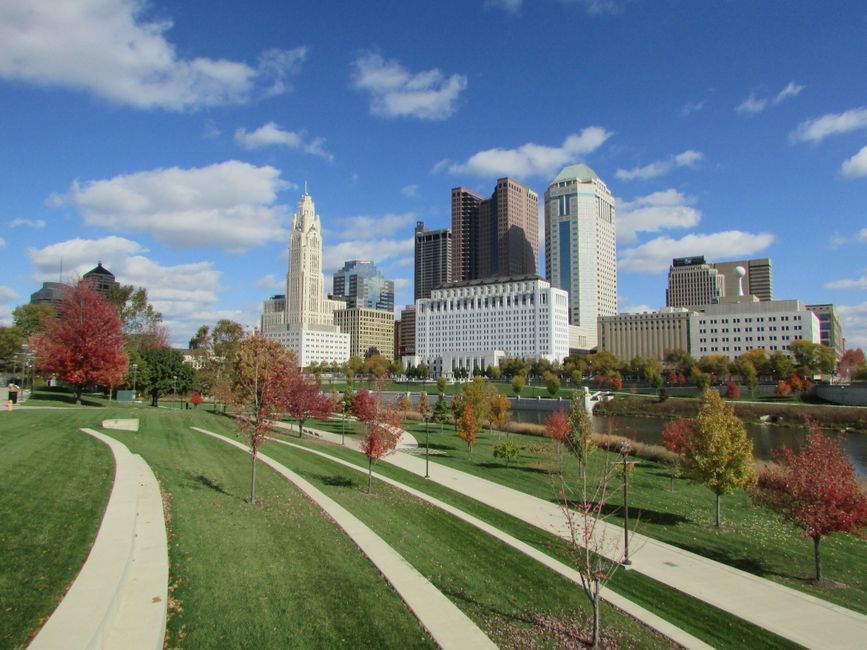
I arrived in Columbus on a gray April afternoon and spent the first couple of days eating my way through the Short North, which is fine if that's your thing. But by day three I was itching to get out. Columbus sits in dead-center Ohio, which means you're never more than a couple hours from something worth seeing — real geology, small towns with actual character, state parks that don't feel manufactured. The trick is knowing which direction to point the car.
I've done the loop enough times now to know what sticks. Some of these trips work better in certain seasons; some are worth doing twice a year. Below are the ones I actually return to.
Hocking Hills: The Obvious Choice (45 minutes)
Every travel writer mentions Hocking Hills, and there's a reason. The area — centered around the village of Logan — has legitimate topography. Gorges, waterfalls, hiking trails that actually feel like hiking. Old Man's Cave is the most famous pull, and yes, it gets busy, especially weekends. The trail down is about 4 miles round-trip, manageable if you're not training for a marathon. The cave itself is just a recess in the rock face, but the gorge around it is the real draw.
Beyond Old Man's you've got Ash Cave, Cantwell Cliffs, Conkle's Hollow. Pick one or two and spend the afternoon there. The park has an eerie quality in late fall when the leaves have mostly dropped and the gorge walls are this dark sandstone red. Spring is busy and muddy. Summer is crowded and humid. Fall is probably the move.
Don't eat in Logan unless you're desperate. The food options are thin and mediocre. Pack something or grab lunch before you leave Columbus. Several outfitters in the area rent kayaks or offer zipline tours if you want to mix things up, though I'd stick to hiking — that's what the place is actually good for.
Yellow Springs: For Lunch and Wandering (50 minutes)
Yellow Springs has the reputation of being Columbus's bohemian sister, which is partly deserved and partly marketing. The downtown is compact, laid out around a small square, and it's got the kind of funky energy that feels genuine enough — vintage shops, local coffee spots, used bookstores. The Glen Helen Nature Preserve is attached to Antioch College and has several easy trails through woods and along a creek. It's not spectacular, but it's quiet and pleasant, the kind of place you don't need a plan for.
The draw is really the town itself. Winds Cafe is reliably good if you want something more ambitious than a sandwich. Several breweries and wine bars if that's your speed. Wander Main Street for an hour and you'll see the whole thing, which is either relaxing or underwhelming depending on your mood. The town gets surprisingly crowded on weekends, especially in good weather, so go on a weekday if you can.
The whole trip works best as a half-day thing. Drive over in the morning, spend a couple hours walking around and eating, hit the nature preserve if you want some air, and be back in Columbus by early evening. It's not a destination that demands your full attention, which is part of its charm.
Lake Anna State Park: Water and Space (45 minutes)
Lake Anna sits in a strip-mined area near Zanesville, which sounds bleak but actually works. The lake is man-made, 2,300 acres, built in an old coal-mining pit. The park has a sandy beach, boat rentals, picnic areas. On a hot day in July or August, it's worth the drive just to get in the water. The beach is small but decent, the water is warm, and it's noticeably less crowded than you'd expect for something so close to a major metro.
If you're not interested in swimming, there's a 3-mile hiking trail that loops around a peninsula. It's flat and easy, runs partly through forest and partly along the water. The park has decent facilities — clean bathrooms, a small concession stand. Bring your own food if you want anything beyond basic fare.
This one is seasonal. Go in summer when the water temperature makes sense. Spring and fall are too cool to swim and there's no real reason to be there if you're just walking around. Winter is bleak. It's specifically a summer trip, which means weekends will be busier than weekdays.
Sunbury and Westerville: Small-Town Suburbs (20-30 minutes)
These aren't exactly day-trip destinations in the classic sense — they're close enough to blur into the Columbus metro. But if you want a change of pace without leaving the region, both have charms worth noting. Sunbury's got a small downtown with a couple of good restaurants and shops. Westerville is bigger, more developed, but has a walkable center and several parks including a nice metro park system.
The Old Owl Tavern in Sunbury dates to the 1800s and has actual character. There are a few antique shops and local joints that survive in the downtown. Westerville's offerings are more mainstream but still solid — better restaurants, more shopping, easier parking.
I'm listing these because they work if you're tired of Columbus but don't want to commit to a full 45-minute drive. They're also useful if the weather is bad and you want something low-stakes. Go for lunch, walk around, be home by late afternoon. They're not memorable the way Hocking Hills is, but they're reliable.
Granville: College Town Charm (45 minutes)
Granville is home to Denison University and has the feel of a proper small college town. The downtown has a good bookstore, several decent restaurants, and a main street that actually feels lived-in rather than curated. The Denison campus itself is pleasant to walk through if you're into that sort of thing — brick buildings, manicured grounds, the usual academic aesthetic.
Denison's Slayter Memorial Union has a good cafe and the campus is open to the public for wandering. Hopewell Culture National Historical Park is nearby, a series of ancient earthworks built by indigenous peoples around 2,000 years ago. The scale is hard to grasp at first — they're not dramatic in the way a cliff or waterfall is — but the more time you spend there the more they get under your skin.
This works best as a half-day trip in combination with something else. Stop in Granville for lunch and bookstore browsing, then drive over to Hocking Hills or Yellow Springs for the afternoon. The town itself is pleasant but doesn't warrant a full day of attention. Spring and fall are the best times — the weather is mild and the college town energy feels most authentic.
When to Go and Logistics
The Ohio seasons matter here. Summer is hot and humid, which works for Lake Anna but makes hiking in Hocking Hills miserable. Fall from late September through October is probably the best bet overall — the weather is stable, the crowds thin out after Labor Day, and the landscape actually looks good. Spring is muddy and crowded. Winter is cold and most of the waterfalls in Hocking Hills are pretty disappointing.
Bring sturdy shoes if you're hiking. The trails in Hocking Hills especially can be rocky and uneven. Check conditions before you go, especially in spring and after rain. A lot of these places have minimal cell service once you're off the main roads, so download maps ahead of time if you're navigating. Pack food and water. The infrastructure in rural Ohio is thin — you can't count on restaurants or stores being open or good.
All of these trips are doable as solo ventures. That's the whole point. You don't need a guide or a group. Drive out, spend your time however you want, drive back. Columbus makes this easy because it's central to decent hiking, small towns, and water. Use it.