
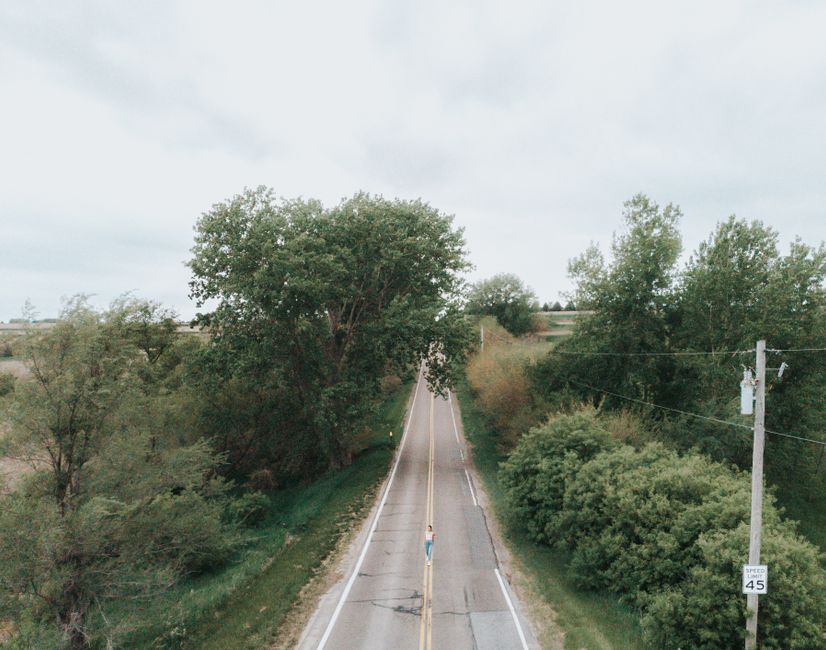
I rolled into Omaha on a gray March afternoon, parked the car, and spent two days eating at The Drover and walking Old Market. Good enough, but the thing about Nebraska is that the real landscape — the stuff that actually matters to the state's identity — sits just beyond the city limits. Within an hour or two's drive, you've got geology you can touch, trails where you won't see another person for miles, and small towns that remind you why people stayed here in the first place. I spent a week doing the loop, and it changed how I thought about the place.
Omaha's a solid hub. Its location in the eastern part of the state means you're never more than two hours from something worth the drive. Spring and fall are obvious choices — the weather's stable, the light is good, and you're not competing with either heat or blizzard. But even winter has its moments if you come prepared.
Chimney Rock National Historic Site (About 2.5 hours west)
This is the one everyone points you toward, and they're right to do it. Chimney Rock sits near Bayard, just south of Highway 92, and it's been a landmark since the Oregon Trail days. You see it from miles away — a 325-foot sandstone formation that just rises up out of the plain like something from a different planet. The visitor center is well-organized without being cute, with actual information about the settlers who used this as a waypoint.
The walk to the base takes about 15 minutes on a decent trail. The formation itself is more impressive from a distance than up close, but standing at its foot and looking up drives home how isolated and strange this landscape must have felt to people in covered wagons. There's a good overlook trail that gives you the classic postcard angle.
Go in late April through October. Winter access is usually fine, but the wind can be brutal and there's sometimes snow on the trails. Summer heat isn't really a problem here — you're in open country and moving. Bring water. The nearest town of any size is Sidney, about 30 minutes further west, which has a couple of decent diners if you need lunch.

Ashfall Fossil Beds (About 1.5 hours northeast near Royal)
Ashfall is one of those places that sounds more interesting once you actually understand what you're looking at. Twelve million years ago, a volcano in what's now Idaho erupted. The ash fell here in Nebraska and buried an entire ancient landscape instantly — mammals, camels, three-toed horses, saber-tooth cats, all of it preserved in a layer of volcanic material. The Smithsonian has been digging here since the 1970s, and the museum building actually lets you watch paleontologists doing real excavation work through a glass wall.
The site includes a reconstructed sod house from the pioneer era on the grounds, which is a nice touch for context. You walk through the museum, see the fossils, and then there's a walking trail that takes you out to where more of the dig site sits. It's quieter than you'd expect, honestly. Families come through, sure, but there's something meditative about standing on the spot where an ancient lake bed got entombed by ash.
Spring through fall are equally good here. Winters are rough in northeast Nebraska, and the site doesn't have the same weather-proof appeal as Chimney Rock. Parking is easy, and the staff knows what they're talking about. Budget two to three hours total.
Plattsmouth and the Missouri River Bottom (About 45 minutes south)
Plattsmouth is a town you could walk through in 20 minutes, but it sits on the Missouri River in a way that matters. There's a riverfront park with genuinely good views, and the historic downtown has that particular Midwestern charm where buildings are real — brick from the 1800s, awnings that have survived multiple eras, actual hardware stores. The Plattsmouth Museum occupies an old mansion and covers the town's steamboat history.
The real reason to come is the trails system along the river. The Elkhorn River and Missouri River merge here, and there's a network of walking and biking paths that feel genuinely wild despite being inside a small town's footprint. The spring migration brings eagles and pelicans, and the trees along the water make it feel completely different from Omaha's terrain. I did a five-mile loop on a cool April morning and saw exactly two other people.
Stop at one of the small cafes — nothing fancy, but the coffee is real and the locals are used to people passing through. Fall colors here are worth planning for, but it's honest year-round. The close proximity to Omaha makes this work for a half-day if you're short on time, though it rewards a longer afternoon.

Fort Robinson State Park (About 2 hours northwest near Crawford)
Fort Robinson is the place to go if you want to feel like you've actually left civilization. The park sits in the Pine Ridge region of Nebraska's panhandle, and it's big — over 22,000 acres of mixed-grass prairie, canyons, and pine forest that genuinely feel remote. The fort itself is a restored 1870s cavalry post with barracks, officer's quarters, and a small museum that handles the history without romance.
There's a road that loops through the park, and there are hiking trails of various lengths. The Soldier Creek Falls trail is short (under three miles round trip) and leads to an actual waterfall — small, sure, but it's something. The views from the high points are the kind of expansive that make you understand why settlers found this place so alien.
The park offers horseback rides and a basic restaurant if you're hungry. Fort Robinson fills up on summer weekends with families, but go in May or September and you'll have it mostly to yourself. The camping is solid if you decide to stay overnight. This is a full-day trip, easily. Bring layers — the elevation and exposure mean weather can shift fast.
Brownville Historic District (About 1 hour southeast)
Brownville sits on the Missouri River in Nemaha County, and it's the kind of small town that almost didn't survive but did because enough people decided to preserve it. The downtown consists of genuinely historic buildings — a printing museum, an old opera house, galleries and antique shops. It has the feel of a place that's trying to stay alive without being aggressively cute about it.
The river views are worth the drive alone. There's a nice walking trail along the bluffs, and the town itself is compact enough to explore on foot. The Brownville State Park has additional river access and trails. If you time it right, there's legitimately good live music and events, especially in summer — check before you go.
It's close enough to Omaha for a half-day trip, and it pairs well with a stop in Plattsmouth if you're making a river-valley loop. Fall is best here, when the temperature cools and the deciduous trees along the Missouri turn. Bring cash — some of the smaller shops don't always have card readers working.

Spacing Out Your Trips
If you're staying in Omaha for more than a weekend, try to hit one of these in different directions rather than piling them all into one week. Chimney Rock and Fort Robinson are both west, so you could do those back-to-back, but spread Plattsmouth and Brownville across different days — they feel different enough that contrast matters. Ashfall works as its own thing.
The drive times I've listed are from downtown Omaha. Add 10-15 minutes if you're leaving from west Omaha. Gas prices matter less than they used to, but these are efficient routes — no backtracking. Pack snacks and water for the longer drives. Cell service is fine on all these routes, but it's not consistent once you're far from towns, so download your maps if you're hiking.
Omaha's worth a couple days, but Nebraska's real story is outside the city. These trips feel short enough to not require an overnight, but long enough to actually disconnect. That's the balance you're looking for in day trips.



