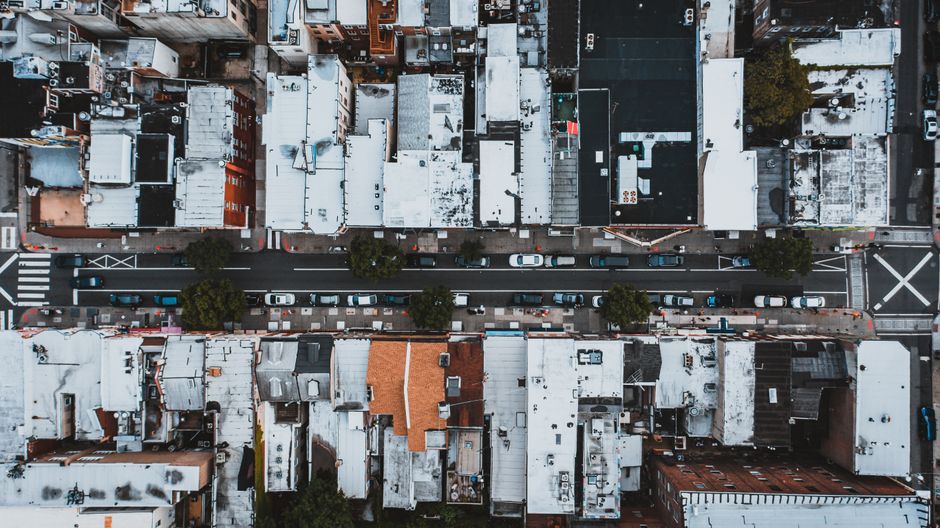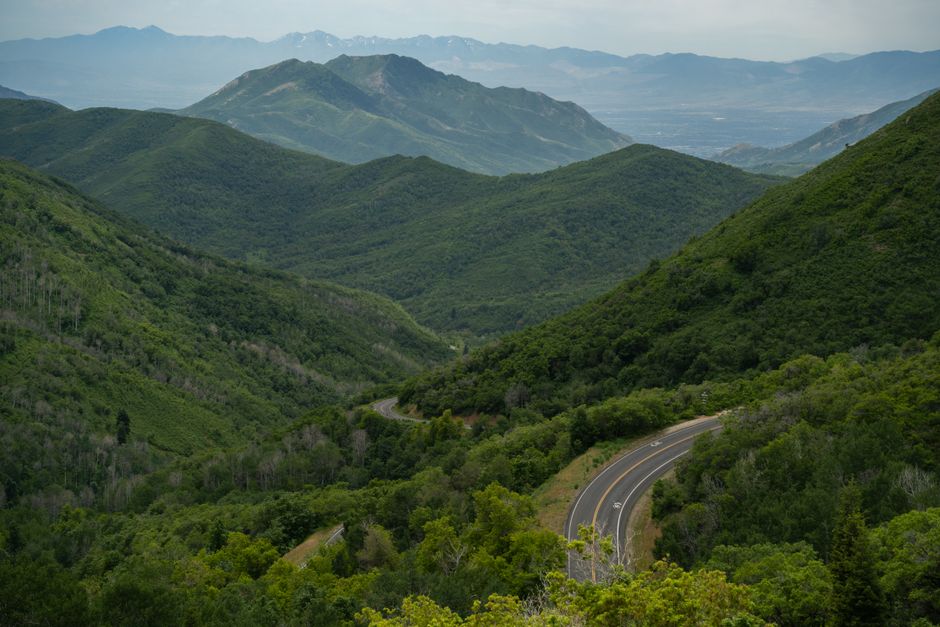
I'd been in Salt Lake City for three days—Temple Square, the Red Butte Garden, one decent brewery—and I was starting to feel the valley walls close in. The ski resorts were shutting down for the season. The downtown core, for all its clean streets and ambitious restaurants, wasn't quite holding my attention. Then I realized the best part about being here wasn't the city itself. It was everything pressed against its edges.
The Wasatch Front sits like a buffer zone between some genuinely strange and beautiful country. Within a ninety-minute drive, you've got red rock canyons, alpine lakes, tight slot canyons, and towns that still feel like they belonged to a different era. Most people who come to Utah for the national parks miss what's practically in Salt Lake's backyard.
Antelope Island State Park (40 minutes)
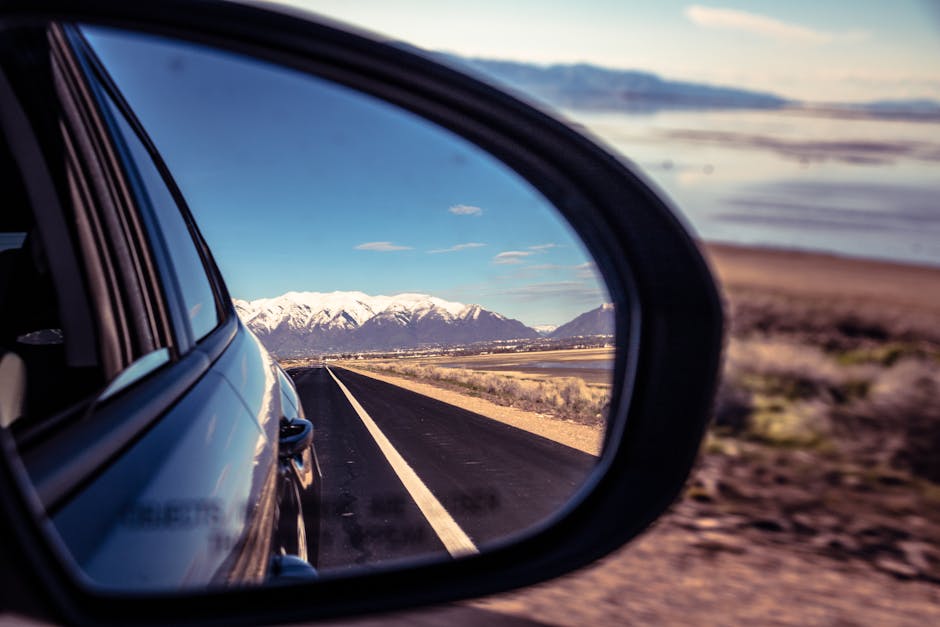
The drive north from downtown takes you across a causeway that feels longer than it actually is—you're driving out into the Great Salt Lake on a thin strip of asphalt, which never stops being strange. Then you're on an island, surrounded by brine, with the Wasatch rising up in the distance and a herd of bison wandering the high desert.
Antelope Island is oddly restorative. You can drive the seven-mile road that circles the island, stopping at overlooks and trailheads. The Fielding Garr Ranch, a restored nineteenth-century homestead near the entrance, gives you a sense of what it took to live out here when that was actually a viable idea. The best hike is the Antelope Island Loop Trail—about six miles, moderate, and it rewards you with views that make the Salt Lake's industrial stretches disappear completely.
Spring is best here, before the heat settles in and the brine gets too aggressive. Summer works fine if you go early. Bring water. The lake itself smells like what it is, and that's part of the experience—it's a reminder that you're somewhere genuinely unfamiliar, not just a different neighborhood.
Alta and the Albion Basin Loop (45 minutes to 1 hour 15 minutes)
If you're visiting in summer and winter makes you uneasy, head up Little Cottonwood Canyon to Alta. The ski resort will be quiet, the lodges will be sleepy, and the mountain will be yours in a way it never is during the season.
The Albion Basin Loop is what you want. It's a four-mile hike that doesn't kill you but gives you serious elevation and views—you're looking back down the canyon, across to the Teton Range on a clear day. The wildflowers in late July and early August are genuinely worth planning around. Columbine, Indian paintbrush, and a dozen others you won't recognize but will photograph anyway. There's also the Cecret Lake Trail, shorter and steeper, which hits an alpine lake surrounded by 11,000-foot peaks.
The drive up the canyon itself is part of it. Single lane in places, dramatic enough that you're paying attention. The whole area gets hammered with snow, so this is strictly a summer and early-fall destination. By September, people have mostly cleared out and the light gets that specific quality it gets before winter.
Park City (35 to 45 minutes)
Park City was a mining town, then it became a ski town, and now it's something between a resort destination and a place where Salt Lake people who didn't quite stay go to spend money. You can take that or leave that, but there are legitimate reasons to spend a few hours here.
The Park City Museum, housed in a former mining building, doesn't pretend to be more than it is—it's local history, straightforward and competent, and it won't eat up more than an hour. The Historic Main Street is lined with restaurants and shops, some decent, some purely for tourists, but the bones of the old town are still visible if you're paying attention. The Olympic Park, built for the 2002 Winter Olympics, offers summer activities like bobsled rides and zip-lining if you want that kind of thing.
The reason to actually go, though, is to walk around. Get coffee at a local place, wander up some of the residential canyons where old mine buildings still stand half-collapsed, sit on a bench and watch people move through their lives in a place that got wealthy very fast. It's a compact area—you can cover it on foot without much trouble. Any season works fine, though summer is warmest and easiest.

Bonneville Salt Flats (1 hour 30 minutes to 2 hours)
West of Salt Lake, past Tooele, you drive out into genuine emptiness. The landscape gets progressively stranger—fewer plants, more open sky, a sense that you're moving away from something rather than toward something. Then you reach the Bonneville Salt Flats, and your brain has trouble calculating what it's looking at.
It's not a dramatic landscape. It's flat, white, stretching to the horizon in all directions, interrupted only by the distant mountains. But the flatness is so complete it becomes a kind of spectacle. You can drive out onto the flats themselves—it's a public area—and walk out where there's literally nothing between you and the edge of the world or so it feels. The reflections of clouds and sky make the whole thing feel inverted. Bring sunglasses. Bring more water than you think you need. The sun out there is serious.
The Bonneville Speedway sits here too, marked by old racing lanes painted on the salt. If you time it right you might catch speed-runs happening, though that's hit or miss. The best time to visit is spring or fall when the temperature is manageable and the light is clearest. Summer is genuinely brutal. Winter can be wet, which changes the whole experience.
American Fork Canyon and the Ashdown Trail (45 minutes to 1 hour)
South of Salt Lake, in the less-crowded part of the Wasatch, American Fork Canyon runs through tight red-rock walls that open onto subalpine terrain. The drive in itself is worth it—the canyon narrows, the creek drops, and you're moving through real landscape, not just scenery you're passing through on a highway.
The Ashdown Trail, which starts from the top of the canyon road, climbs through a mix of aspen and conifer before opening into meadow with views that stretch all the way back toward the valley. It's about five miles round trip, moderate elevation gain, and it's less crowded than the Basin trails because fewer people know about it. There's also the Tibble Fork Reservoir at the canyon's end, a smaller lake surrounded by granite cliffs where you can walk the perimeter or just sit and let the quiet work on you.
Late summer and early fall are ideal—the wildflowers are done but the aspen haven't turned yet, so you get the green and the light without the crowds. The canyon can get busy on weekends, so early morning or a weekday visit is smarter if you're trying to avoid people.

Goblin Valley State Park (1 hour 30 minutes to 2 hours)
Out toward the San Rafael Swell, past Helper and past a lot of empty space, you reach Goblin Valley. It's not a well-known spot for most Salt Lake visitors, but it should be. The park covers an area of hoodoos and badlands formations so dense and weird that walking through it feels like you're on a different planet.
There are some established trails, but the real move is to leave the trail and just wander through the formations. Nothing is sharp enough to hurt you badly, nothing is hidden. You can see across the entire landscape. It's one of those places where you can walk for hours and cover maybe two miles, just being distracted by the shapes and the geometry and the color variation of the rocks. The Little Wild Horse Canyon slot canyon is nearby too, if you want something more technical.
Spring and fall are perfect. Summer gets hot enough that you need to start early and finish early. The drive is long enough that this makes more sense as a half-day trip—you go early, spend three or four hours wandering around, and drive back. The emptiness of the landscape is part of the appeal, but it's also genuinely empty, so fill up on gas before you head out and bring water.
When to Actually Go
Salt Lake sits at high elevation, and the Wasatch and surrounding ranges get real weather. Spring, roughly April through May, is when everything starts moving again—snowmelt creates waterfalls, wildflowers start showing up, and the temperatures are moderate without being extreme. Summer runs hot in the lowlands but stays reasonable at elevation. Fall, September and October, is probably the best time—consistent weather, fewer crowds than summer, and the light is clearer.
Winter closes off most of these destinations unless you're equipped for snow. The canyon roads can become difficult, the trails disappear under cover, and what's accessible in summer isn't anymore. There's something to be said for a winter day trip to somewhere like Park City when it's snowing, but that requires a different approach and real caution.