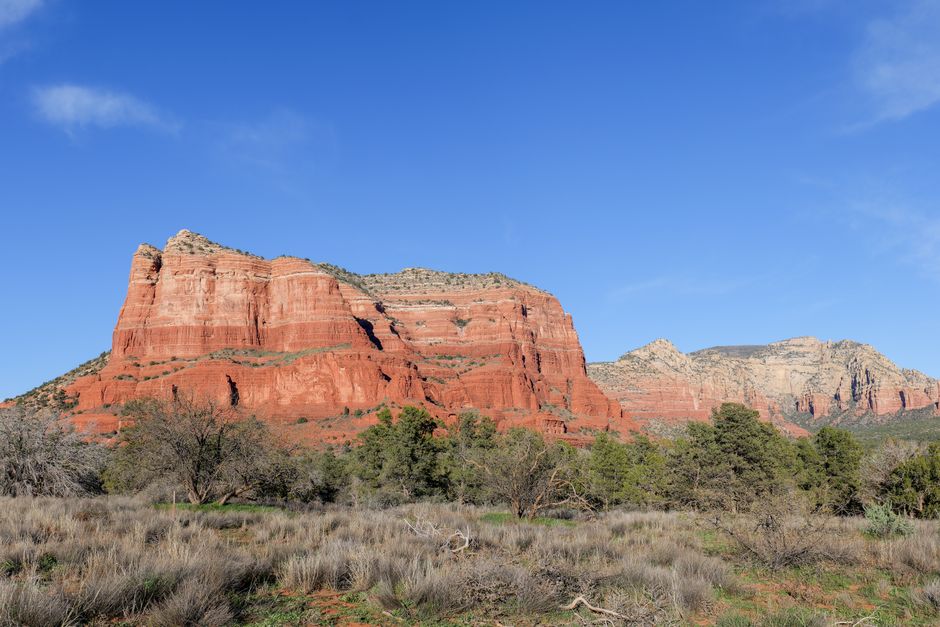
I showed up in Tucson in early March with no particular plan beyond exploring the desert and seeing what a mid-sized Arizona city actually felt like beyond the retiree clichés. What I found was a good base for wandering, and more importantly, a launchpad for some genuinely worthwhile half-day and full-day excursions. The surrounding region—within an hour or two's drive—has enough variety that you can climb through a national forest one day and explore a Victorian mining town the next without feeling like you're chasing gimmicks.
The key to maximizing these trips is understanding the seasons. Winter and early spring are ideal—comfortable driving temperatures, cooler hiking conditions, and the saguaros in their element. Summer turns the desert into a convection oven, and some of these destinations get punishing by midday. Fall is decent but less reliable. I'm assuming you've got a car and a decent road budget. Everything here is within a reasonable drive.
Saguaro National Park (East): 30-40 minutes east
The eastern section of Saguaro sits right on the edge of Tucson's sprawl, accessible via Old Spanish Trail. It's not the dramatic, landscape-painting scenery you might expect—it's quieter and more subtle. You're driving or hiking through actual desert where saguaros do what they do naturally, not crowded into a postcard shot.
There's a scenic loop road, the Cactus Forest Drive, where you can get out at various pullouts and walk short trails. The Javelina Rocks trail is maybe two miles round trip and gives you solid desert vegetation mixed with rock formations. If you want something easier, the Cactus Forest Trail itself runs nearly eight miles but is totally manageable in sections. The payoff isn't jaw-dropping vistas—it's the quiet and the meditative pace of being in actual Sonoran Desert without the tourist machinery.
Best seasons are November through April. The park opens early and you want to be there by midmorning if you're doing this as a half-day. Bring water. Cell service is spotty. Entry is the standard national park pass, or you can get a day pass for each section.
Sabino Canyon: 45 minutes northeast
Sabino Canyon is a different animal entirely. You drive up the Sabino Canyon Road into the Santa Catalina Mountains, and the landscape shifts—you go from scrubby desert floor to actual canyon riparian woodland with sycamores, cottonwoods, and a creek that actually runs year-round. In spring, there's real water flow and greenery.
The setup is straightforward: tram or car access up to the canyon, then hiking trails of varying difficulty branching off from the main road. Phoneline Trail is the popular one—it's a six-mile round trip that follows the canyon rim with decent views and isn't brutal. Sabino Canyon Trail itself runs along the creek floor and gets busier but is scenic if you don't mind crowds. Or you can just take the tram to the end and walk the final stretch on foot.
The canyon is busiest on weekends, obviously. Weekday mornings give you breathing room. The best time is spring—April and May—when the water flow is visible and the wildflowers are showing up. Summer gets crowded and the canyon becomes a hiking magnét for tourists. Winter is fine too, though the water level drops. Go early, plan to spend three to four hours minimum.
Bisbee: 90 minutes southeast
Bisbee is the outlier on this list—it's not nature-focused, it's a genuine small town with some actual character. It's a former copper-mining hub built vertically into a hillside, and what remains is a jumble of Victorian buildings, quirky galleries, bars, and places where people actually live (not just tourist infrastructure).
You park at the top and walk downhill through the town. The main commercial strip is Main Street, where you'll find the Copper Queen Hotel (a working, decent hotel if you wanted to overnight), a few solid restaurants and cafes, and galleries that range from serious to novelty. The Queen Mine Tour is an actual descent into the old mining shafts—informative and claustrophobic in a good way, takes about ninety minutes.
The vibe depends on timing. Weekends bring crowds and a slight circus atmosphere. Weekday visits feel more authentic—you catch locals and the town's actual rhythm. The town's been gentrified and touristified, sure, but it hasn't been neutered completely. Good restaurants include places doing solid Mexican food and a few upscale spots. Winter weather is perfect. Summer is hot even at this elevation. I'd go in spring, midweek if possible, and plan for at least four hours in town plus the drive.
Tubac: 75 minutes south
Tubac is much smaller and quieter than Bisbee—it's a colonial Spanish village (founded 1691) turned artist community, tucked into the Santa Cruz River valley. The main draw is galleries, a few shops, and one genuinely good restaurant situation. It's not a full day unless you combine it with something else, but as a three-hour half-day, it works.
The town centers on Tubac Presidio State Historic Park, which has ruins and a small museum worth an hour. The galleries are scattered through town, and they're actually curated—not all mass-produced southwestern kitsch. The restaurant scene is small but there's at least one place doing real food at a reasonable price. It's a place where artists and retirees have settled, and that shows in the quality level.
Combine Tubac with a visit to Tumamoc Hill or the river trail if you want more hiking, or pair it with the nearby mission at San Xavier del Bac (just north, maybe fifteen minutes). Best in winter or early spring when the river valley is pleasant. Go on a weekday and you'll have the place mostly to yourself.
San Xavier del Bac: 20 minutes south
This deserves its own mention because it's close enough to be almost a Tucson neighborhood trip, but distinct enough to feel like stepping outside the city. San Xavier is a still-active Catholic mission founded in the 1700s, and the building itself is striking—white-washed adobe and stone in a desert setting.
You can walk around the exterior and grounds freely, and enter the church if you're respectful. It's active—you might catch people praying or services happening—so treat it as a working place, not a museum. There's minimal tourist infrastructure by design, which keeps it from feeling commercialized. A full visit is maybe forty-five minutes. Combine it with Tubac (twenty minutes north) or grab lunch at one of the few spots near the mission.
Any season works fine. The isolation and historical weight of the place make it worth the short drive even if you're only in Tucson for a day or two.

Mount Lemmon: 45 minutes northeast (seasonal)
If you're visiting in winter, Mount Lemmon ski area is accessible and sometimes actually has snow. The drive alone gains serious elevation—you go from desert to high desert to pine forest. Even if you're not skiing, the scenic drive and high-elevation hiking are worthwhile.
The summit area has trails ranging from easy walks to serious scrambles. It's cooler up there by maybe twenty degrees even in spring. The views back down toward Tucson and across the mountains are solid. In summer, it's a good escape from the heat—locals drive up here to cool off and hike.
This is more weather-dependent than the other trips. Winter requires decent conditions; summer works fine but expects crowds on weekends. Spring and fall are ideal.
Logistics and reality check
Gas is cheap compared to California. The drive times I've listed assume normal conditions—monsoon season (July-September) can create flash-flood delays, and winter snow is rare but possible on mountain roads. Cell service is spotty outside the city, so download maps if you're hiking.
Bring water everywhere, even on short walks. Tucson and the surrounding region are at high elevation (around 2,400 feet in the city, higher in the mountains), and the dryness will catch you. Sunscreen matters. Hats matter. I ran through two water bottles on what I thought was a casual two-mile walk.
The best approach is to pick one or two destinations and spend real time, not rushing through a checklist. These aren't Instagram stops—they're places to actually be.