
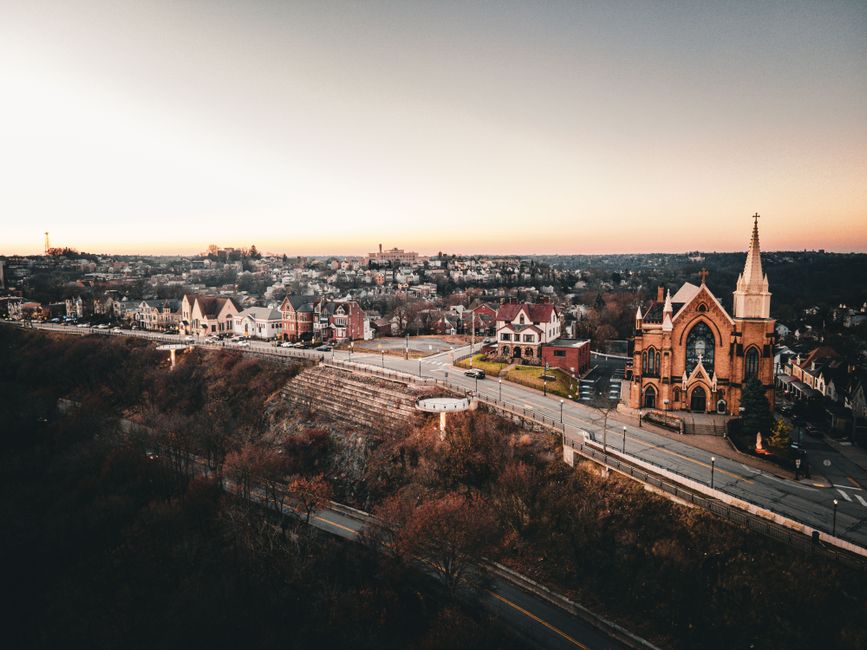
I rolled into Pittsburgh on a gray February afternoon, the kind that makes you question whether daylight exists at all in Western Pennsylvania. But the moment I got off the interstate and started walking, something clicked. This isn't a city that tries to impress you—it just does. The neighborhoods don't feel like branded zones or Instagram backdrops. They feel lived in. After spending weeks crashing in different corners of the city, talking to baristas and construction workers and people sitting on stoops, I realized the best Pittsburgh address depends entirely on who you are and what you actually want from a place.
Pittsburgh's geography is vertical and fragmented, cut up by rivers and hills, which means each neighborhood has its own personality in a way most cities don't. You're not sliding gradually from one vibe to another. You turn a corner and you're somewhere entirely different. That can feel chaotic if you don't know the city, but it's also the whole appeal. I'll walk you through the neighborhoods that matter—not because they're the most famous, but because they're where real people choose to be.
Lawrenceville: The Young Professional Default
Lawrenceville has spent the last decade becoming Pittsburgh's version of every other neighborhood where the first wave of young professionals showed up and made it too obvious they were there. Butler Street is lined with third-wave coffee shops, craft breweries, and restaurants where the menu is printed on kraft paper and the bartender will spend five minutes explaining the terroir of the pour-over. But here's the thing—it actually works. The neighborhood isn't trying to be something it's not. The bones are genuinely old-Pittsburgh industrial, and the businesses are usually run by people who actually moved here to stay.
If you're in your late twenties or thirties, relatively new to Pittsburgh, and you want walkability without having to pretend you're doing something noble by being here, Lawrenceville is the obvious choice. You can grab groceries, get a drink, and meet actual neighbors without leaving a six-block radius. The rent isn't cheap—prices have climbed consistently—but you're also not paying San Francisco money. The neighborhood slopes upward, which means some blocks are steeper than others, and the farther you get from Butler Street, the quieter and more residential it becomes. That's where the deals are.
The Strip District: Raw and Specific
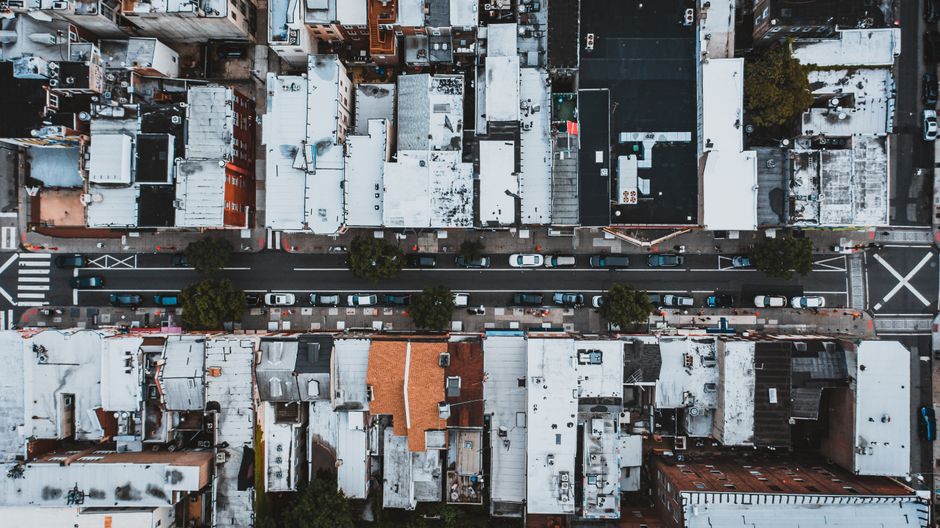
The Strip doesn't soften itself for visitors. It's a market district in the real sense—Penn Avenue runs a gauntlet of produce vendors, butcher shops, ethnic grocers, and restaurants that have been in the same family for forty years. On a Saturday morning, it's legitimately chaotic, the way a working neighborhood should be. You'll find pierogi at Wholey Market, German delis that predate gentrification, and fish stalls where the guy behind the counter will lecture you on freshness.
Who fits here? People who actually cook. People who like eating in neighborhoods rather than at curated venues. It's also increasingly becoming a residential address for folks who want proximity to downtown and riverfront trails without the obvious polish of other options. The loft conversions have happened, but they haven't erased the character. You still walk past working businesses, not gallery windows. The neighborhood doesn't have the nightlife draw of South Side or the coffee-culture immersion of Lawrenceville. That's a feature, not a bug—it means rent is lower and the pace is slower.
Shadyside: Establishment Comfort
Shadyside is what you get when a neighborhood has been affluent for long enough that the trees are massive and the streets feel genuinely quiet despite being close to downtown. Walnut Street is the main corridor—shops, restaurants, some chains mixed with local spots—but the appeal isn't the commerce. It's the tree canopy and the fact that you can walk to everything while it still feels like an actual neighborhood with residents who aren't performing urbanity for social media.
This is the choice for established professionals, families who can afford the area, and anyone who wants to be close to the cultural action of the city (the Carnegie museums are adjacent) while living somewhere that still functions like a suburb in the best sense. The real estate market is competitive, and you're paying for stability and schools and the simple fact that the streets are well-maintained and safe. If you're someone who likes to walk to dinner but also values a quiet evening on your porch without noise complaints, Shadyside gets you there. It's not trendy. It's just been reliable for decades.
South Side: The Bars-First Approach
South Side is young and loud and aggressively fun in a way that feels unsustainable until you realize people just live like this here. East Carson Street is a wall of bars, restaurants, and music venues, and on Thursday through Sunday nights it's as crowded as any urban bar district in America. The neighborhood draws college kids, tourists, and young people who haven't gotten tired of waking up hungover on a Saturday morning and deciding that's fine.
If your priority is nightlife and you don't care about waking up to serenity, South Side is the obvious choice. It's also getting more mixed—there's actual residential inventory above and behind the ground-floor bars, and some of it is genuinely affordable compared to Shadyside or Lawrenceville. The downside is obvious: the noise, the crowds, the fact that you'll probably eventually want to move somewhere quieter. Most people know this going in. They're not looking for a five-year plan; they're looking for the next two to three years of being in the center of something active. Music venues like Stage AE and Altar Bar draw people from across the city, and the restaurants have gotten genuinely good—it's not just drinking destination anymore.
North Shore: Museums and Proximity
North Shore has the clearest purpose: it's where the museums are. The Heinz History Center, the Aviary, PNC Park, the Andy Warhol Museum. If you're visiting Pittsburgh and want to actually do things, you'll spend time here. But it's also become a legitimate residential neighborhood in a way it wasn't fifteen years ago. The riverfront trail connects everything, and the views of downtown across the Allegheny River are objectively impressive—the kind of thing that justifies the Instagramming.
Who lives here? Families with young kids like the museums and open space. Visitors rent short-term apartments and essentially use North Shore as their home base for seeing the city. Empty-nesters sometimes move here for the walkability and the cultural institutions without the chaos of younger neighborhoods. The real estate feels newer and more planned than the chaotic grid of older Pittsburgh neighborhoods—it's a deliberate development, which means fewer character quirks but also fewer surprises at 2 a.m. The neighborhood is still not as vibrant as Lawrenceville or South Side, but that's intentional. It's a place to be active during the day and sleep well at night.
Regent Square: The Overlooked Middle Ground
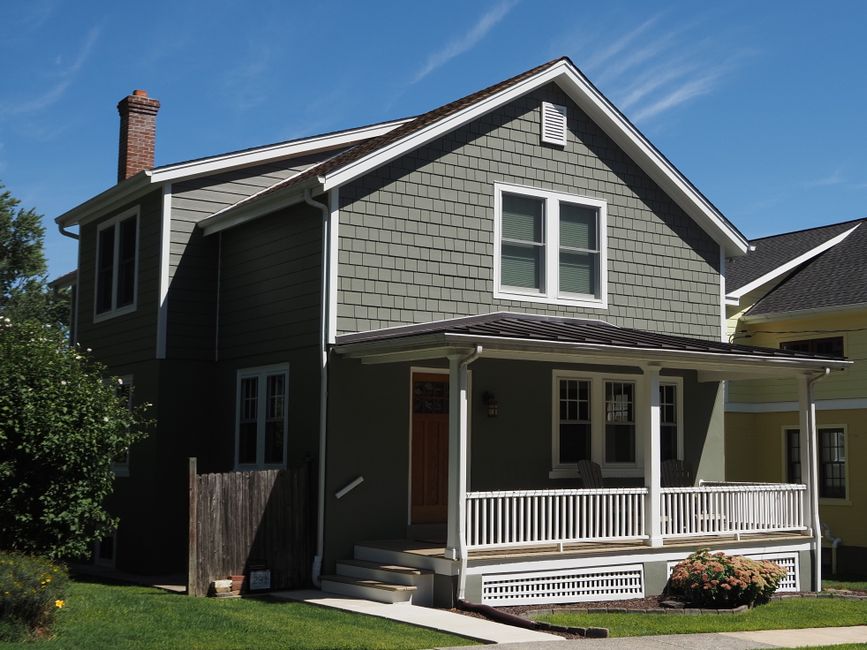
Regent Square sits in the southeast, quieter and more forgotten than the neighborhoods everyone talks about. It's residential without being sleepy, established without being buttoned-up, and genuinely affordable without requiring you to compromise on what the neighborhood actually offers. Penn Avenue runs through it and has actual local restaurants and shops—not curated enough to feel like a tourist district, but present enough that you can sustain yourself without a car.
This is where people move after they've lived in Lawrenceville and decided they want more quiet but aren't ready to retreat to the suburbs entirely. Families like it. People who've been in Pittsburgh for a while and figured out what they actually need like it. The architecture is sturdy Pittsburgh housing stock—nothing that makes you feel like you're living in history, but nothing that feels disposable either. You won't find boutique coffee roasters or craft cocktail bars, and that's fine. You'll find a neighborhood where your neighbors are people with jobs and kids and actual lives, and the rent doesn't require you to make six figures.
Frequently Asked Questions
where do young professionals live in Pittsburgh
Most young professionals in Pittsburgh cluster in Lawrenceville, which has walkable streets, coffee shops, breweries, and restaurants. South Side is another option if nightlife is the priority. Strip District appeals to people who cook and want a working neighborhood feel. All three have good transit connections and reasonable rent compared to other major cities.
what is the safest neighborhood in Pittsburgh
Shadyside is widely considered one of the safest neighborhoods in Pittsburgh, with well-maintained streets and a police presence. North Shore is also generally safe and family-oriented. Regent Square has a stable residential feel. Safety varies by block in older neighborhoods like Lawrenceville and Strip District, so check specific streets and walk them during different times of day before committing.
which Pittsburgh neighborhood is best for families
Shadyside and North Shore are both popular with families—Shadyside has excellent schools and tree-lined streets, while North Shore offers museums, riverfront trails, and parks. Regent Square is also family-friendly with lower prices and a genuine community feel. All three provide good schools, walkability, and safety.
where should I stay if visiting Pittsburgh for a few days
North Shore is the best base for visiting—museums, riverfront trails, and restaurants are all walkable, and you have views of downtown. Lawrenceville and Strip District work if you want more local character and nightlife. South Side is good if you're primarily interested in bars and music venues. Any of these neighborhoods are a short Uber or bus ride from downtown attractions.
Which neighborhood catches your eye?



