
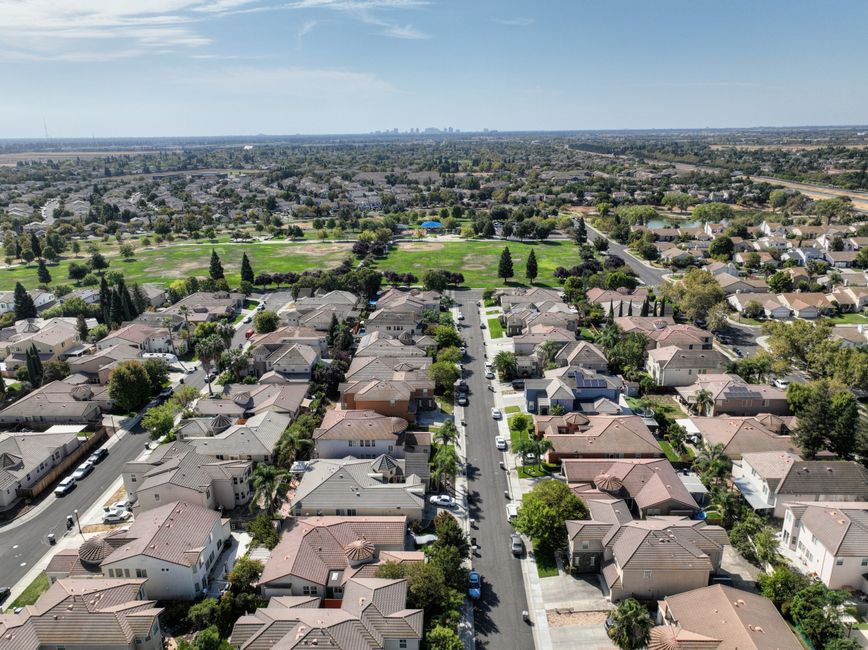
I rolled into Sacramento on a Tuesday afternoon expecting strip malls and state-office boredom. What I found was a city that actually has neighborhoods with personality—places where you could genuinely want to spend a few days, or longer. The capital isn't flashy like San Francisco or LA, but that's partly why it works. You can eat well, walk around without feeling like you're being gouged, and figure out where you actually want to stay without needing a real estate broker.
The key thing about Sacramento is that it's compact enough to explore but spread out enough that your neighborhood choice actually matters. You're not just picking a hotel; you're picking the vibe of your stay. Some people want bars and restaurants within stumbling distance. Others want to hear their kids playing in a yard, not traffic. I spent time in six different parts of town, and each one scratches a different itch.
Midtown: Bars, Restaurants, and Actual Energy
Midtown is Sacramento's answer to "I want something to do at night." It's a roughly six-block grid of K Street and surrounding avenues where most of the city's independent bars, restaurants, and music venues cluster together. When I was there on a Friday, the sidewalks were actually full of people who looked like they'd planned to be outside.
The dining scene is genuinely solid. You've got everything from farm-to-table spots that don't feel pretentious to casual taquerias where the owner is probably in the kitchen. Bars range from dive bars with cheap beer to cocktail places where someone actually cares about what goes in your drink. The live music venues are small—nothing stadium-sized—but that means you can actually hear the band and move around without being crushed against someone's shoulder.
Midtown makes sense if you're under 35, traveling solo, or just want to be where the activity is. Parking can be tight, and it gets loud at night if you're the type who needs absolute silence to sleep. Rent or hotel rates here are higher than the outer neighborhoods. But if you're here for the experience of Sacramento as a functioning adult city rather than just the capitol building, this is where you start.
Land Park: Families and People Who Actually Know Sacramento
Land Park is the neighborhood where people who've lived in Sacramento for a decade actually live. It's south of downtown, built around a legitimately nice park—the kind with a zoo, a fairground, a swimming pool, and enough green space that it doesn't feel like you're surrounded by houses.
The streets here are wider, the houses are older and mostly well-maintained, and there's a particular kind of calm. You see people walking dogs, kids on bikes, families pushing strollers to coffee shops. The commercial strip along Freeport Boulevard has groceries, hardware stores, and restaurants that have probably been there longer than some people's mortgages. It's not trendy. It's not trying to be trendy. It's just pleasant in a way that appeals to people who have kids, or who've had kids, or who remember when neighborhoods were built around park systems instead of shopping centers.
If you're traveling with family or if you want to understand how actual Sacramentans live when they're not downtown, Land Park is where you look. It's walkable within the neighborhood itself, quieter than Midtown, and generally cheaper for hotels or longer-term rentals. The downside is that you're car-dependent if you want to get elsewhere in the city quickly. But that's also partly the point—people live here because they don't feel the need to be constantly moving.
Old Sacramento: The Tourist Infrastructure That Actually Works
Old Sacramento is the historic riverfront district, and I'll be honest: it's a tourist area. The wooden storefronts, the cobblestone streets, the river views—it's all designed to sell you something. But the thing about Old Sacramento is that the infrastructure actually functions. Hotels here range from standard chains to some locally-owned options, and they're not all marked up to Silicon Valley prices.
The restaurants along the waterfront are uneven—some are solid, some are clearly leaning on location to carry mediocre food—but there are enough options that you can find something real. There's a riverboat casino if you're into that. The Railroad Museum is genuinely worth an hour if you care about that kind of history. Most importantly, it's a neighborhood where you can actually walk to multiple things: shops, restaurants, bars, the Capitol building (heading north), and the river itself.
Old Sacramento works if this is your first time in the city and you want the classic "visiting" experience without entirely disconnecting from how the city actually functions. It's touristy, but it's not a theme park. Parking is available but not always convenient. The river adds something—you're not just in another downtown, you're in a downtown that's anchored to water. If you're staying here, you'll spend time walking, eating, and observing the city from a slightly elevated perspective. It's not the realest Sacramento, but it's a legitimate entry point.
Pocket: Hidden, Walkable, and Weirdly Livable
Pocket sits south of Old Sacramento, west of the main downtown grid, and it's the neighborhood that Sacramento people mention when they're trying to sound like they know something you don't. It's a genuine residential neighborhood that nobody is really marketing to tourists, which is partly what makes it work.
Walking through Pocket, you're on tree-lined streets with small houses, local parks, and minimal traffic noise. There's a small commercial area along Pocket Road and Riverside Boulevard where you'll find mom-and-pop restaurants, a couple of bars, coffee shops, and the kind of stores that serve people who actually live nearby rather than driving from across town. The vibe is relaxed, almost small-town, even though you're technically in the capital.
Pocket suits people who want an actual neighborhood experience but still be close enough to downtown to reach it in 10 minutes by car or 25 minutes walking. Rent is reasonable compared to Midtown. It's quieter than anywhere closer to the city center. The trade-off is that you're not in the thick of it—if your plan is to spend all night bar-hopping or going to multiple restaurants, Pocket requires a little more intention. But if you want to experience Sacramento as a place where people actually settle, where there are parks and community and restaurants that have regulars, Pocket is the answer.
Natomas: Sprawl, But Functional Sprawl
Natomas is north of downtown, past the freeway, and it's where a lot of Sacramento's newer development has clustered. I know what you're thinking: sprawl, chains, parking lots. You're not entirely wrong. But Natomas is also where a lot of young professionals and families who can't afford Midtown or Land Park have ended up, and the neighborhood is actually functional in a way that sprawl often isn't.
There are parks here. There's a Target, a Costco, all the standard suburban amenities. Hotels are cheaper than downtown. You're close to the airport. If you're traveling for work or a conference and need a base that's convenient without requiring much effort, Natomas delivers. There are restaurants scattered throughout—not the kind of concentrated dining scene you get in Midtown, but enough that you're not eating at the hotel.
Natomas makes sense if you're staying in Sacramento for practical reasons rather than for the experience of being in a specific neighborhood. You won't feel like you're in the heart of anything, but you also won't feel stressed about logistics. It's the neighborhood you choose when the location matters more than the vibe. Families sometimes prefer it because it's quieter and has more space. Business travelers end up here because it's near the convention center and priced reasonably. Just go in knowing that you're trading neighborhood character for convenience.

Capitol District: Quiet, Official, and Surprisingly Walkable
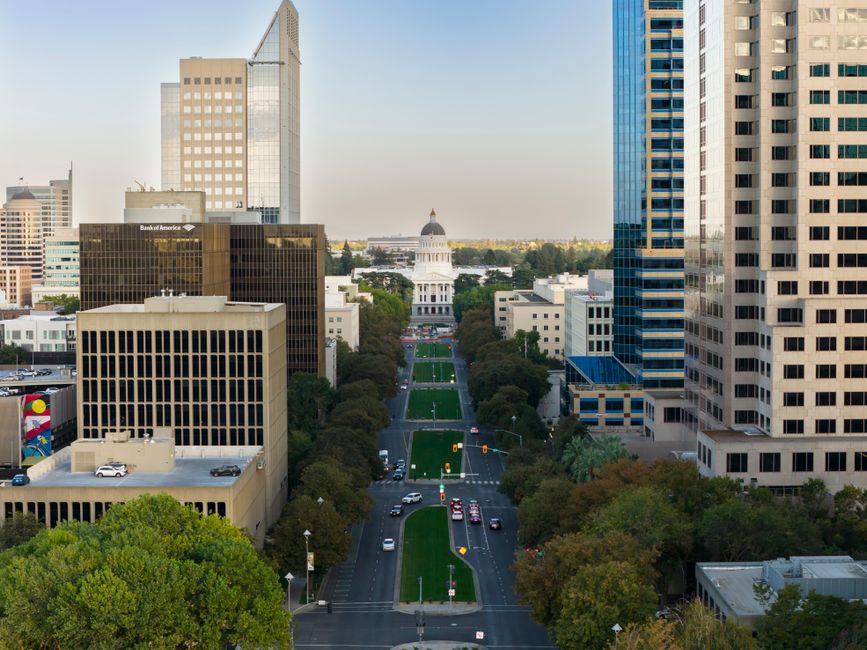
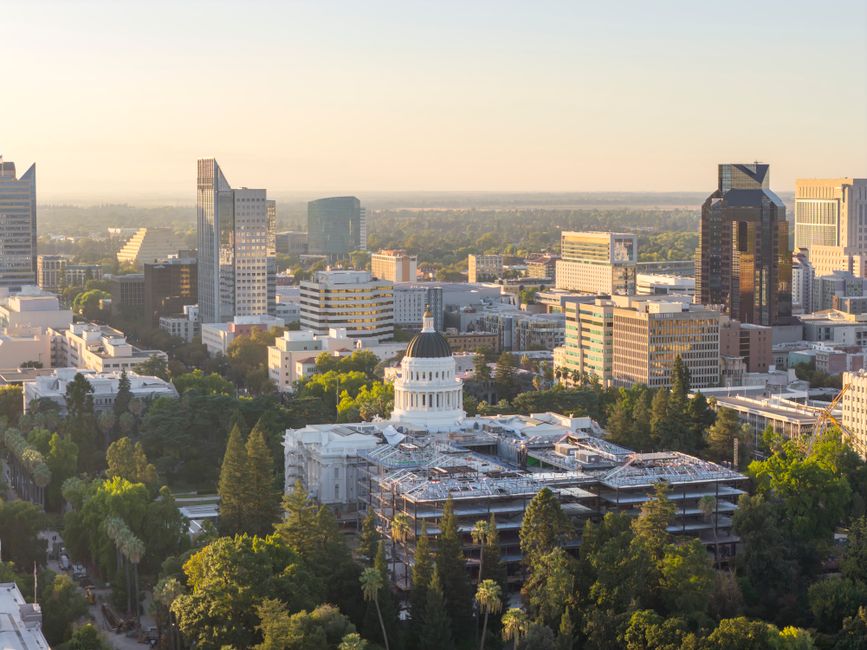
The Capitol District is exactly what the name suggests: the area immediately around the State Capitol building, a few blocks in each direction. It's a neighborhood defined by government buildings, wide streets, and a particular kind of orderly calm.
What makes it work is that it's walkable and dense in a way that doesn't feel like it. You can walk from the Capitol to the Governor's Mansion (which you can tour), through parks, past restaurants, and down to Old Sacramento without ever feeling lost. The commercial streets have some good restaurants and cafes. Hotels here tend to be older, established properties rather than new chains. The neighborhood has history embedded in the actual streets—not in a cutesy way, but in a "this is where things actually happen" way.
The Capitol District suits people who want to be centrally located, can walk everywhere they need to go, and don't mind that the neighborhood's primary function is government. It's quieter than Midtown but more urban than Land Park. Parking is available if you have a car, but you genuinely don't need one for daily life. If you're visiting the Capitol building or the museums nearby, staying here means you're already there. If you like neighborhoods with a clear identity and historical weight, this one has it. The downside is that nightlife is minimal compared to Midtown, and weekends can feel a bit quiet because office workers clear out.
Frequently Asked Questions
What is the safest neighborhood in Sacramento?
Land Park and Pocket are generally considered safer, quieter residential neighborhoods with lower crime rates than downtown areas. Capitol District is also safe, with good foot traffic and visibility during the day. Like any urban area, avoid walking alone late at night in Midtown, and use standard city travel sense. Check current crime statistics for the specific block you're considering—safety varies by street in any neighborhood.
Where should I stay in Sacramento if I want nightlife?
Midtown is Sacramento's nightlife hub, with the highest concentration of bars, live music venues, and late-night restaurants within walking distance. The six-block area around K Street has most of the city's active nightlife. Old Sacramento also has bars and some evening activity, though it's more tourism-focused. Other neighborhoods are quieter after dark.
Is Sacramento walkable without a car?
Midtown, Old Sacramento, Capitol District, and parts of Pocket are genuinely walkable for daily needs. Land Park and Natomas are car-dependent for getting around the broader city. You can survive without a car in central neighborhoods, but Sacramento is spread out enough that a car is useful for exploring beyond your immediate area. Public transit exists but isn't extensive.
Where do families usually stay in Sacramento?
Land Park is the family-friendly choice, with the zoo, swimming pool, parks, and quieter residential streets. Natomas also works for families because it's quieter and has more space than downtown areas. Both offer a more relaxed, child-oriented environment than Midtown or Old Sacramento.
Which neighborhood catches your eye?



