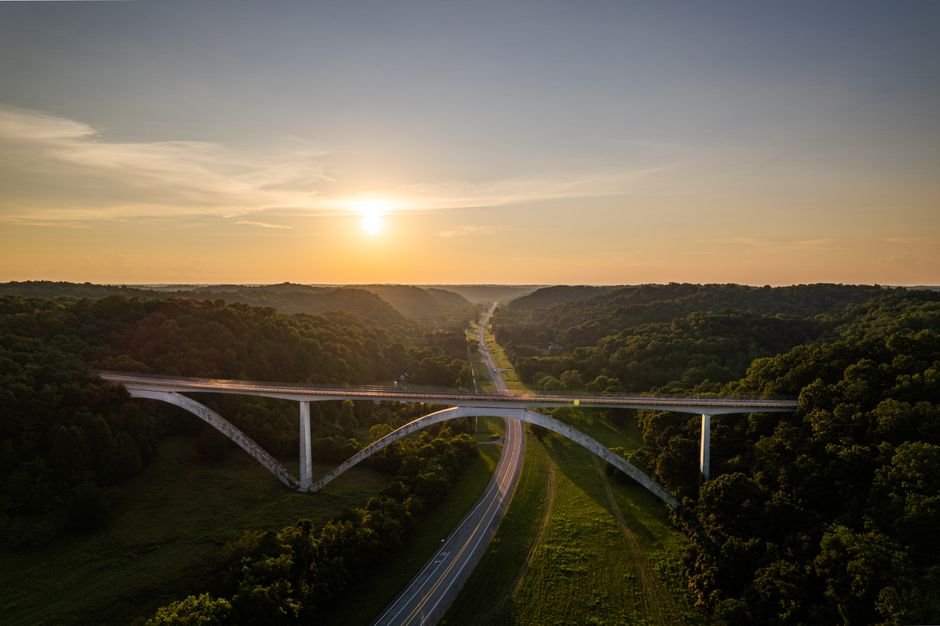
I showed up in Nashville on a Friday with the usual plan: Broadway, hot chicken, maybe a live show. By Sunday morning I was restless. The city's got charm, sure, but after a couple days the tourist treadmill wears on you. So I grabbed a rental and started driving. Turns out the best part of visiting Nashville isn't always Nashville. The region around it—rolling country, limestone valleys, old mountain towns—offers plenty of reasons to leave the interstate and actually see Tennessee.
Waterfall Season at Fall Creek Falls
Fall Creek Falls State Park is about 75 minutes south near Spencer, and it's the kind of place that makes you wonder why you didn't go sooner. The main event is a 256-foot waterfall that genuinely impresses, especially after rain or in spring when water flow is heavy. There's a straightforward hiking trail down to the base—steep, but mercifully short. Most people can manage it without serious fitness.
The park sprawls across 17,000 acres, so one waterfall isn't the whole story. There's a second, smaller fall if you want to keep moving. In good weather you can loop both in a morning. The lake here is for fishing and kayaking if you're into that. The historic stone buildings dotting the grounds date back to the Depression-era CCC program, which is honestly more interesting than most state park architecture.
Spring through early summer is prime time—water's rushing, the green canopy is full, and it's not yet brutal heat. Fall is fine too, though drier. Summer works if you go early and don't mind the heat and humidity. Winters are gray but empty, which some people prefer.

Mammoth Cave National Park Across the Border
Kentucky sits about 90 minutes north. Mammoth Cave National Park is the world's longest known cave system, and I get why that statistic gets repeated: it's genuinely hard to picture a cave that big until you're inside one.
You'll need to book a tour ahead—ranger-led groups only, no wandering solo into the dark. The variety is legitimately good. The Frozen Niagara tour hits the showy stalactites and stalagmites in about two hours. The Domes and Dripstones tour is longer and less crowded if you want to avoid the main-event crowds. For the physically demanding option, the Gothic Avenue tour involves ladders and tight passages, which some folks find thrilling and others find claustrophobic.
The cave stays around 54 degrees year-round, so bring a jacket. Otherwise, there's no real season advantage here—it's steady. I'd avoid peak summer weekends just for the parking and tour-scheduling hassle. The Green River runs through the park too, and if you're not a cave person, paddling is the move.
Jack Daniel's and the Whiskey Trail
Lynchburg sits roughly 90 minutes south, a town of about 600 people that exists almost entirely because of the distillery. It's a bit weird showing up to tour a massive industrial operation in a tiny town, but that's precisely what you're doing here.
The Jack Daniel's distillery tour is free but requires reservations—they move people through in groups, and it's fairly slick production. You'll see the barrel warehouse, the still house, and learn whatever story they're telling that week. The tour's fine. The tastings at the end are the actual draw. Moore County is a dry county, so buying bottles anywhere else in town is illegal; you can only purchase at the distillery itself, which creates this odd, monopoly-like situation that at least keeps things straightforward.
Lynchburg itself has the usual gift shops. Lynchburg Hardware & General Store is genuinely old and worth a wander. There's decent barbecue nearby if you're staying for lunch. The whiskey trail angle works best if you're interested in the process itself. If you're just looking to buy a bottle and snap a photo, the experience feels a bit thin. Best to combine this with something else in the region—the Falls, or a riverside town.
Murfreesboro and the Stones River Sites
Murfreesboro sits just 30 minutes southeast, which makes it the easiest day trip, but don't let that fool you into thinking there's nothing here. It's a college town with real character, and the Civil War history is substantial and less Disney-fied than some tourist sites.
The Stones River National Battlefield marks a significant winter battle from 1862. The visitor center is small and well-done. You can walk the grounds and read the monuments, or drive a loop if the weather's bad. It's not a theme park—it's a field and some markers—but the landscape genuinely helps you understand what happened here. The nearby Murfreesboro town square is one of the better downtown cores in Middle Tennessee. Local restaurants and shops actually seem to run for locals, not just tourists.
If you time it right, Murfreesboro hosts the Tennessee Craft Brewers Association events and farmers markets. The town works as a half-day trip if you're already driving south anyway, or as a standalone morning if you combine it with lunch and browsing the historic district. No real season limitation—it's pleasant year-round, though summer heat can make walking the battlefield less enjoyable.
Riverfront Time in Clarksville
North about 45 minutes toward Kentucky, Clarksville sits on the Cumberland River and has been quietly improving its downtown over the past few years. It's not Instagram-famous, which means it's not swamped.
The Customs House Museum is the obvious anchor—a Victorian building with rotating exhibits that touch on local history, art, and some broader stuff. It's fine. The real reason to come is the Cumberland riverfront. There's a walking path that's genuinely pleasant, and you can walk into actual downtown shops and restaurants without the honky-tonk atmosphere. Beachaven Vineyards is nearby if wine tasting appeals to you, though I found it competent but unremarkable.
Clarksville's appeal is subtle. It's not a destination on its own, but if you're driving toward Kentucky or already heading north, spending a few hours here beats another spin through Broadway. Early fall gives you decent weather and fewer tourists clogging the paths. Winter's flat and gray. Spring and summer are fine if you don't mind the humidity.
Strategy for Combining Trips
The smart move is bundling destinations by direction. South means Fall Creek Falls and Lynchburg in one drive—you can do both in a long day if you wake early, though it feels rushed. North means Mammoth Cave as a solo trip, or Clarksville as a bonus stop on the way.
The Murfreesboro battlefield works as a half-day warm-up if you're leaving Nashville midmorning. Pack snacks and water. The cave tour requires booking ahead, sometimes weeks during summer. Download a map for the state parks because cell service in rural areas is inconsistent.
Weather matters most for the Falls and the riverfront walks. Rain fills the waterfalls but makes the hike slippery. Heat in July and August is real and unpleasant for anything involving hiking. Spring is the obvious choice, but fall is underrated—the tourists thin out, temperatures drop, and the leaves go strange colors in late October. Winter means empty parks and gray skies, which some days feels exactly right.
When to Actually Go
If you've got flexibility, late April through May and September through early November are the real sweet spots. Temperatures are manageable, water flow is decent, and the crowds thin after spring break and before the summer push.
Don't go expecting each place to be life-changing. They're not. They're reliably decent day trips that get you out of the city and remind you why you came to Tennessee in the first place—not for the honky-tonks, but for the landscape and the actual place underneath the tourism overlay. After a couple days of that, the Broadway stuff starts to feel worth it again.